Portuguese
  Spanish


The Corinthians stadium boosted Itaquera after the 2014 World Cup, raising the square meter from R$ 2,700 to R$ 6,129 and attracting residential launches, but mobility around the Neo Química Arena still concerns urban planners due to physical barriers, pedestrian access, and pressure on game days in São Paulo’s capital.
The Corinthians stadium became one of the main symbols of the real estate transformation of Itaquera, in the eastern zone of São Paulo, after the 2014 World Cup. According to a report published by Exame on June 13, 2026, the square meter in the neighborhood went from just over R$ 2,700 in 2011 to R$ 6,129 in May 2026, while mobility in the surrounding area remains a point of debate.
The Neo Química Arena was inaugurated in May 2014 and chosen to host the opening of that year’s World Cup. Since then, the region has attracted developers, gained new residential projects, and seen growing interest from residents and investors, but still faces criticism from urban planners for mobility barriers in the area.
Stadium changed the way Itaquera came to be seen
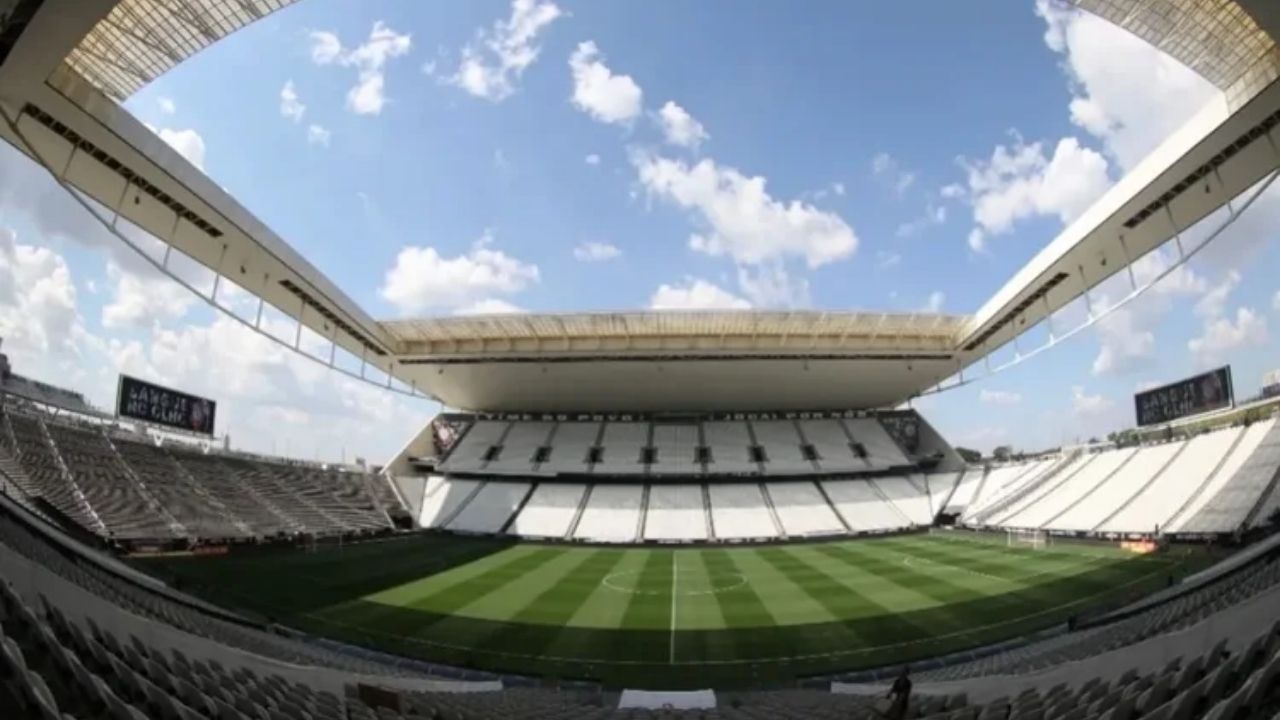
Before the construction of the arena, Itaquera was still perceived as a less valued region within the city of São Paulo. The project of the Corinthians stadium, started in 2011, changed this image by placing the neighborhood at the center of a global event.
-
As Brazil Expands Social Welfare, Survey Reveals 40% Blame Poverty on Laziness, While 58% Cite Lack of Opportunities

-
China Tightens Control on Antimony, Driving Prices from $22,000 to Nearly $40,000 per Ton as U.S. Rushes to Bolster Strategic Reserves

-
BlackRock Freezes $1 Billion in Brazilian Renewable Energy, Impacting 1.5 GW of Planned Projects and Highlighting Investor Concerns Over Infrastructure Bottlenecks Cutting Up to 25% of Solar and Wind Generation
-
Labor Shortage: Despite Record Average Salary, 90% of Brazilian Bar and Restaurant Owners Struggle to Hire Key Roles Like Sushi Chefs and Head Cooks


The 2014 World Cup served as a showcase for an area that until then had less contested land and lower prices. The opening of the World Cup brought works, public attention, a flow of people, and a new perspective on the real estate potential of the eastern zone.
Square meter more than doubled since 2011
The strongest evidence of the transformation appears in the price per square meter. According to Exame, Itaquera had a value just above R$ 2,700 per square meter in 2011, when the stadium was still in the planning stages.
In May 2026, the value reached R$ 6,129, according to the FipZap Index from the OLX Group. This means that the neighborhood more than doubled in price during the period, with appreciation associated not only with the arena but also with infrastructure, commerce, services, and new developments.
The 2014 World Cup demanded works in the surroundings
The choice of the Corinthians stadium to host the opening of the 2014 World Cup required significant urban interventions in Itaquera. Streets and avenues were modernized, public services were expanded, and new businesses emerged in the region.
These changes helped create a more attractive environment for the real estate market. The neighborhood began to gather important factors for developers: location in the capital, access to transportation, presence of urban facilities, and perception of accelerated development.
Developers expanded their presence in the neighborhood
The appreciation of Itaquera also appears in the advancement of residential projects. MRV, cited by Exame, began to operate more expressively in the region, especially in developments linked to the Minha Casa, Minha Vida program.
Previously, the developer’s presence was more sporadic. In May 2010, for example, 120 units were launched in neighborhoods near the Neo Química Arena. Over the years, the scale increased, reaching developments with more than a thousand units.
Thousands of homes arrived near the arena
Considering neighborhoods within a radius of up to 5 km from the Neo Química Arena, such as Artur Alvim, Jardim Coimbra, Cidade Líder, Santa Marcelina, Parque Savoy, Vila Carmosina, Águia de Haia, Itaquera, A.E. Carvalho, Rio Verde, and Parada XV, real estate activity grew significantly.
In 2024, MRV launched Gran Arena Itaquera, with 1,064 units, just a few meters from the arena. The following month, there were 1,051 more units in the region. In 2026, another large-scale launch added another 1,064 units. The scale shows how the surroundings became a target for popular housing and residential investment.
Corinthians stadium became an urban landmark
The Corinthians stadium did not only impact sports. It helped create a new urban brand for Itaquera, associating the neighborhood with events, mobility, commerce, housing, and large developments.
For real estate market representatives cited by Exame, the arena helped change the way many people see the region. The neighborhood began to be seen as a strategic point for growth, especially by bringing together infrastructure and access to services.
Appreciation doesn’t depend solely on the arena
Experts remind us that appreciation around stadiums doesn’t happen automatically. Fábio Tadeu Araújo, CEO of Brain Strategic Intelligence, states that the effect depends on the area where the facility is installed and the existing or created infrastructure around it.
In the case of Itaquera, there was a combination of factors. The arena was important, but the growth also relied on public works, transportation, commerce, services, and the interest of developers. Therefore, the stadium acted as a trigger within a larger urban process.
Urbanists point out old barriers in the neighborhood
Despite the appreciation, the transformation of Itaquera did not eliminate historical problems. According to Pedro Henrique Rezende Mendonça, from LabCidade, the region has an urban formation marked by centralities and physical barriers since the 1920s and 1930s.
The initial development was linked to the Central do Brasil railway, with a station near the area where the Neo Química Arena stands today. A commercial centrality emerged there that remains active, but the neighborhood continued to face urban integration problems over the decades.
Metro, shopping mall, and stadium reinforced fragmentation
The arrival of the metro in the 1980s consolidated occupations in an area that was almost rural before. Later, the Itaquera Shopping Mall in 2007 and the Corinthians stadium, linked to the 2014 World Cup, reinforced a logic of concentrated large urban facilities.
According to the urbanist interviewed by Exame, this concentration did not necessarily produce integrated urbanization. Even with the Corinthians-Itaquera station nearby, residents still face difficulties accessing on foot, and many end up using the Artur Alvim station for ease of movement.
Mobility remains a sensitive point
Mobility barriers appear mainly around the arena. Road connections on Jacu-Pêssego and the extension of Radial Leste to Guaianases created urban obstacles, and recent investments still maintain part of this logic of functional isolation.
On game days, the problem becomes more visible. Workers, residents, and fans mix on the Red Line, while road closures can disrupt bus circulation. The arena concentrates movement, but the neighborhood still seeks a more fluid integration.
The legacy of the World Cup is economic and urban
The legacy of the 2014 World Cup in Itaquera has two sides. On one hand, the neighborhood gained real estate appreciation, new developments, greater public attention, and growth in the residential market.
On the other hand, the challenges of circulation, pedestrian access, and urban fragmentation show that a major project alone does not solve structural problems. The stadium accelerated the transformation, but did not erase the barriers that already shaped the region before the World Cup.
But the appreciation also raises an uncomfortable question: is real estate growth enough when the surroundings still have mobility barriers, access difficulties, and pressure on game days? Do you think Itaquera gained more than it lost with the arrival of the arena? Leave your opinion in the comments.