






 Portuguese
  Spanish
  2 min of reading
  0 comments


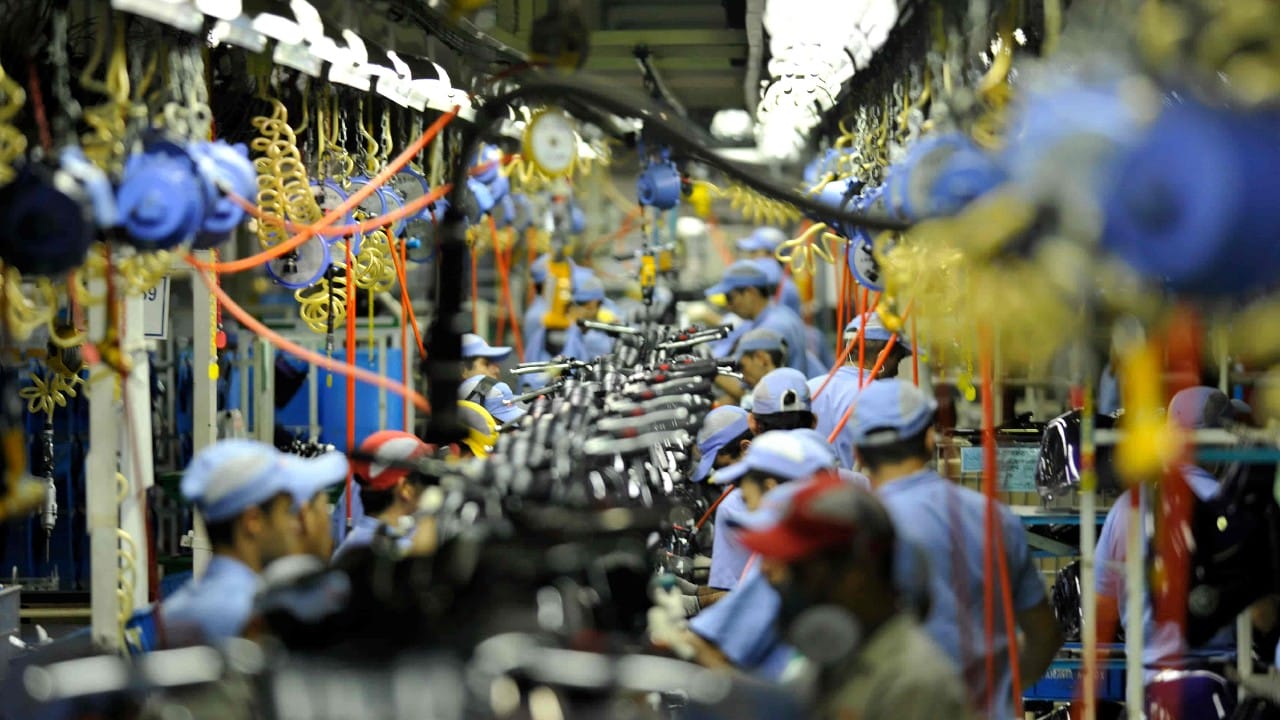
According to CNI, high interest rates impact economic recovery and the investment rate, expected to decline in 2023, limiting productive modernization.
Labor productivity in the manufacturing industry is constantly growing, even in the face of a slowdown in industrial production. According to the National Confederation of Industry (CNI) Productivity in Industry survey, the productivity indicator recorded an increase of 0.7% in the third quarter of 2023, compared to the previous quarter, in the seasonally adjusted series.
This productivity growth directly reflects on process efficiency and company performance, contributing to better market performance. The pursuit of strategies that boost productivity becomes essential to achieve positive results and stand out in a competitive environment.
The Stagnation of Produced Volume Influences Productivity
According to the analysis, the current performance reflects the stagnation in production volume, with a variation of only 0.1%, and a decline of 0.6% in hours worked. After recording growth in the last two quarters, the indicator points to a seasonally adjusted series but is still below the highest levels observed in 2017, 2019, and 2020.
-
Long before sustainable construction became a trend, China built earthen fortresses with multiple floors, a central courtyard, and the capacity to house up to 800 people living in a community.

-
He got tired of renting, bought an old school bus, removed the seats, modified the roof, reinforced everything with steel, and created a two-story mobile home that looks small on the outside but houses two bedrooms inside.
-
A mother of four sought a safer family environment, watched tutorials on the internet, built a 325 m² house with her family, and learned foundation, walls, plumbing, and electrical work without any professional experience.
-
Iron ore falls to 762 yuan in China as real estate sales decline and steel production hits lowest level since 2018




Despite the growth of 1.3% accumulated over the last two quarters, it still does not compensate for the cumulative decline of 10.6% between the third quarter of 2020 and the first quarter of 2023. This places productivity at levels close to those of 2015.
Challenges for Sustained Productivity Growth
The Industrial Policy Manager at CNI, Samantha Cunha, highlights that insufficient domestic demand is pointed out as the main obstacle to production recovery, as indicated by entrepreneurs in a recent survey. Furthermore, high interest rates have impacted economic activity and are expected to contribute to a reduction in the investment rate in 2023, threatening sustained productivity growth.
According to Samantha, productivity growth depends on productive modernization, the adoption of advanced technologies, and training investments for professionals.
Expectations for Year-End and the Future of Productivity
Even if there is growth in the fourth quarter, productivity in the Brazilian manufacturing industry is expected to end the year with a decline of approximately 0.5%. This would represent the fourth consecutive year of decline, but with a smaller reduction compared to 2021 and 2022. Projections indicate that performance will still be impacted by insufficient domestic demand and challenges related to the investment rate, indicating a challenging scenario for productivity in the coming quarters.
Source: Industry Portal





Be the first to react!