






 Portuguese
  Spanish


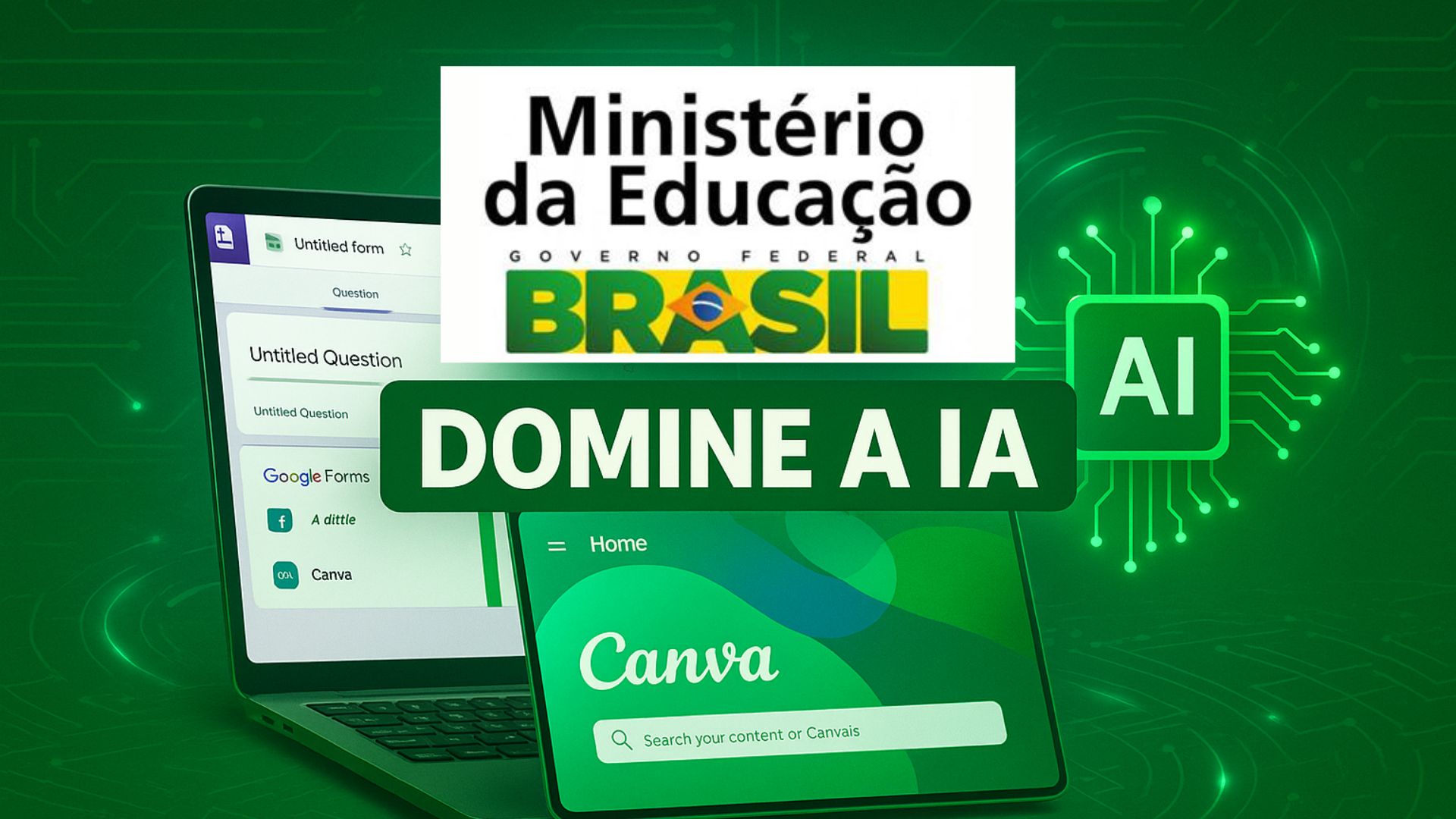
Free Course From MEC Presents Digital Tools, Artificial Intelligence, and Production of Pedagogical Materials in 60-Hour Training.
The Ministry of Education opened new spots for the free distance course “Use of Digital Resources for Innovation in Pedagogical Practices”, with a workload of 60 hours and conducted through the MEC Virtual Learning Environment (AVAMEC).
The training is part of the National Strategy for Connected Schools (ENEC) and aims to support Basic Education teachers in the pedagogical use of tools such as Google Forms, Artificial Intelligence, and Educational Canva.
The slots are limited and filled on a first-come, first-served basis.
-
Surprising opportunity in the railway sector: MRS offers a free course for assistant train driver and shunter in Juiz de Fora with a R$ 1,600 scholarship, specialized training, and the chance to join one of the largest railway operators in Brazil.

-
It’s official: IFMS opens spots in free courses on artificial intelligence, drones, and app creation, expanding technological education in 2026 and preparing students for areas with high professional demand and accelerated digital transformation.
-
Senai launches an unprecedented program with Petrobras and opens 2,000 spots in free courses with recognized certification, a monthly allowance of R$ 600, and training for industrial professions that continue hiring across the country.

-
Petrobras and SENAI open 480 spots in free technical courses with a scholarship of up to R$ 858, meal allowance, and training in Mechanics, Welding, Metallurgy, and Industrial Automation to meet the growing demand of the industry and the oil and gas sector.


The initiative is primarily aimed at the public network and seeks to strengthen the digital culture in schools, in line with the BNCC and recent guidelines for the use of technology in basic education.
In a fully distance learning format, the course is self-instructive, allowing participants to organize their study schedules within the offering period.
In addition to presenting specific tools, the training aims to support the creation of digital activities, class materials, and assessment strategies that use online resources in a critical and responsible manner.
The content incorporates AI as support for pedagogical planning, and not as a substitute for teaching work.
What The Course Offers In Digital Resources
Throughout the 60 hours, the course is organized into three main units that introduce and deepen the use of digital resources applied in the classroom.
The structure is designed for those who are starting to explore these tools and also for educators who already use technology but wish to expand their pedagogical repertoire.
In the first unit, the focus is on Google Forms and Google Slides, with practical guidance for creating questionnaires, polls, quick assessments, and interactive presentations.
The idea is for teachers to learn to transform these resources into diagnostic tools, learning tracking, and student engagement.
The activities can be carried out both in the classroom and in remote or hybrid contexts.
Next, the second unit presents Artificial Intelligence tools, with usage proposals aligned with the National Common Curricular Base (BNCC).
This stage discusses examples of how AI can support lesson planning, the development of teaching materials, and the personalization of learning paths.
The module emphasizes the ethical, safe, and responsible use of technology, also highlighting the limits and the importance of teaching mediation.
The third unit addresses the production of materials in Educational Canva, with guidance on selecting templates, basic design principles geared towards education, and the use of AI resources integrated into the platform.
The goal is to support teachers in creating slides, infographics, cards, visual activities, and other materials that make classes clearer and more engaging.
Throughout the entire training, the proposal is for participants to experiment with the tools in real teaching situations.
The course encourages the construction of a digital portfolio of reusable or adaptable activities for different classes and curriculum components.
The methodology is one of autonomous learning, with materials organized in a study pathway and practical activities.
Target Audience And Profile Of Participants
The course is primarily directed at Elementary School teachers who work in public Basic Education and are beginning to use digital technologies in their practices.
Other education professionals, such as pedagogical coordinators, school managers, and teachers from other stages, can also participate.
There is no requirement for prior experience with AI, Canva, or Google Forms.
The training starts with introductory guidance and advances to more structured uses.
Interested individuals need only access to the internet and a device that allows them to follow the content on AVAMEC.
At the end, those who complete all required activities receive a 60-hour certification, issued by the AVAMEC platform, valid as continued education according to the regulations of each education network.
Workload And Organization Of Activities
The workload is distributed among theoretical content, step-by-step guidance, and practical activities applied to everyday pedagogy.
Participants can progress at their own pace, as long as they respect the offering period.
All materials are available on AVAMEC, with no need for in-person meetings.
The self-instructive model facilitates the participation of educators from different regions of the country, including those working in smaller cities or remote areas.
For this offering, MEC has made 4,350 spots available, filled according to the order of valid registration on the platform.
There is no curriculum analysis or exam, ensuring more direct access for those interested.
Due to the limited number of spots and the high demand for training in educational technology, it is recommended that interested parties enroll as soon as possible.
How To Enroll In The Free MEC Course On AVAMEC
To participate, the educator must access the AVAMEC platform, create or update their registration, locate the course “Use of Digital Resources for Innovation in Pedagogical Practices” in the internal search, and confirm the enrollment while spots are available.
With the registration validated, access to the virtual environment is granted, and the participant can already start the study pathway.





-

-

-

-

-

10 people reacted to this.