Portuguese
  Spanish


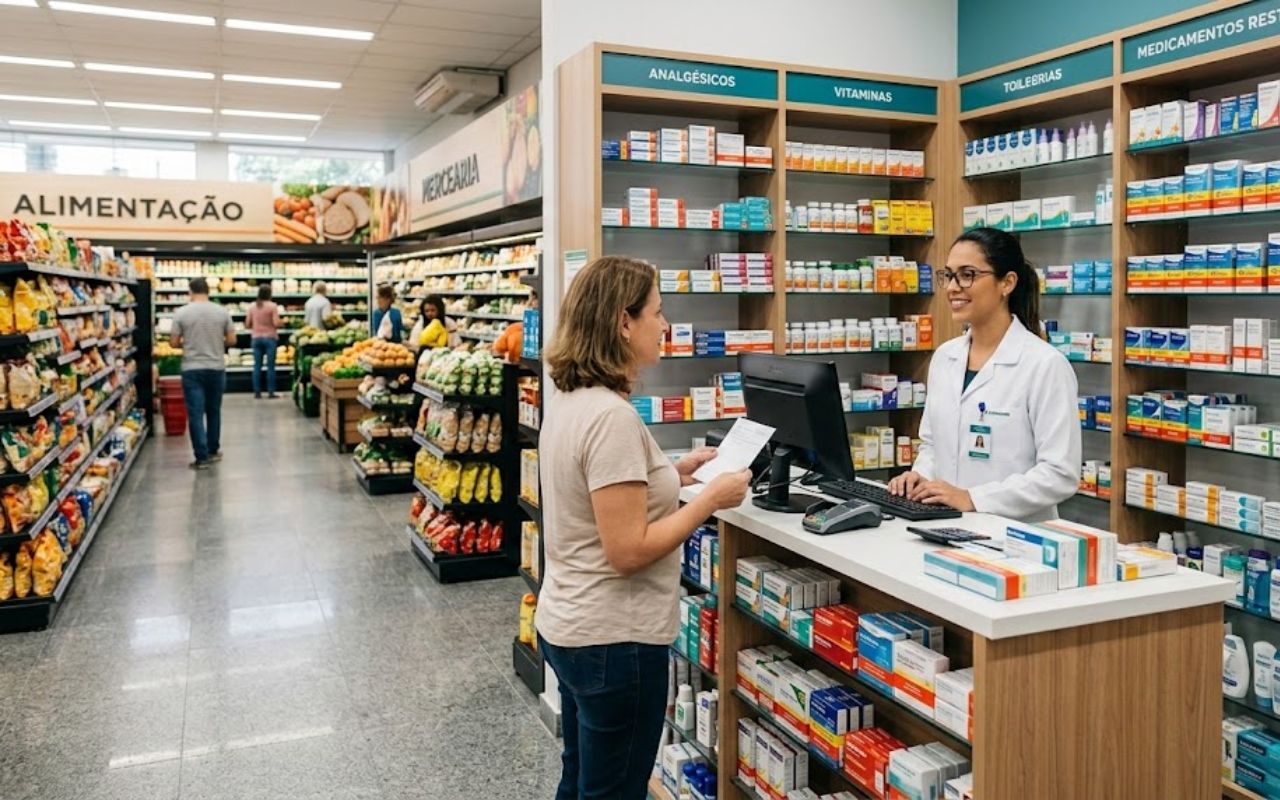

Chamber Approves Pharmacies to Operate in Supermarkets, but Maintains Control over Restricted-Use Medicines and Requires Exclusive Space.
The release of medications in supermarkets divided the House of Representatives before being approved on the night of last Monday (2).
The proposal, which had previously passed the Senate last year, now proceeds to the sanction of President Luiz Inácio Lula da Silva.
The vote took place after the approval of an urgency request, which allowed the text to be analyzed directly in the plenary, without prior processing through thematic committees.
-
Are Companies Required to Release Employees During Brazil’s World Cup Matches? Understanding Workers’ Rights

-
Brazilian Family’s Homeschooling Success Sparks International Debate: Daughters Read 30 Books Annually and Speak Multiple Languages

-
Piauí Governor Enacts Law Requiring State Contractors to Reserve Jobs for Former Inmates with Minimum Wage and Verification Before Payment
-
Providing Your Tax ID at Supermarkets: A Routine Step That Can Unlock Discounts and Rewards but Also Reveals Your Shopping Habits




What Changes with the Sale of Medicines in Supermarkets?
If sanctioned, the new rule will allow the installation of pharmacies or drugstores inside Brazilian supermarkets.
However, the sale of medications cannot occur mixed with other products.
The project stipulates that medications must be placed on separate shelves in a physically defined space, exclusive to pharmaceutical activity.
The text states:
“The installation of a pharmacy or drugstore in the sales area of supermarkets is permitted, provided that it is in a physically defined, segregated, and exclusive environment for pharmaceutical activity, independent of other sectors of the supermarket.”
In practice, it will be like a structured pharmacy within the establishment, but functioning independently of other areas.
Sanitary Rules and Mandatory Presence of Pharmacist
In addition to physical separation, the proposal establishes important requirements to ensure safety in the sale of medicines in supermarkets.
The presence of a pharmacist will be mandatory during all operating hours of the pharmacy or drugstore installed on site. Without this qualified professional, sales will not be permitted.
Another rule involves controlled-use medicines that require a prescription.
In these cases, delivery to the customer can only occur after payment, reinforcing the control over these products.
In a statement, the president of the Federal Pharmacy Council (CFF), Walter da Silva Jorge João, stated:
“The approved text reduces harm, maintaining the sanitary requirements already established in the Senate, and addresses the central points defended by the Federal Pharmacy Council (CFF).”

Arguments in Favor of Selling Medicines in Supermarkets
Among the supporters of the proposal is Deputy Hildo Rocha (MDB/PA). For him, the measure can benefit consumers by increasing competition in the sector.
The congressman declared:
“It’s like having a pharmacy inside the supermarket. It’s a pro-consumer decision because the trend is to increase competition and lower prices.”
According to this view, the ability to sell medicines in supermarkets tends to pressure prices and facilitate access for the population.
Criticism and Concerns about Self-Medication
Despite the approval, not everyone agrees with the initiative. Deputy Maria do Rosário (PT/RS) expressed opposition to the project and warned of risks to public health.
She stated:
“Pharmacy and medication are health equipment. The supermarket cannot become a pharmacy, as we are encouraging a culture of self-medication.”
The main concern revolves around the increase in self-medication, a practice that can lead to complications when there is no proper guidance.
Next Steps for the Project
With the approval of the Chamber, the text authorizing medications in supermarkets now goes to the analysis of President Luiz Inácio Lula da Silva, who may sanction or veto the proposal.
If it receives presidential approval, interested supermarkets will need to adapt to the structural and sanitary requirements set forth by law.
Meanwhile, the debate around access, competition, and safety in the use of medications remains prominent in the political and health sector landscape.
Source: Olhar Digital