Portuguese
  Spanish


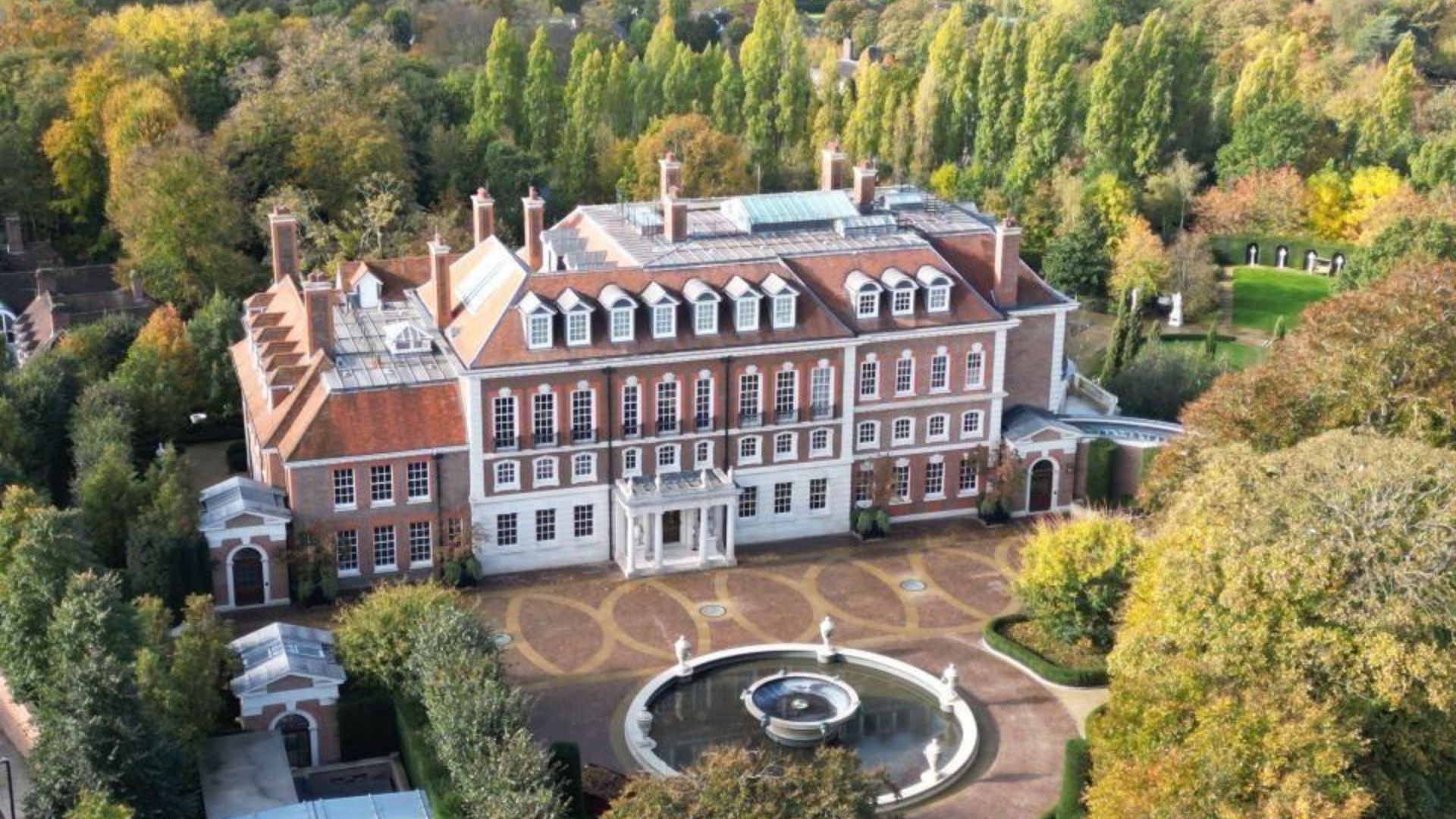

Historic mansion in Highgate boasts more square footage than the White House, underground renovation, protected structure, and a connection attributed to a Russian billionaire, in a case involving high-end real estate, offshore companies, and high-value properties in London.
The private residence Witanhurst, located in Highgate, North London, has been mentioned again in international reports for its size, the opaque ownership history, and the connection attributed to Russian businessman Andrey Guryev, founder of PhosAgro and target of US sanctions.
After renovations described by The New Yorker magazine, the mansion now encompasses about 90,000 square feet of internal area, equivalent to approximately 8,300 square meters, making it one of the largest private residential properties in the British capital.
The square footage surpasses the area of the main residence of the White House in Washington, estimated at about 55,000 square feet by the White House Historical Association, a reference used to gauge the scale of the London construction.
-
Over 1,060 Wheelchairs Created from 102 Tons of Aluminum Tabs Collected Across Brazil, Turning Waste into Mobility Nationwide

-
Explore the History, Architecture, and Unique Features of Arena Fonte Nova, One of Brazil’s Most Iconic and Modern Football Stadiums

-
Indian School in Assam Expands Enrollment by Accepting Plastic Waste as Tuition Payment
-
Parintins Festival 2026 Celebrates Amazonian Tradition with Three Nights of Competition Between Caprichoso and Garantido, Highlighting Its Cultural Significance in Brazil


This comparison considers only the historic American residence, excluding the East and West Wings, and does not make Witanhurst a functional equivalent of a government building, as it is a private property.
Witanhurst surpasses the White House in internal area
Besides the square footage, the internal configuration of the property helps explain the public interest around the address, as the house features 65 rooms, including 25 bedrooms, a ballroom, dining room, Chinese room, billiard room, and gallery.
Part of the additional area was created in an expansion below the ground, with leisure, service, and circulation spaces that expanded the residence without proportionally altering the facade visible from the street.
According to The New Yorker, the owners built under the front area of the house a structure of more than 40,000 square feet, described by the magazine as an “underground village.”
This area includes a 70-foot-long pool, a cinema with a mezzanine, massage rooms, sauna, gym, staff quarters, and a garage with capacity for 25 vehicles, as reported by the article.
Underground village expands historic mansion in London
In Highgate, a traditional neighborhood located north of central London, Witanhurst occupies a site associated with historic residences, tree-lined streets, and views of Hampstead Heath, one of the best-known green areas in the British capital.
The current building was erected between 1913 and 1920 for Arthur Crosfield, an English businessman in the soap industry, in a project signed by architect George Hubbard and conceived within the standards of the great urban residences of the time.
Designed in Queen Anne style, the property preserves architectural elements linked to the early 20th century and maintains characteristic environments of houses intended for receptions, social gatherings, and large private events.
The ballroom, about 70 feet long, is among the main internal spaces of the mansion and highlights the property’s original function as a venue for social events of the British elite.
Aristocratic past marked address in Highgate
Throughout the 20th century, Witanhurst hosted prominent guests in British public life, according to records cited by The New Yorker in a report on the history and ownership of the property.
The magazine reported that parties held at the address brought together authorities and members of the British royalty, including Elizabeth in 1951, before her coronation as Queen of the United Kingdom.
This history led the mansion to be associated with the London elite decades before recent renovations, when the property was still used as a space for receptions and social events.
After this period, the property’s trajectory went through a phase of abandonment and deterioration, with irregular occupation starting in the 1970s, according to the American magazine’s report.
The house came to present structural problems and signs of wear, such as leaks, floor damage, and empty spaces, during a period when the preservation of the property failed to keep up with its architectural importance.
Purchase by offshore company increased the mystery
In 2008, Witanhurst was sold for 50 million pounds to Safran Holdings Limited, a company registered in the British Virgin Islands, according to information published by The New Yorker.
The purchase by an offshore company made it difficult to immediately identify the final beneficiaries publicly and led residents, journalists, and real estate agents to question who controlled the property.
The interest increased because the renovation involved an unusual expansion for a traditional residential area, with prolonged construction activity and excavations associated with the creation of underground spaces.
The New Yorker linked the property to the family of Andrey Guryev, a Russian businessman associated with PhosAgro, a company in the fertilizer sector that became one of the largest in the segment in Russia.
In the report, the magazine cited documentary and business connections involving people close to the billionaire’s family circle, although the offshore structure has made it difficult for years to directly identify the owners to the public.
Connection with Andrey Guryev appears in US records
The association between Guryev and the address also appears in records of the United States Department of the Treasury, through the sanctions database maintained by the American agency.
The agency’s list identifies Andrey Grigoryevich Guryev as a Russian citizen sanctioned in the program related to Russia and includes Witanhurst, in London, as well as the address 41 Highgate West Hill among the data associated with him.
In the British real estate market, the purchase of properties by companies registered outside the United Kingdom has become a topic of public debate, especially when it involves high-value properties and final beneficiaries who are difficult to identify.
The New Yorker report pointed to Witanhurst as an example of this debate, addressing asset transparency, foreign capital, and high-end properties acquired through business structures that are not easily accessible to the public.
Renovation generated complaints in Highgate
During the renovation, Highgate residents reported being disturbed by the movement of trucks, workers, noise, and prolonged excavations, as reported by The New Yorker.
The construction drew attention because it took place in a residential area known for historic buildings and tree-lined streets, while the property maintained a preserved facade and expanded its area below street level.
This type of expansion is known in the United Kingdom as an “iceberg home,” an expression used to describe properties where a significant part of the built area is hidden beneath the surface.
In cities with scarce land and preservation rules, such as London, underground renovations have been adopted by owners of high-end properties seeking to expand internal areas without significantly altering the facade.
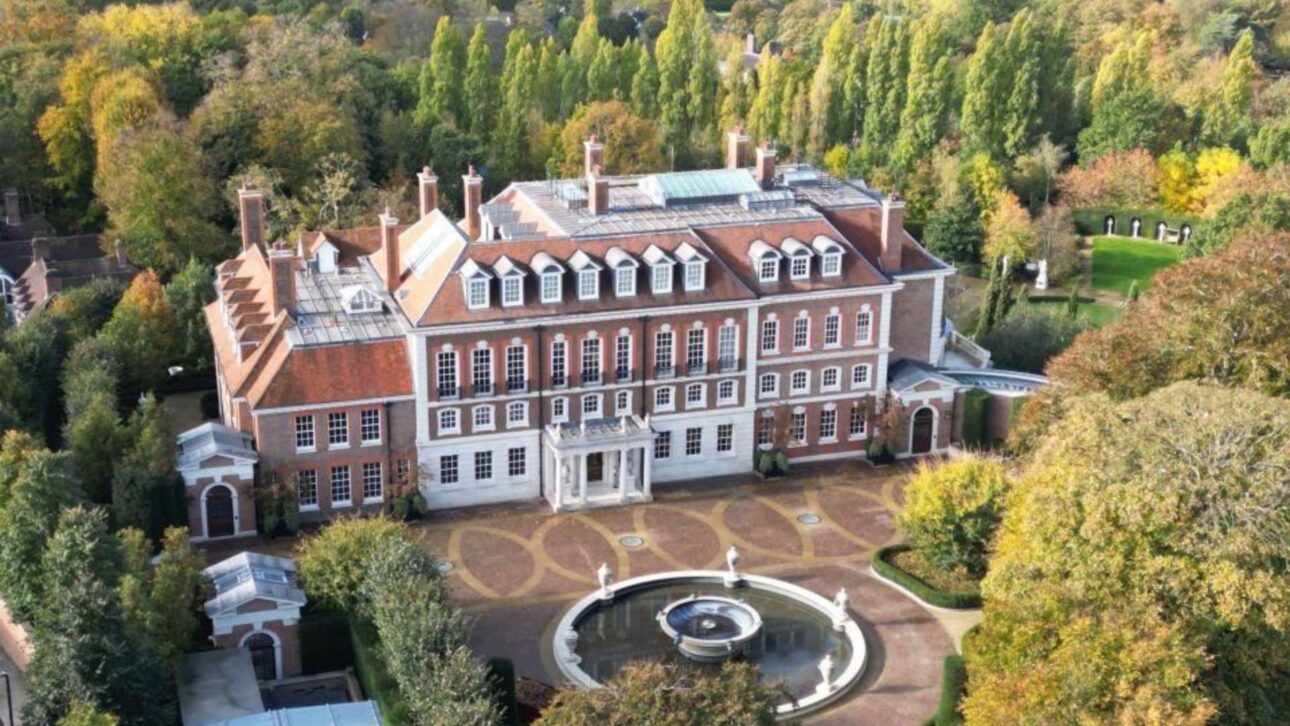
Iceberg mansion became an example of underground luxury
In the case of Witanhurst, the underground expansion gained attention for involving a historic house, a large plot, ornate environments, a high estimated value, and a property structure marked by companies registered outside the UK.
The combination of these factors made the mansion appear in international reports on the luxury real estate market in London, especially in topics about underground properties and asset transparency.
The New Yorker reported that real estate agents estimated the value of the completed house at around 300 million pounds, a level that would place Witanhurst among the most expensive residential properties in the British capital.
Even without being open to visitation, the residence continues to be mentioned because of its size, its underground renovation, and the historical difficulty of publicly identifying the complete chain of ownership.
Protected heritage requires care in renovation
Witanhurst is classified by Historic England as a building of architectural and historic interest, a condition that imposes specific requirements for interventions, renovations, and preservation of original elements.
This protection helps explain the complexity of the work, which needed to reconcile the restoration of old parts with the creation of new spaces below the ground, maintaining the external appearance of the mansion.
The property remains a standout case in the London real estate market for combining a historic residence, a size larger than the White House, an extensive underground area, records linked to Andrey Guryev, and debates about transparency in high-value properties.