






 Portuguese
  Spanish


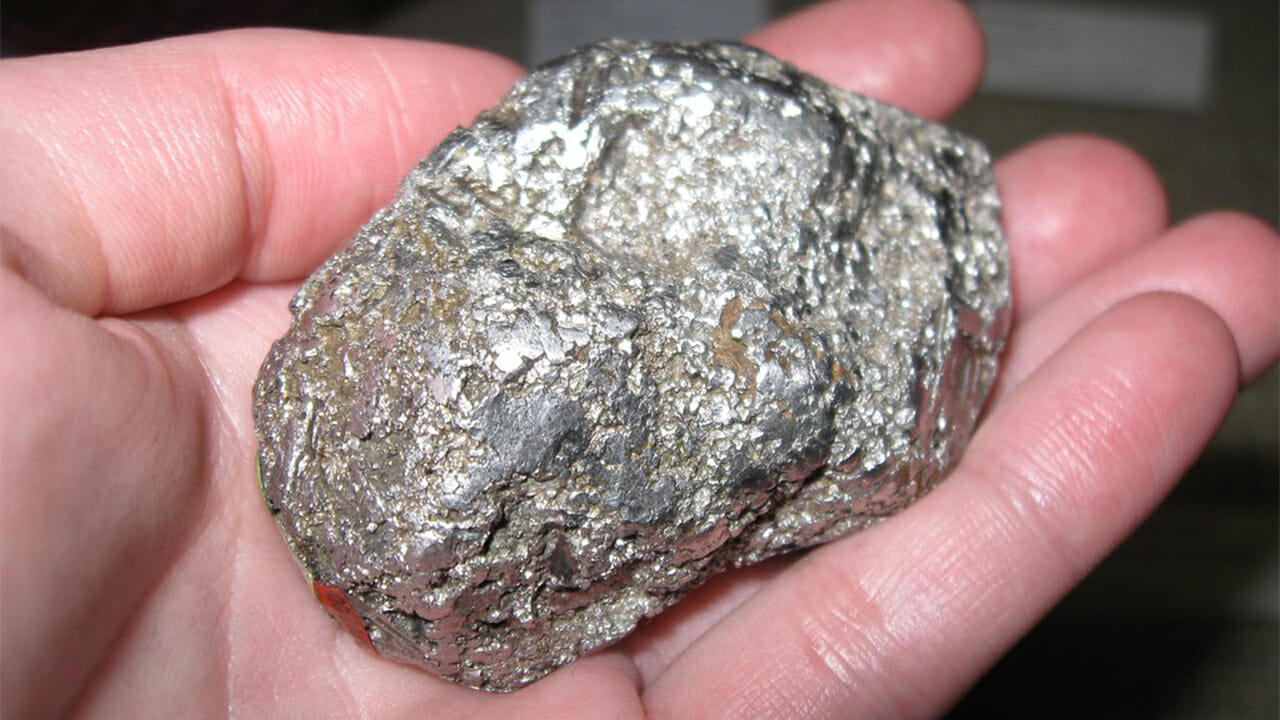

Scientists Were Testing the Resistance of the Metal, with a Microscope When They Noticed That the Fragment Regenerated Its Cracks Automatically.
Imagine a future where a cracked or damaged metal spontaneously regenerates. Sounds surreal? Thanks to an unexpected discovery, this fantasy may become reality, opening new avenues in engineering and transforming our relationship with materials we use daily.
We have always associated metals with characteristics such as conductivity, durability, and high melting and boiling points. Now, imagine adding “self-regeneration” to that list. In a discovery that could mark a new era in engineering, scientists observed a metal automatically regenerating, a phenomenon that, if well understood and controlled, could revolutionize the way we manufacture and use countless structures.
Platinum Fragment with a Thickness of 40 Nanometers “Healed” Its Cracks in Minutes
This incredible discovery occurred during an experiment conducted by researchers at Sandia National Laboratories and Texas A&M University. They were testing the resistance of the metal, using a transmission electron microscope. In it, a 40-nanometer thick platinum fragment was suspended in a vacuum and pulled 200 times per second.
-
Ancient Ritual Circle, Hidden for 5,000 Years, Discovered in Scotland’s Machrie Moor Using Sensors, Revealing a “Phantom Stonehenge”

-
Engineers Develop Fridge-Sized Machine to Produce 95-Octane Synthetic Fuel from Air and Water, Aiming to Sustain Combustion Engines Without Oil
-
Two-Armed Robot Uses AI to Reassemble Destroyed Pompeii Frescoes, Solving an “Impossible” Puzzle
-
New Law in Brazil Requires Breaks for Type 1 Diabetes Management at Work, School, and Public Exams


This continuous stress eventually created small cracks, known as fatigue damage. Usually, this damage leads to equipment and structural failure. But, to everyone’s surprise, after 40 minutes of testing, the platinum began to regenerate, merging and repairing itself on a microscopic scale.
Brad Boyce, a materials scientist, described the experience to ScienceAlert, stating that it was astounding to witness this self-healing firsthand.
The Possibilities of Metal Self-Regeneration
The exact conditions that led to the self-healing of the platinum are still unknown, as is the possibility of replicating this phenomenon. However, the existence of metals with this ability could revolutionize various fields of engineering, from the maintenance of bridges to the repair of smartphones.
Although this is the first time such a process has been observed in action, previous research conducted in 2013 had already predicted the self-healing of nanocracks in metals, thanks to tiny crystalline grains within them that alter their response to stress.
Another notable point is that the metal self-regeneration occurred at room temperature. One possible explanation is the occurrence of a process called cold welding, which happens when metal surfaces come close enough for atoms to intertwine. This phenomenon is even more likely in pure metals and in a vacuum, which raises the question: could this process be replicated in common metals and typical environments?
Michael Demkowicz, one of the materials scientists involved in the research, expressed his excitement about the discovery, hoping it will encourage other researchers to consider that, under the right circumstances, metals can surprise us with previously unseen behaviors.
With this discovery, we eagerly anticipate a revolution in the way we perceive and use metals, embarking on a future where materials can be as resilient as life itself.






