






 Portuguese
  Spanish
  3 min of reading
  0 comments


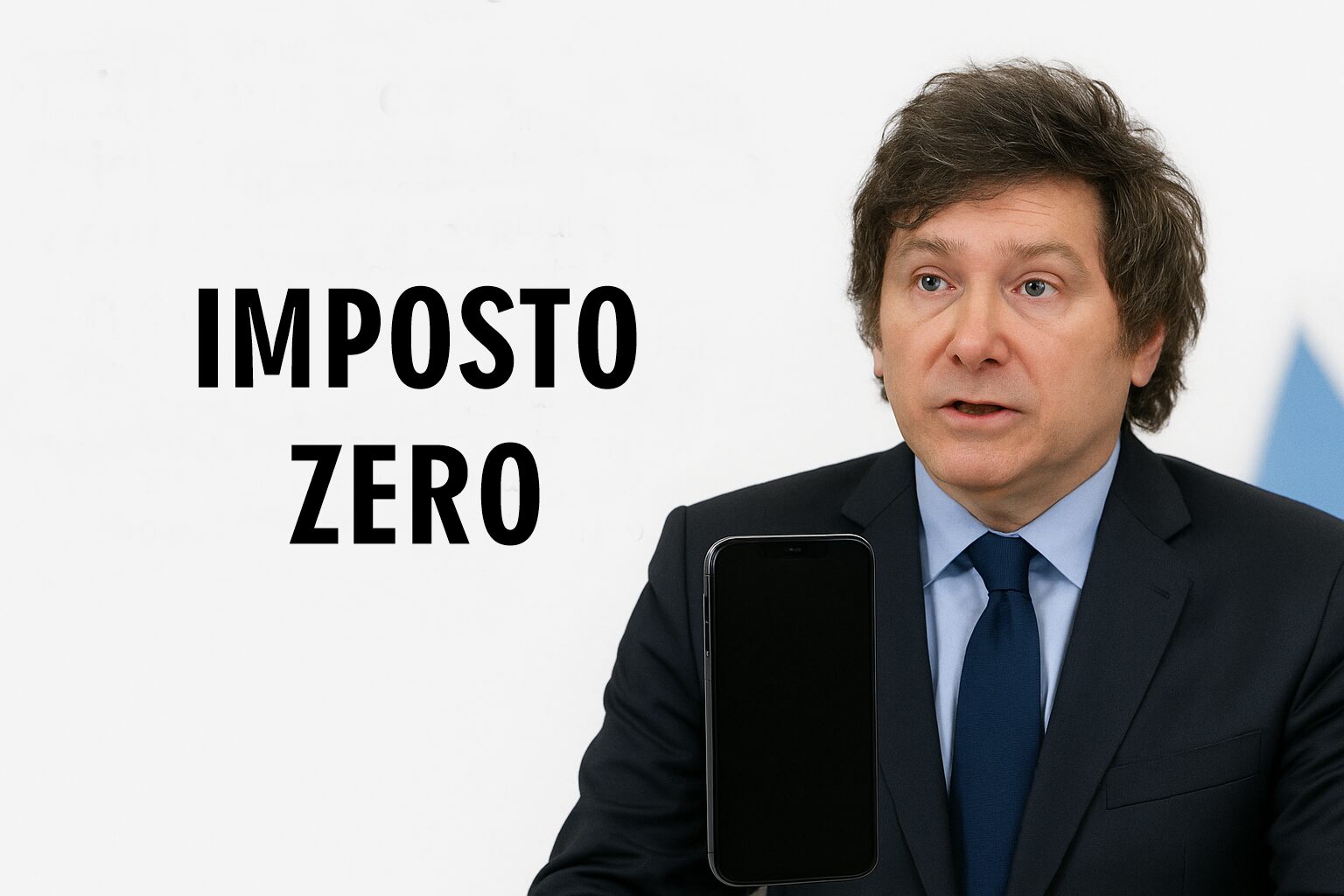
Measure Is Part of President Javier Milei’s Reform Agenda and Provides for Total Cuts on Cell Phone Tariffs by January 2026, with Direct Impact on Consumer Prices.
The Argentine government led by Javier Milei announced this Tuesday (13) the gradual elimination of import tariffs on cell phones.
The measure, according to presidential spokesperson, Manuel Adorni, is part of a strategy to reduce the tax burden and align local prices with those practiced in other countries.
The decision is part of the reform package promised by President Javier Milei at the beginning of his administration.
-
A collective political will that allows for the creation of a cross-party and state agenda, focusing on concrete actions such as reducing the Custo Brasil; commitment to fiscal balance; feasible goals that enhance professional qualification and the adoption of a myriad of incentives aimed at innovation.

-
PIX from BRICS becomes reality: BRICS Pay advances to enable international payments without the dollar; system inspired by Pix and based on blockchain could move up to 20% of global trade by 2030, while bloc countries already account for 40% of the world economy.

-
After a motorcycle accident at 17, a Bahian agronomist borrowed R$ 40 from his mother, transformed a homemade granola recipe into Tia Sônia, and reached R$ 120 million, targeting São Paulo with 300 tons monthly and 80 products.

-
The CNPJ made up only of numbers is numbered in Brazil, and the Federal Revenue has already set the changeover for July 2026: the new model will mix letters and numbers to avoid exhausting combinations and also prepare the ground for tax reform taxes.



The change will be implemented in two phases, with a direct impact on consumers and the electronics trade in the country.
Reduction in Two Phases
According to Adorni, the first phase of the plan will immediately reduce the import tariff on cell phones from 16% to 8%. The decree with the new rule is expected to be published by the end of the week.
In the second phase, scheduled for January 15, 2026, the taxes will be eliminated. “Today, a 5G technology cell phone in Argentina costs double what it does in Brazil and the United States,” said the spokesperson during an interview at the Casa Rosada.
Adorni stated that the current situation is so unfavorable that many Argentines prefer to travel to other countries just to buy cell phones. “It is such a ridiculous situation that there were people who would pay for a plane and hotel just to buy something as basic as a cell phone in another country. And even then, it was cheaper than buying it in Argentina,” he declared.
International Price Comparison
During the announcement, Adorni presented data on the cost of high-end cell phones in different cities.
In Argentina, the average price quoted was US$ 2,566. In other places, prices are much lower: Madrid (US$ 1,260), Santiago (US$ 1,147), London (US$ 1,143), and New York (US$ 1,011).
In addition to cell phones, the government also intends to reduce internal taxes on imported TVs and air conditioning units. The current rate of 19% will be halved to 9.5%.
Products manufactured in the Tierra del Fuego region will also benefit from total tax exemption, according to the spokesperson.
Measures Also Include Consoles
Another point of the announcement was the reduction of import taxes on video game consoles, which will drop from 35% to 20%. The goal, according to the government, is to expand access to electronic products and reduce the final cost to consumers.
With all these changes, thegovernment expects a decrease of at least 30% in the prices of imported electronics in the country.
Adorni believes this should also help reduce smuggling and theft of cell phones.
During the one-year government review, President Javier Milei reaffirmed the commitment to deep reforms in Argentina. Among them, he cited changes in the tax system, labor laws, social security, and the penal code.
“As promised by President Javier Milei at the beginning of his government, as the fiscal surplus consolidates, we will continue to lower taxes,” Adorni stated.
The Argentine government continues with its deregulation agenda, promising to transform the country’s economic structure in the coming years.







Be the first to react!