Portuguese
  Spanish



With Minas Gerais Leading Fertilizer Production, Brazil Can Drastically Reduce Its Dependence on 85% of Foreign Inputs
The Brazilian agribusiness, a key component of the national economy, faces a critical challenge: dependence on imported fertilizers, which currently account for 85% of all inputs used in the sector. This vulnerability to fluctuations in the international commodity market has spurred the need to seek alternatives to ensure the country’s autonomy. In this scenario, Minas Gerais stands out.
In this context, Minas Gerais emerges as a state with the potential to lead a revolution in the sector, as highlighted by the president of the National Union of Fertilizer Raw Material Industry (Sinprifert), Bernardo Silva.
Minas Gerais: A Pillar in Fertilizer Production
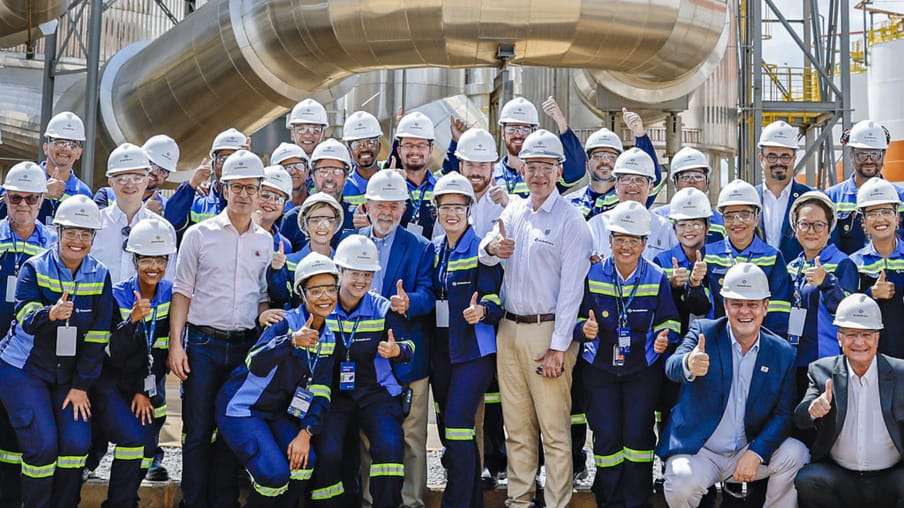
Minas Gerais is already recognized as the main producer of fertilizers in Brazil and Latin America. According to Silva, the state not only has the largest fertilizer industrial park in the country but also attracts the necessary investments and technologies to boost the sector.
-
California’s Almond Industry Consumes Over 4 Trillion Liters of Water Annually Amid Drought, Relies on Trucked-In Bees for Pollination

-
India’s Sugar Export Cuts and Ethanol Shift Amid El Niño Threat Could Impact Global Prices and Stocks

-
Quarantine Pest Threatening Palm Trees Puts Brazilian Authorities on Alert, Prompts Monitoring at University of Taubaté and Potential Control Measures Across São Paulo
-
Global Alert: Report Finds 159 Pesticides in Coffee Beans Sold in Europe, Posing Serious Risks to Millions of Farm Workers



Moreover, it houses the largest phosphate reserves and also has a significant production of potassium, both essential inputs for fertilizer manufacturing.


The state is also already investing in new projects, such as the production of nitrogen fertilizers, which reinforces its leadership role in this market. However, for Minas Gerais to truly consolidate this position, it is necessary for the state to take a leading role in federal political discussions, something that, according to Caio Coimbra, Deputy Secretary of Economic and Agricultural Policy of the Minas Gerais Department of Agriculture, is already underway.
Agribusiness: National Fertilizer Plan and Goals for 2050
The Brazilian government has set ambitious goals with the National Fertilizer Plan (PNF), which aims to reduce dependence on imported fertilizers to 50% by 2050.
Although bold, the goal is deemed achievable by sector experts, including the president of Sinprifert himself. To reach this target, Silva emphasizes that it requires “attitude, focus, and a sense of urgency.”
Minas Gerais, aligned with the PNF goals, has already taken concrete measures. An example is attracting the EuroChem Group, one of the largest global players in the fertilizer sector, to build a Mining and Industrial Complex in Serra do Salitre, in the Alto Paranaíba region.
This facility is designed to be integrated, covering everything from phosphate rock extraction to fertilizer distribution, and will meet 15% of national demand. The project involves investments of over US$ 1 billion and has estimated mineral reserves of 350 million tons.
Initiatives to Strengthen Local Production
In addition to investments in industries, Minas Gerais is also looking to strengthen its productive capacities through strategic partnerships.
An example is the international mission to the International Fertilizer Development Center (IFDC), aimed at consolidating partnerships to optimize fertilizer consumption in local agriculture. Among the initiatives, a notable one is the training of qualified labor, something essential for the sector’s future.
Another relevant action is the partnership with the Federal University of Viçosa (UFV) to create the MG Fertilizers Hub, linked to the Center of Excellence in Fertilizers and Plant Nutrition. This hub will be dedicated to research and innovation, focusing especially on phosphate-based fertilizers, which are essential for agricultural productivity in the state and the country.
International Collaboration and Innovation
The partnership with Harsco Environmental, an American multinational company, is also an example of how Minas Gerais is seeking innovation in the sector. Harsco donated 10,000 tons per year of agrosilicate-based fertilizers to the administration of Governor Romeu Zema, as part of an effort to improve soil correction in the state.
Agrosilicate stands out for being three times more efficient than limestone in soil correction and for containing 10% silicon, a beneficial element for the healthy growth of crops.
This type of innovation brings positive impacts not only for agricultural production but also for the sustainability of agribusiness, as it reduces the need for agricultural pesticides to combat pests and diseases, strengthening plants naturally.
Towards Independence
With so many initiatives underway, Minas Gerais is paving the way for Brazil to achieve the long-desired independence in fertilizers.
The state, which is already one of the largest producers of inputs in the country, has shown that, with focus, investment, and international collaboration, it is possible to transform the reality of the sector and reduce dependence on the foreign market.
In the long run, these actions will not only benefit the local economy but also strengthen the national agribusiness as a whole, ensuring greater security and stability for the future of agriculture in Brazil.