






 Portuguese
  Spanish


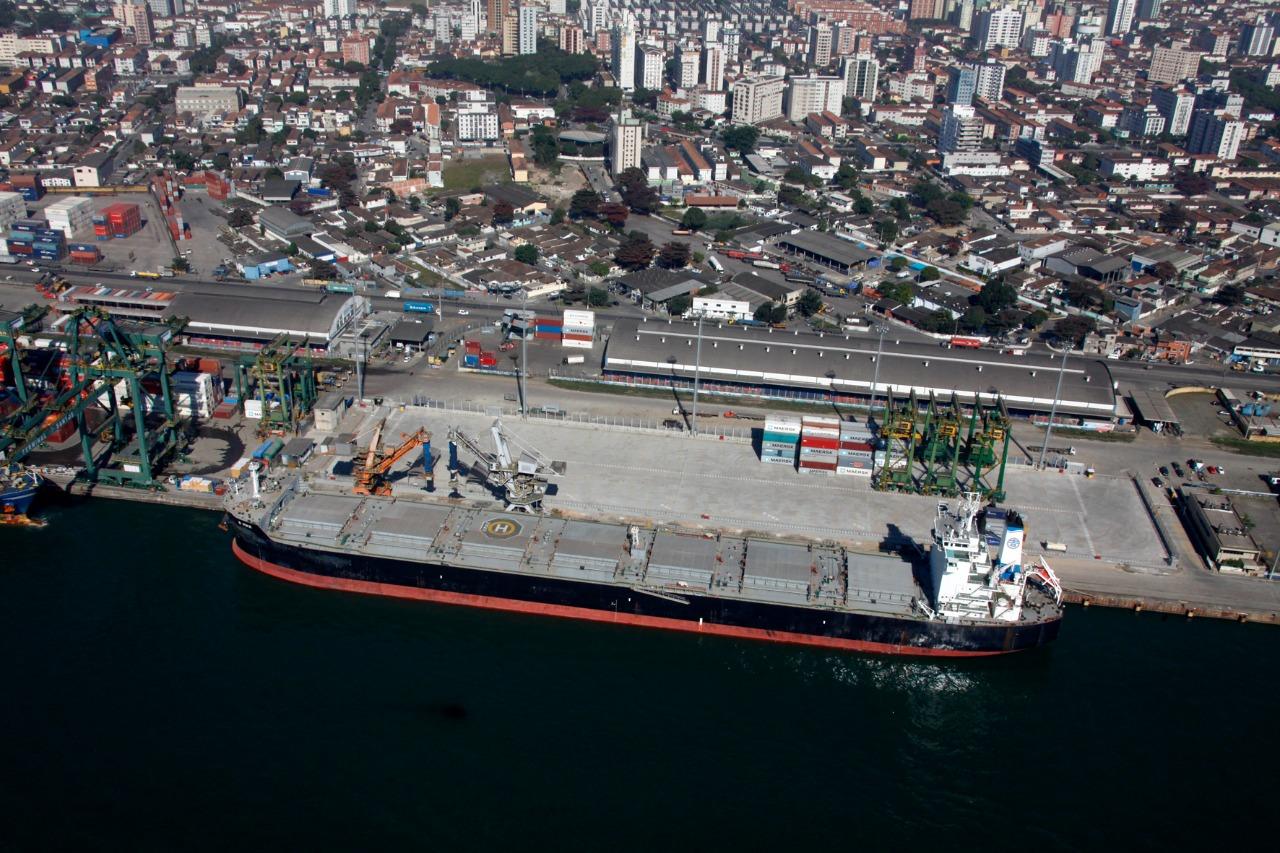

According to the MME, terminals at the Port of Santos will receive investments of R$ 420 million and are expected to be auctioned in August of this year
The Brazilian Government’s concession program hasn’t stopped! The bidding notices for the cellulose terminals at the Port of Santos (SP): STS14 and STS14A, were published yesterday (08) by the Ministry of Infrastructure – MME. In addition to these, another 15 port terminals will be auctioned this year by the Government.
Also Read
- 36 Oil Fields Idle in Brazil Due to Pandemic
- Multinational Hires Mariners for Embarkation in Sao João da Barra, RJ
- Bricklayer, Welder, Operator, and Many More Job Vacancies to Meet Construction Works on This Day 08
- Amaggi with Job Openings for Helpers, Electricians, Mechanics, Technicians, Engineers, and More on This Day 09
The contracts are expected to generate private investments of 420 million reais at the Port of Santos. The concession contract will last for 25 years, and the expectation is that the assets will be auctioned on August 28.
-
Microsoft Lays Off 4,800 Employees, Cuts 20% of Xbox Staff Amid AI Pressure on Major Tech Firm

-
Brazil’s ANP Opens 86 New Oil Blocks in the Equatorial Margin, Expanding the Amazon River Mouth Frontier

-
Warren Buffett’s Lesson: How Discipline, Extra Income, and Small Investments Can Transform Your Financial Future
-
Brazilian Startup Turns Coffee Grounds into Plant-Based Leather, Cutting Water Use by Over 50 Times for High-Impact Sustainable Fashion




This is the first major milestone for implementing a new logic for optimizing the use of areas. The Port of Santos will also see an expansion of rail access, as the transportation of cellulose at these terminals will be 100% by rail.
With the concession of the port areas of the Santos Port Authority, Brazil has much to gain! The Port of Santos is already one of the largest cellulose producers in the world and will have its cargo handling capacity increased to 5 million tons per year. Cellulose has the highest annual growth rate!
“The publication of the bidding notices is the first major milestone for implementing a new logic for optimizing the use of areas at the Port of Santos. The new strategy for the Port is the clustering of operations, with economies of scale through concentrating operations of the same type in specific areas of the port,” evaluates the National Secretary of Ports and Waterway Transportation, Diogo Piloni.
Moreover, he argues that with the structural improvements expected for the rail access that will be implemented, there will be greater integration with the lines of rail concessionaires that connect to the port, which have been the subject of billion-dollar investments. “The transportation of cellulose at these terminals will be 100% by rail,” he emphasizes.
TERMINALS – The STS14 terminal, which has an area of 44.5 square meters, will be served by two berths located at the public quay of Macuco, with a total length of around 1,000 meters. The future tenant will need to make investments, such as building a new warehouse and acquiring gantry cranes to facilitate the rail unloading of a train consisting of 67 cars with 88 tons each, in a maximum of 8.5 hours, for example.
On the other hand, the winner of the STS14A terminal, with an area of 45.1 square meters, in addition to building a new warehouse and making investments that allow the same rail unloading as the other terminal, will also need to fund equipment that enables shipping dispatch from the warehouse to the quay of at least 25 thousand tons per day.
CELLULOSE – Brazil is one of the largest producers of cellulose in the world, being this the product with the highest annual growth rate at the Port of Santos. After investments in the terminals, the movement of this type of cargo is expected to jump to five million tons per year.

Check Below the Bidding Notices for the Port of Santos


