Portuguese
  Spanish


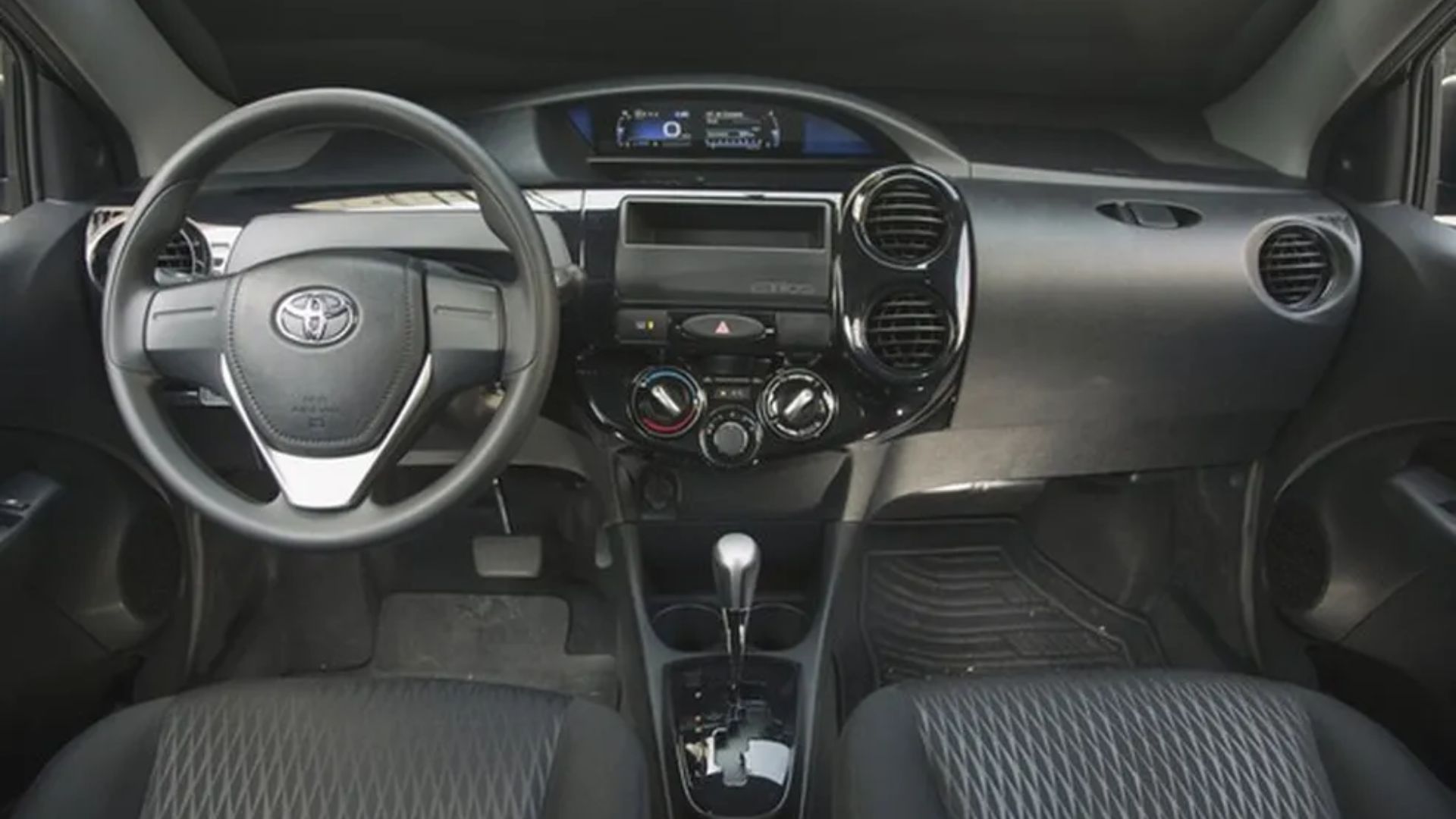

Compact Hatch Combines Low Consumption, Competitive Entry Price, and Affordable Maintenance, Remaining a Rational Alternative in the Used Market and Attracting Drivers Seeking Energy Efficiency and Predictable Costs Per Kilometer Driven.
With official consumption of up to 14.2 km/l on the highway with gasoline and a power output of 98 hp with ethanol, the Toyota Etios 1.3 ranks among the most efficient and affordable used hatches in the country.
In tables from the Brazilian Labeling Program Vehicle (PBEV), the hatch registers 12.6 km/l in the city with gasoline.
With ethanol, the averages reach 9.8 km/l (highway) and 8.6 km/l (urban), numbers that placed it among the efficiency references at the time.
-
Toyota Corolla Hybrid Achieves 17.5 km/l in City with Self-Charging System and Regenerative Braking, Offering a Spacious and Quiet Ride Without Needing a Plug

-
Land Rover Issues Recall for Airbag Connector Fault Affecting 250,857 Vehicles in the US, Alerting Drivers in Brazil for Official Notice

-
Brazilian Electric Motorcycle Once Promised 180 km Range and Affordable Price, Now Faces Uncertain Future Amid Delays and Manufacturer’s Bankruptcy
-
Chery Stockman 2026 Unveiled: Larger Than Toyota Hilux, Featuring Unique Plug-In Hybrid Diesel Engine, 3.5 Ton Towing Capacity, and 1,000 kg Payload to Challenge Traditional Off-Road Trucks


For those who drive a lot and seek predictable costs per kilometer, this is a set that caters well to daily use.
Consumption and Energy Efficiency in Focus
The results from the PBEV were obtained with the Etios hatch 1.3 manual and help explain the model’s good reputation among drivers who prioritize economy.
The calibration favors linear responses and utilizes torque at low and medium RPM, which enhances urban mobility and short trips.
In practice, the ability to replicate the official figures depends on economical driving and regular maintenance.
The powertrain’s design helps keep the RPM contained at cruising speeds, consequently reducing noise and consumption.
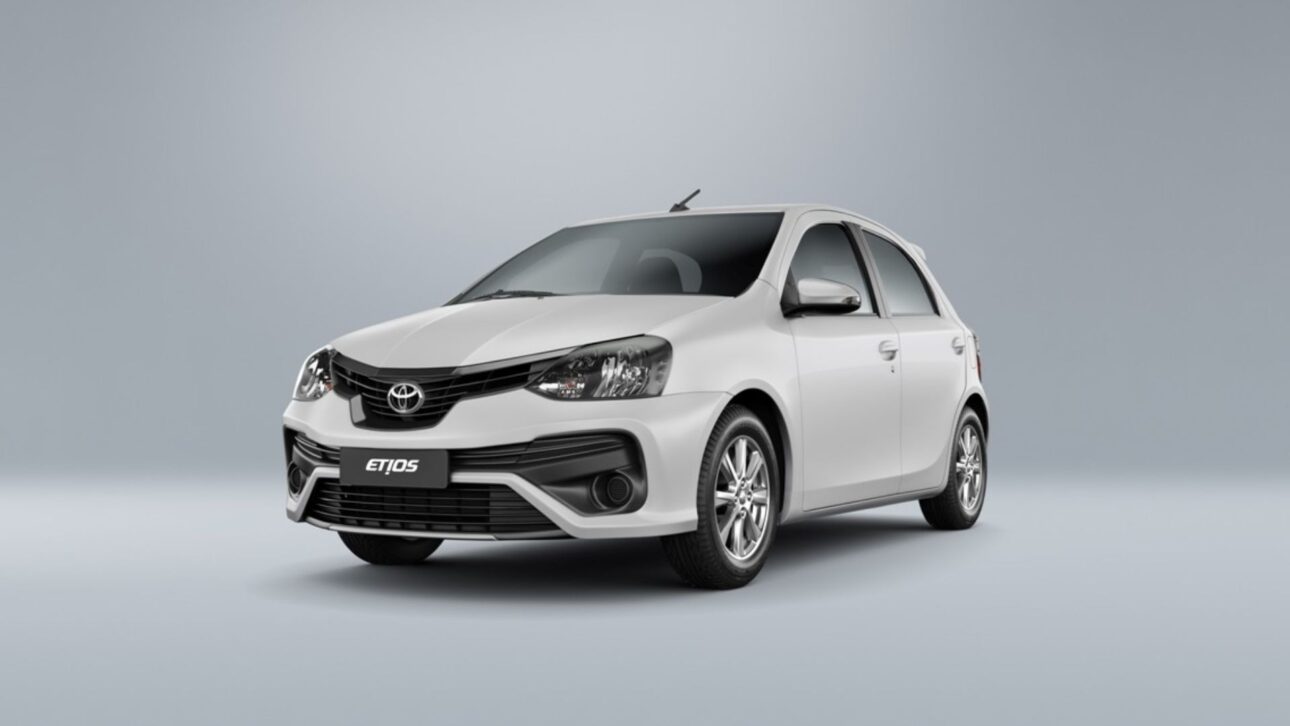
National Engine and Six-Speed Transmission
The update launched in 2016, already as the 2017 line, brought the 1.3 16V engine with dual variable timing manufactured in Brazil and the option of a six-speed manual transmission.
With ethanol, the power output is 98 hp at 5,600 RPM.
With gasoline, it is 88 hp.
The declared torque is 13.1 kgfm (ethanol) and 12.5 kgfm (gasoline), a level appropriate for the hatch’s weight and sufficient for daily use without sacrificing efficiency.
The longer transmission ratios help lower RPM at cruising speed, directly contributing to the good averages of the PBEV.
Competitive Entry Price
In the used market, examples from the early years of the Etios 1.3 — such as 2013 — appear at reference values starting from R$ 39.7 thousand, varying according to the version, condition, and sales location.
Public price surveys indicate a range close to R$ 39.7 thousand to R$ 40.6 thousand for 1.3 versions from the beginning of production, which keeps the model among the entry options with good liquidity.
It is advisable to use the reference only as a starting point and to contrast it with the vehicle’s history and actual state.
What the Simplest Versions Offer
The X and XS versions focus on the demand from those seeking low cost without sacrificing the essentials.
Electric steering, air conditioning, electric locks and front windows, and front airbags typically feature in the catalogs of those years, meeting basic comfort and safety requirements.
In some lots and model years, it is possible to find stability control and hill start assist, as well as an integrated sound system.
As the package varied, the recommendation is to confirm standard and optional items in the documentation and vehicle advertisement.
Performance Aligned to Urban Use
With a curb weight of around 950 kg, the 1.3 i-VVT-i delivers performance consistent with its proposal.
In evaluations published at the time, the acceleration from 0 to 100 km/h for the manual hatch was in the range of 11 to 12 seconds, a result comparable to aspirated compact hatches.
In traffic, the tuning of the clutch pedal and the progression of the first gears favor smooth departures and predictable accelerations.
On the highway, the sixth gear lowers RPM and noise, making driving more comfortable.
Equipment and Safety: Pay Attention to Model Year
Besides the basic package, more complete units may come with features that facilitate daily life, such as an audio system with steering wheel controls and a trip computer.
However, the presence of these items varied according to version and update cycle.
Due to this dispersion, it is prudent to check the registration certificate, the equipment label, and, when available, the owner’s manual to confirm the content of each unit.
Simple Maintenance and Wide Network
Another attractive feature of the Etios 1.3 used is predictable maintenance.
The mechanical set is well-known to the service network and retail, with the availability of filters, spark plugs, and fluids at affordable costs.
For units with an urban history, it’s worth inspecting components that typically wear, such as the clutch, stabilizer links, and suspension bushings, in addition to the condition of the cooling system.
Consulting recall campaigns by the chassis number is free and can be done through the manufacturer’s and official agencies’ channels, an important step to check for pending interventions.
Internal Space and Interior Trim Updates
Inside, the Etios prioritizes ergonomics and comfortable accommodation for four adults, with a trunk suitable for the category.
The 2016 facelift brought trim adjustments and improved acoustic insulation, maintaining the centralization of the instruments on the dashboard — a feature that divides opinions but does not interfere with reported consumption and performance results.
For those who primarily use the car in urban settings, the wide visibility and contained turning radius aid in maneuvering.
Used Market and Rivals
When compared to similarly priced competitors in the used market, the Etios 1.3 maintains its appeal in the triad of consumption, mechanical simplicity, and liquidity.
The proven efficiency in official cycles, the robustness perceived in use, and the extensive service network influence the search for well-maintained units, especially in regions with high demand for reliable compacts.
It is not a car focused on performance but on predictability of costs and low complexity, aspects valued by fleet operators and drivers who drive above average.
How to Evaluate a Good Purchase
When searching for a used Etios 1.3, it’s worth comparing the asking price and the vehicle’s condition, prioritizing documented maintenance, absence of structural accidents, and uniform operation of the engine-transmission set.
A dynamic test and electronic scan help confirm the health of systems such as fuel injection and ignition.
Regular documentation, tires in good condition, and a cooling system without leaks reduce surprises after purchase.
In the end, the decision comes down to balancing budget, mileage, and equipment content, always based on technical evidence and the history of the evaluated unit.
Between official consumption, entry price, and maintenance history, which of these factors weighs more for you in choosing a used Etios 1.3?