





 Portuguese
  English
  Spanish
  5 min of reading
  0 comments


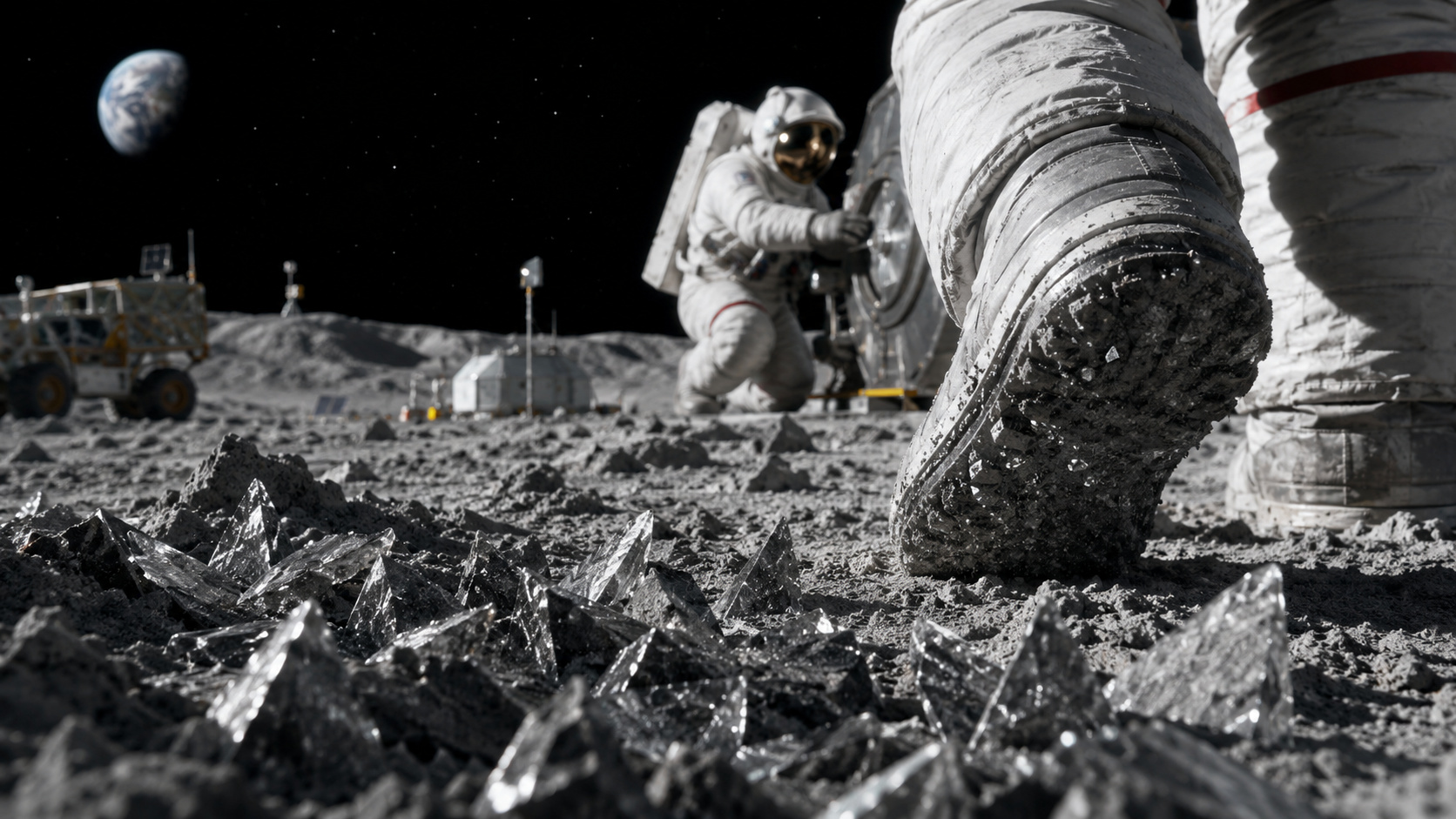
Lunar dust can damage suits, equipment, habitats, and affect astronauts. NASA and ESA consider regolith as one of the biggest challenges of the Artemis missions.
Lunar dust is currently treated as one of the most persistent problems in the return of humans to the Moon. Although it seems fine and harmless at first glance, it combines extreme abrasiveness, electrostatic adhesion, and the ability to penetrate critical systems, making it a direct threat to astronauts, space suits, vehicles, sensors, and habitats. According to NASA, lunar regolith is among the central challenges for sustainable human exploration of the Moon.
The issue gained even more importance with the advancement of the Artemis program and studies focused on establishing a permanent presence at the lunar south pole. According to the ESA, Moon dust is fine as powder, but sharp as glass, and can remain suspended longer, penetrate deeper into the body, and easily invade equipment. What seemed like mere lunar soil dirt has become one of the greatest operational risks of long-term space exploration.
Lunar dust is sharp, abrasive, and very different from Earth dust
The main difference between terrestrial and lunar dust lies in its formation. According to NASA, lunar regolith is produced by the continuous impact of rocks and micrometeorites that grind the Moon’s surface into tiny particles.
-
The American company Pyka demonstrated that its autonomous aircraft, DropShip, without a pilot on board, can drop 90-kilogram loads that land about 15 meters from the target, aiming to resupply troops in hard-to-reach locations.

-
Young Hawaiian recycles 1.8 million cans and bottles and uses the money to fund college scholarships: Genshu Price diverted 63,000 kilograms of waste from landfills and turned each five-cent deposit into university hope.
-
Scientists create “electrochemical bath” that can recover up to 95% of the power of used batteries, cut recycling costs by 56%, and transform lithium-ion waste into a new weapon against dependence on critical minerals.

-
Now it’s a reality: researchers at Unicamp develop AI capable of identifying anxiety with 80% accuracy directly on a smartwatch, paving the way for continuous mental health monitoring with low energy consumption.





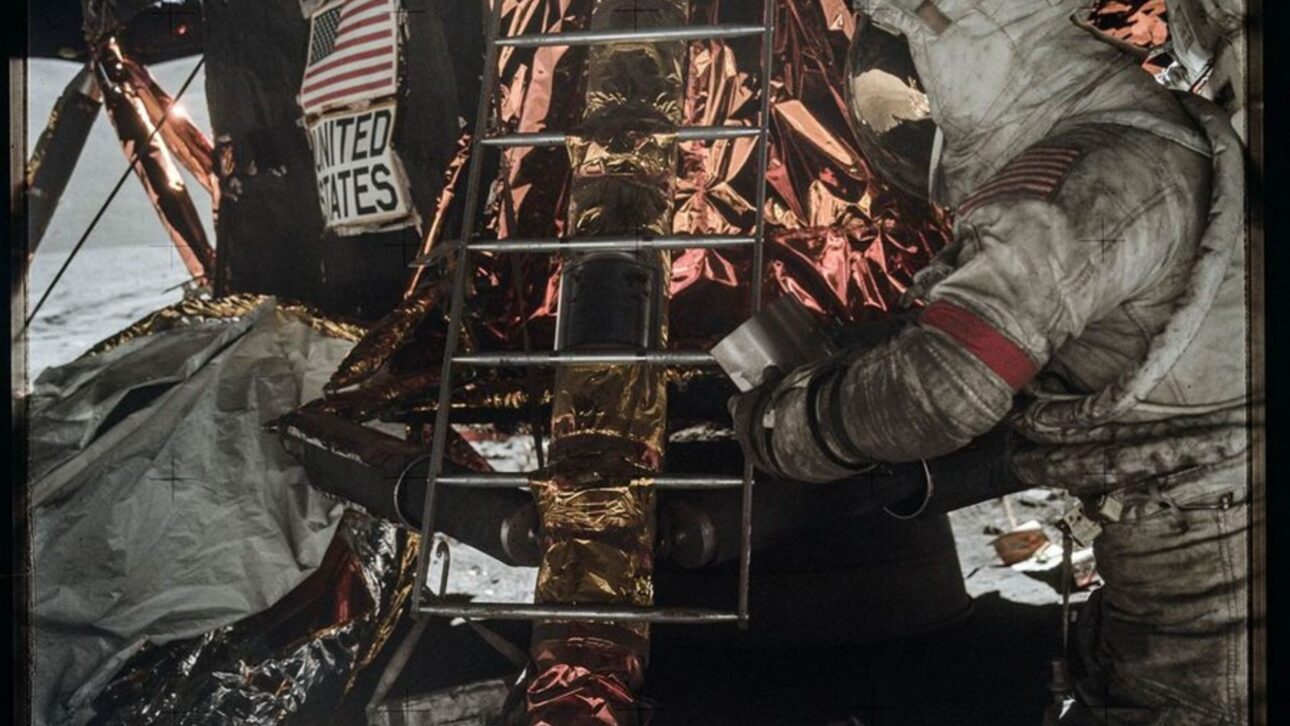
Since the satellite has neither wind nor water to wear down these fragments, the grains remain irregular, pointed, and extremely abrasive.
The ESA reinforces this description by stating that the grains are fine as powder and sharp as glass. Without atmospheric erosion and with constant exposure to solar radiation, lunar dust also tends to become electrically charged, increasing its ability to adhere to surfaces, visors, fabrics, and mechanical systems.
This combination makes the problem much greater than simple dirt accumulation. The dust not only covers objects. It sticks, wears down, enters joints, damages surfaces, and resists removal, creating a hostile environment for any prolonged human operation on the Moon.
Apollo mission astronauts have already suffered from lunar dust inside the capsules
According to NASA, astronauts from the Apollo missions have reported symptoms after inhaling lunar dust that adhered to their suits and entered the spacecraft.
Records include sneezing, nasal congestion, and irritation, a condition informally known as “lunar hay fever”. NASA itself highlights that astronaut Eugene Cernan from Apollo 17 returned to the module with his suit covered in dust, bringing the material into the cabin.


The ESA states that the reaction to lunar dust affected the 12 astronauts who walked on the Moon during the Apollo era. According to the agency, the described symptoms ranged from sneezing to nasal congestion, and in some cases, took days to disappear. The ESA also highlights that, inside the spacecraft, the dust was described as smelling like burnt gunpowder.
Although the Apollo missions were short, the current concern is much greater. Longer missions, repeated stays, and permanent habitats would increase exposure and could turn a temporary nuisance into a much more serious medical and operational problem.
Lunar regolith can destroy seals, suits, instruments, and critical hardware
According to NASA, the abrasiveness of lunar regolith directly affects space suits, seals, mechanisms, and instruments. During the Apollo program, the dust wore down astronauts’ boots, compromised vacuum seals of sample containers, and clogged mechanisms.
If the material continues to accumulate on long-duration missions, it could reduce the lifespan of essential components.
The ESA concurs, stating that lunar dust corroded layers of space boots and damaged container seals even during the Apollo era missions. The problem escalates because a future lunar base will depend on sealed structures, joints, hatches, optical systems, and life support equipment functioning flawlessly for long periods.

This means that lunar dust not only threatens comfort or cleanliness. It directly affects the reliability of infrastructure, which will be crucial for any attempt to keep astronauts working for weeks, months, or years away from Earth.
Electrostatic charge makes dust stick to everything and increases risk in Artemis missions
According to NASA, besides being sharp, lunar dust is sticky because the Moon’s soil can be electrically charged by the action of the Sun and other radiation sources. This causes the grains to behave almost like particles pulled by static electricity, adhering to surfaces persistently.
The ESA states that this charge can be so intense that the dust can levitate above the lunar surface, which further increases the chance of penetration into equipment and respiratory tracts.
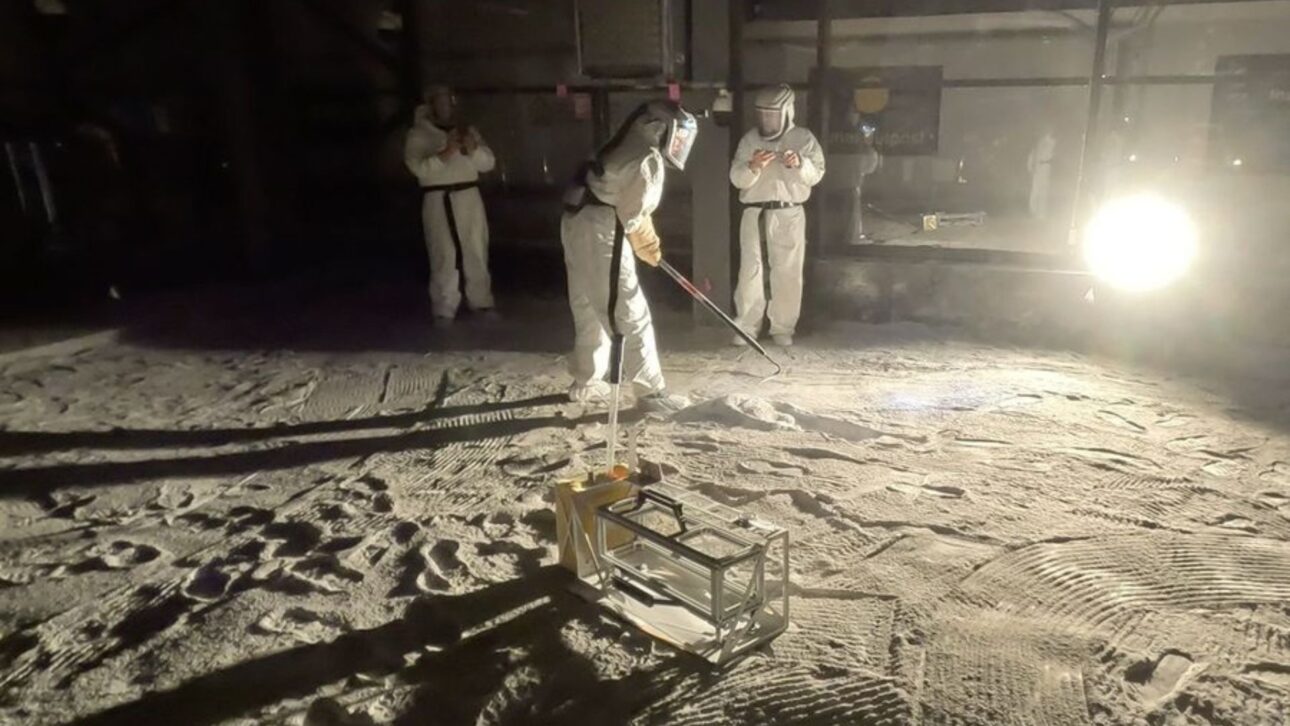
In ground operations, this means that walking, landing, drilling, or moving vehicles can spread particles over much larger areas than one would imagine in an atmosphere-less environment.
For the Artemis missions, this directly impacts visors, sensors, thermal radiators, cameras, panels, and moving mechanisms. The longer humans and robots remain on the surface, the greater the need for active mitigation systems.
NASA has already tested technology on the Moon to expel dust from critical surfaces
The most promising technological response presented by NASA is the Electrodynamic Dust Shield, or EDS. According to the agency, the system uses electrodynamic forces to lift and remove lunar regolith from surfaces like glass and thermal radiators, combating dust accumulation in critical areas.
In March 2025, NASA reported that the EDS successfully demonstrated its ability to repel lunar dust on the Moon’s surface during the Blue Ghost Mission 1 by Firefly Aerospace. The agency stated that the test proved the system’s effectiveness and reinforced its potential for future applications in solar panels, cameras, suits, helmets, and other exposed surfaces.

According to NASA itself, this advancement represents an important step towards sustaining long-term lunar operations. Instead of treating dust as just inevitable dirt, the strategy becomes to create surfaces actively capable of cleaning themselves in an environment where dust can compromise almost everything.
The greatest enemy of future lunar bases may be something microscopic and almost invisible
When it comes to returning to the Moon, the imagination usually focuses on rockets, modules, energy, mining, and habitat construction. But, in practice, one of the greatest enemies of future lunar bases may be something microscopic, light, and seemingly trivial. According to NASA, lunar dust is among the most persistent environmental challenges of human exploration of the satellite.
The ESA emphasizes that the full potential of damage to human health from prolonged exposure is still not completely known. What is already known is enough to place regolith at the center of planning for the coming decades: it is abrasive, adhesive, potentially inhalable, and hostile to infrastructure.
Before humanity builds permanent bases, establishes work routines at the lunar south pole, or transforms the Moon into a platform for deeper space exploration, it will be necessary to solve an apparently simple but technically brutal problem: preventing billions of grains of sharp dust from invading everything in their path.





Be the first to react!