Portuguese
  Spanish


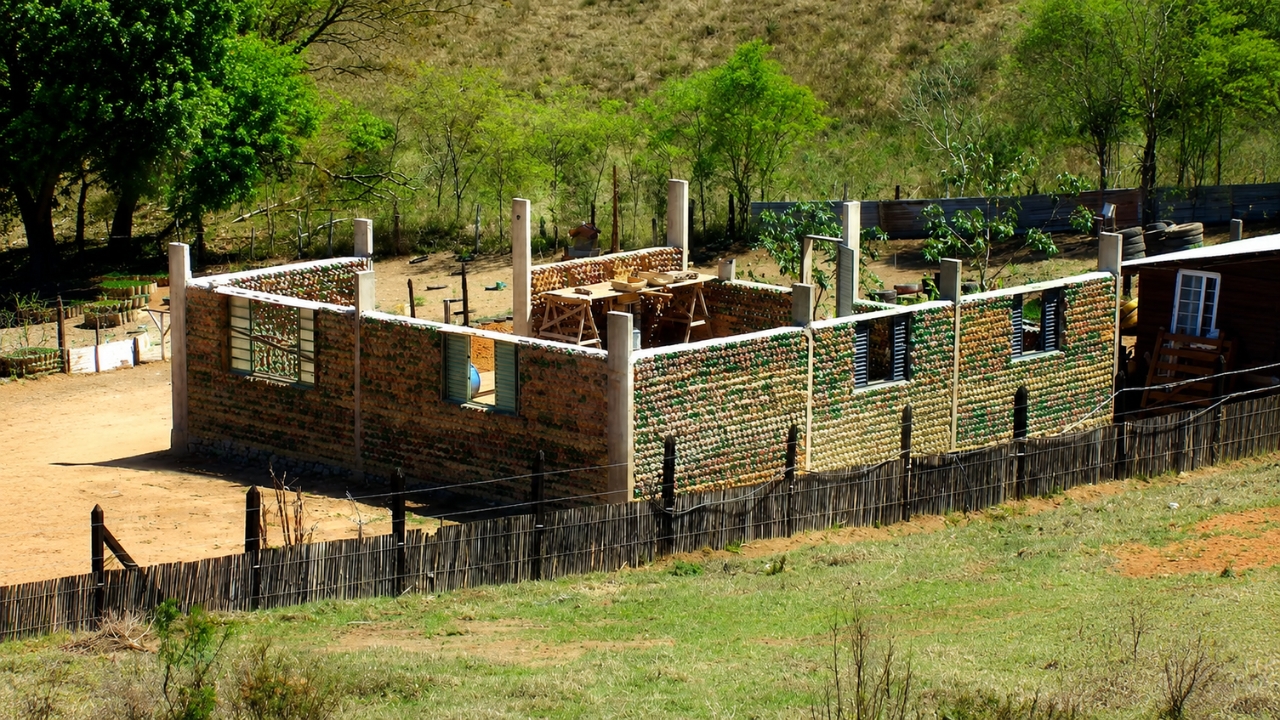

Instead of following only the path of traditional construction, a bricklayer bet on an alternative solution and used plastic bottles filled with earth to build walls, save resources, and draw attention to urban waste.
A house built with 11,000 PET bottles seems like an idea from a school experiment, but it became a real home in Minas Gerais. The detail that makes the story even more impressive is familiar: the builder’s father collected 90% of the bottles throughout the city, before that material became forgotten trash on the streets or ended up in common disposal.
The case happened in Extrema, in the south of Minas Gerais, and involves the bricklayer Ed Mauro Aparecido Morbidelli, who decided to transform a plot of land into his own house using creativity, manual labor, and a gigantic amount of plastic bottles.
More than a sustainable curiosity, the construction became an example of how urban waste can gain practical function when there is technique, patience, and willingness to do things differently.
-
Engineering Feat in Brazil: 6.4 km Tunnel and Powerful Pumps Overcome 200-Meter Elevation to Save São Paulo’s Cantareira Water System

-
Engineering Students Build Off-Grid Tiny Home with Sustainable Features and Offer Free DIY Guide
-
Historic Brazilian Championship Stadium Demolished for New Supermarket and Shopping Center Development

-
Workers excavate one of the world’s longest railway tunnels beneath the Alps between France and Italy, stretching nearly 60 km, 600 meters deep, with an investment of 11 billion euros.


The house that started with an image and became a life project
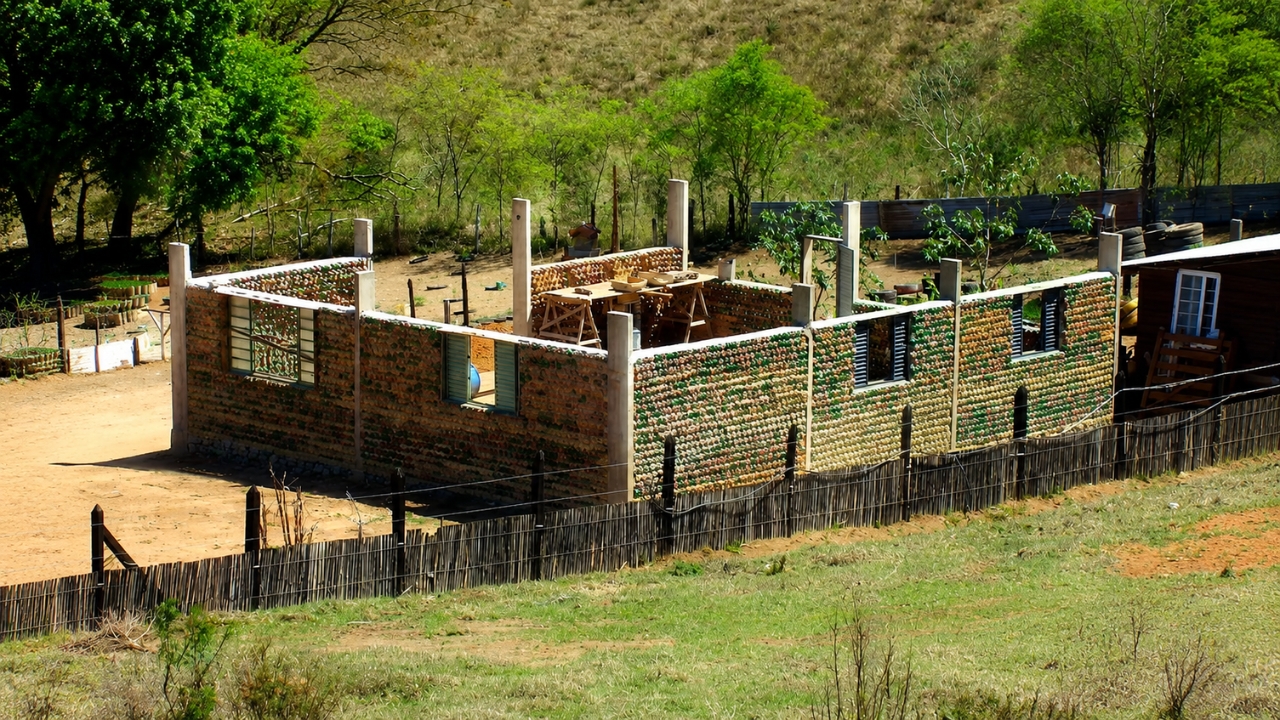
The story recorded by Pensamento Verde shows that Ed Mauro decided to start the construction in 2010, after learning about experiences of houses made with PET bottles in other places. The idea was not just to save money. He wanted to build a sustainable home and prove that a material seen as an environmental problem could be part of a solution.
The house was planned to be approximately 100 m², using the bottles as part of the walls. Instead of simply stacking empty plastic, the bricklayer filled the bottles with earth, transforming each bottle into a kind of alternative block.
The work required time. Just filling the bottles took about three months, in a tiring process dependent on the weather. With rain, the earth was harder to handle. With sun, the work progressed better, but the physical effort remained enormous.
The father who became a key part of the construction
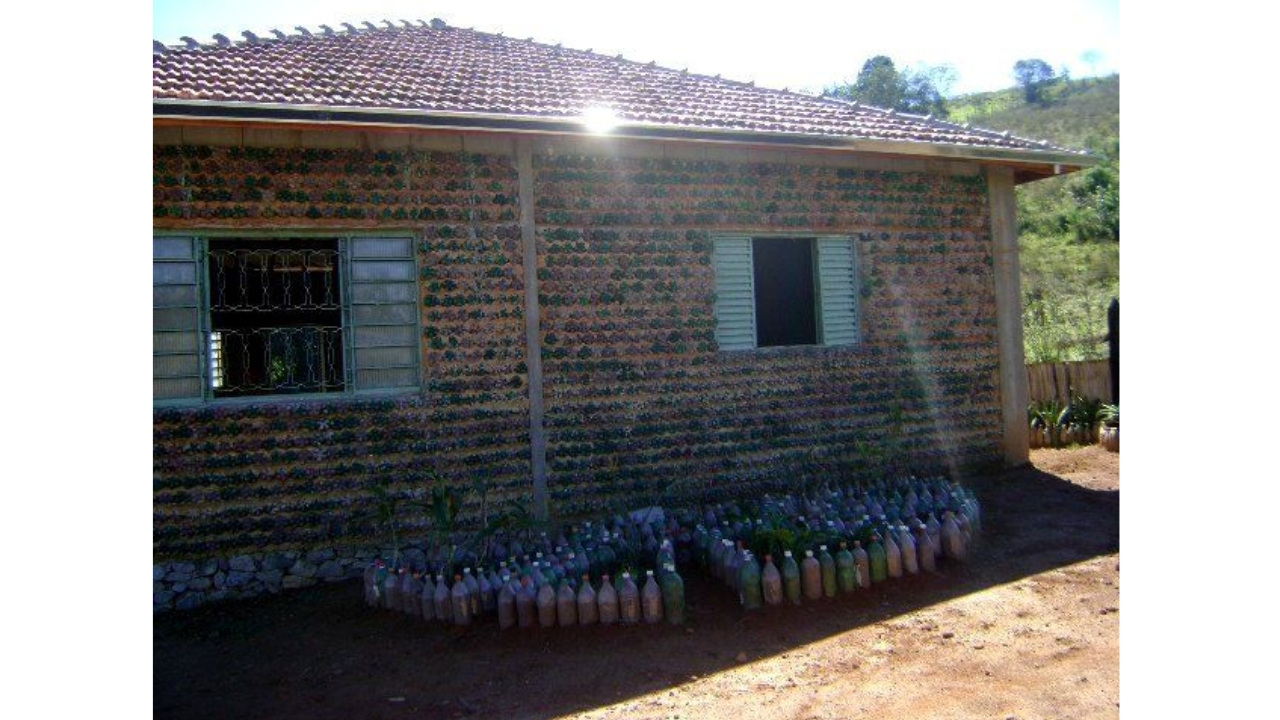
The number of bottles is striking, but the most powerful element of the story is the father’s involvement. He reportedly collected 90% of the 11,000 units used in the construction, circulating around the city and also counting on the help of acquaintances, neighbors, and friends.
This detail completely changes the weight of the narrative. It wasn’t just about gathering recyclable material. It was a family operation, almost daily, to transform waste into walls, trash into structure, and collective effort into housing.
The image is powerful: while thousands of bottles could disappear into the common flow of urban waste, they were gathered one by one to form the son’s house. The work thus gained a value that goes beyond the price of materials.
Bottles instead of bricks and an unusual construction
In practice, the proposal was to replace part of the traditional materials with filled PET bottles, combined with conventional construction elements. The base of the house still used common materials, such as cement, stone, and support structure. The main difference was in the walls.
Years later, in a report to the Instituto Claro, Ed Mauro explained that he was looking for a sustainable house and decided to study the technique before putting it into practice. The construction took about two years to complete, a timeframe that reveals the size of the challenge.
Another point mentioned by sources about the case is thermal comfort. The structure with filled bottles would help keep the house more pleasant, with a feeling of coolness on hot days and heat retention on cold days. This type of result, however, depends on execution, design, and construction conditions.
Therefore, the case draws attention but should not be treated as a simple recipe for any construction. To move from improvisation to a safe project, an alternative house needs technical evaluation, respect for local regulations, and professional supervision.
Economy, reuse, and an uncomfortable question
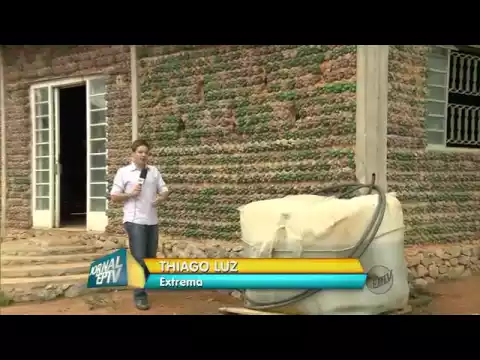

Some reposts attributed to G1 mention that the construction would have cost less than R$ 15,000, using donated and reused materials. Even though it’s a value from the past and not directly comparable to current costs, it helps to understand why the story went viral.
The project also reused other materials, such as doors, windows, and items from demolition. Thus, the house was not only marked by the bottles but by a broader logic of reuse, economy, and waste reduction.
And that’s precisely where the question arises that captures the reader: how many other things discarded every day could have a second life if they were seen as resources, and not just as waste?
Why this story matters again now
The topic remains current because Brazil still faces a huge challenge with plastic packaging. Data released by Agência Brasil shows that the country recycled 410,000 tons of PET packaging in 2024, a volume 14% higher than recorded in 2022.
The progress is significant, but it doesn’t erase the magnitude of the problem. PET bottles continue to appear on streets, lots, streams, and dumps, especially where selective collection does not reach efficiently. In this scenario, stories like Ed Mauro’s gain new momentum because they visually and concretely show what recycling can mean beyond statistics.
The house made with 11,000 PET bottles is not just a curiosity of sustainable construction. It is a story about family, persistence, and creativity in the face of an urban problem that remains present.
In the end, what impresses is not just the number of bottles. It’s imagining that almost all were collected by the father, one by one, until what many saw as waste turned into a wall, shelter, and symbol of a simple idea: sometimes, the solution begins exactly where most only see disposal.