






 Portuguese
  Spanish
  3 min of reading
  0 comments


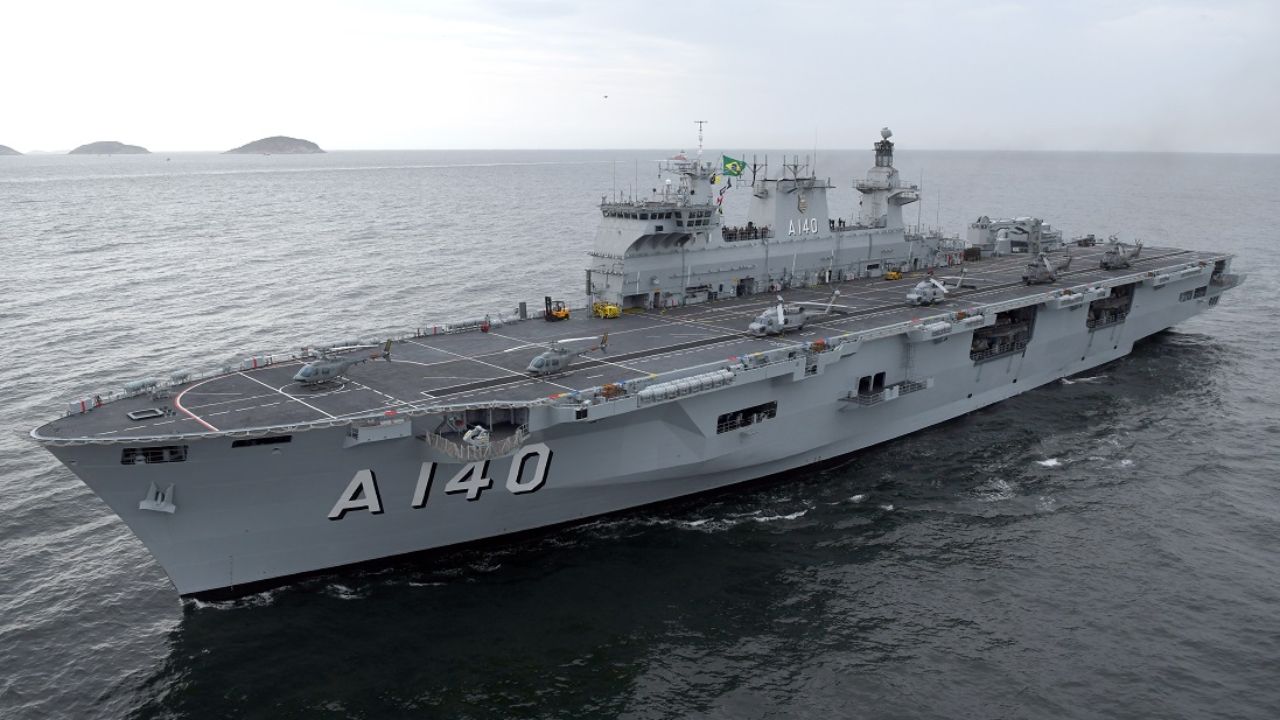
The NAM “Atlântico” Is The Largest Ship In The Brazilian Navy And Performs Military And Humanitarian Missions. Learn Its Origin, Capabilities, And Importance To The Country.
The largest ship in the Brazilian Navy, named NAM “Atlântico,” was officially incorporated into the Brazilian fleet on June 29, 2018. The commissioning ceremony took place at Her Majesty’s Naval Base in Plymouth, England. The ship, acquired from the United Kingdom, was originally built in the 1990s and operated for decades in the British Royal Navy under the name HMS Ocean.
The transfer process involved intensive training for Brazilian military personnel, structural renovations, and upgrades before its definitive arrival in Brazil.
However, the importance of this acquisition goes far beyond military strategy: the ship plays a fundamental role in peace missions, disaster relief, and humanitarian operations.
-
North Korean Fiasco: Launch of the Largest Warship Ends in Sinking

-
While giant ships still burn heavy fuel and the maritime sector races against climate targets, Maersk and Vale are starting to bet on ethanol as a new route to reduce emissions at sea.

-
China begins construction of the world’s largest LNG ship, a 344-meter giant capable of supplying 4.7 million homes for a month, carrying 271,000 m³ of gas, and placing QatarEnergy in the largest naval order ever recorded in world history.
-
China is designing a container ship with a thorium nuclear reactor that will operate for 40 years without refueling, and the 25,000-container giant from Jiangnan Shipyard will cross oceans without emitting carbon in an industry that burns 300 million tons of fuel per year.



What Is The NAM “Atlântico” And What Is Its Function In The Brazilian Navy?
The NAM “Atlântico” (Multipurpose Amphibious Ship) is currently the largest and most versatile ship in the Brazilian Navy.
In addition to being the flagship of the Fleet, it was designed to carry out a wide variety of tasks, including:
- Control Of Strategic Maritime Areas
- Power Projection By Sea, Land, And Air
- Amphibious Operations With Helicopters And Troops
- Logistical Support And Transportation Of Military Personnel
- Humanitarian Missions And Assistance In Natural Disasters
- Support For Peacekeeping Operations
Its name refers to the historical importance of the Atlantic Ocean for Brazil’s formation and security, as well as paying tribute to the great Portuguese navigations that culminated in the discovery of the country.
British Origin: Decades Of International Service Before Coming To Brazil
Before becoming the NAM “Atlântico,” the ship was commissioned in September 1998 as HMS Ocean.
Constructed by Kvaerner Govan and VSEL, it operated for nearly 20 years from the naval base in Devonport, United Kingdom.
During this period, it participated in important missions:
- Humanitarian Support In Kosovo And Central America
- Palliser Operation In Sierra Leone In 2000
- Operations In The Middle East During The Iraq War
- Unified Protector Operation In Libya In 2011
- Operation Ruman In 2017, Rescuing Victims Of Hurricane Irma In The Caribbean
This history reinforces the ship’s vocation for humanitarian and operational actions in conflict or disaster areas.
Technical Features Of The NAM “Atlântico” Impress
The NAM “Atlântico” has capabilities that considerably enhance the Brazilian Navy’s power projection. Its specifications are:
- Capacity To Transport 806 Marines
- Length: 203.43 Meters
- Deck Capable Of Operating Up To 7 Aircraft Simultaneously
- Displacement: 21,578 Tons
- Hangar For 18 Helicopters
- Range: 8,000 Nautical Miles
- Maximum Speed: 18 Knots
The ship can operate all helicopters in the Navy’s fleet, such as the Seahawk (SH-16), Cougar (UH-15), Lynx (AH-11B), Esquilo (UH-12/13), Bell Jet Ranger III (IH-6B), and the Super Puma (UH-14).
Geopolitical And Humanitarian Importance To Brazil
The acquisition contract was signed in February 2018 by Admiral Luiz Henrique Caroli, representing the Brazilian Navy, alongside the British Ministry of Defense.
Since then, the Brazilian crew has undergone training with British specialists and manufacturers of the onboard systems.
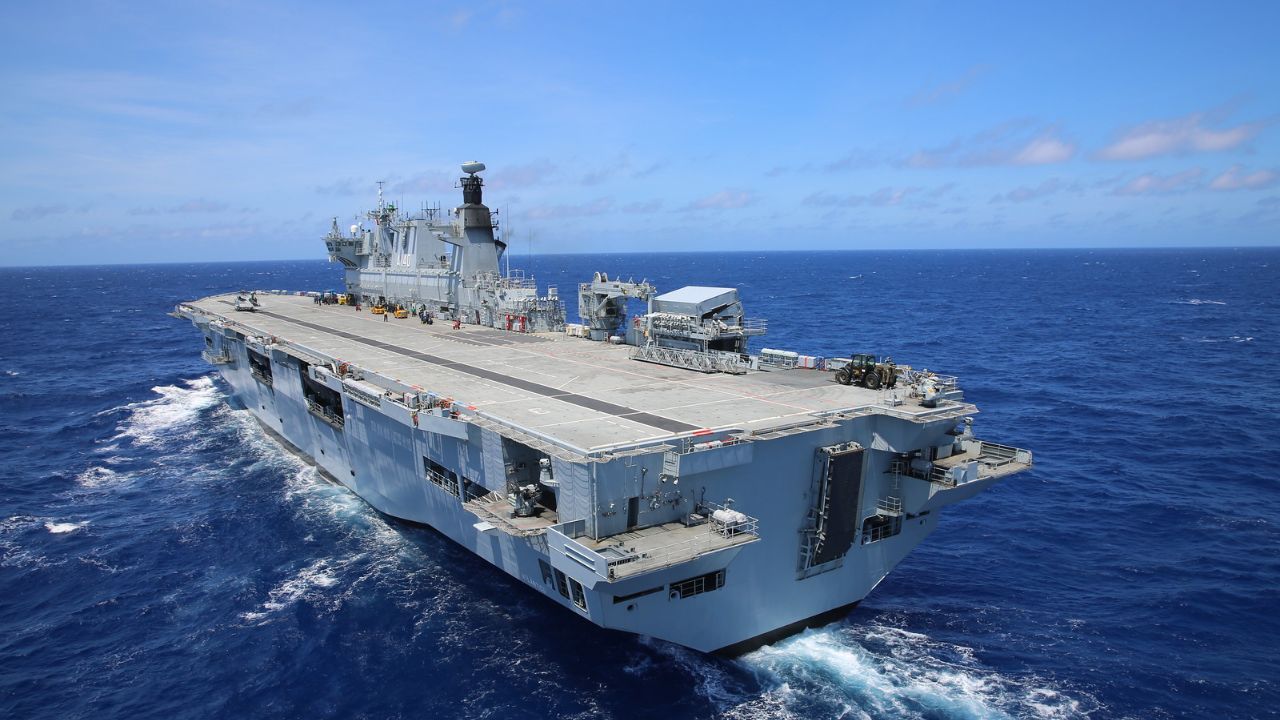
During the transition period, the ship also underwent maintenance and dry docking at a British shipyard, ensuring it arrived in Brazil in full working condition.
More than a military acquisition, the NAM “Atlântico” represents a key piece in Brazil’s geopolitical strategy.
Its ability to operate in conflict zones, assist victims, and participate in international missions enhances the country’s image as an active agent in international cooperation and the promotion of peace.
Additionally, in times of environmental tragedies and natural disasters, the ship serves as a floating base for assistance and resource transport, expanding the Brazilian state’s response capacity.




Be the first to react!