






 Portuguese
  Spanish


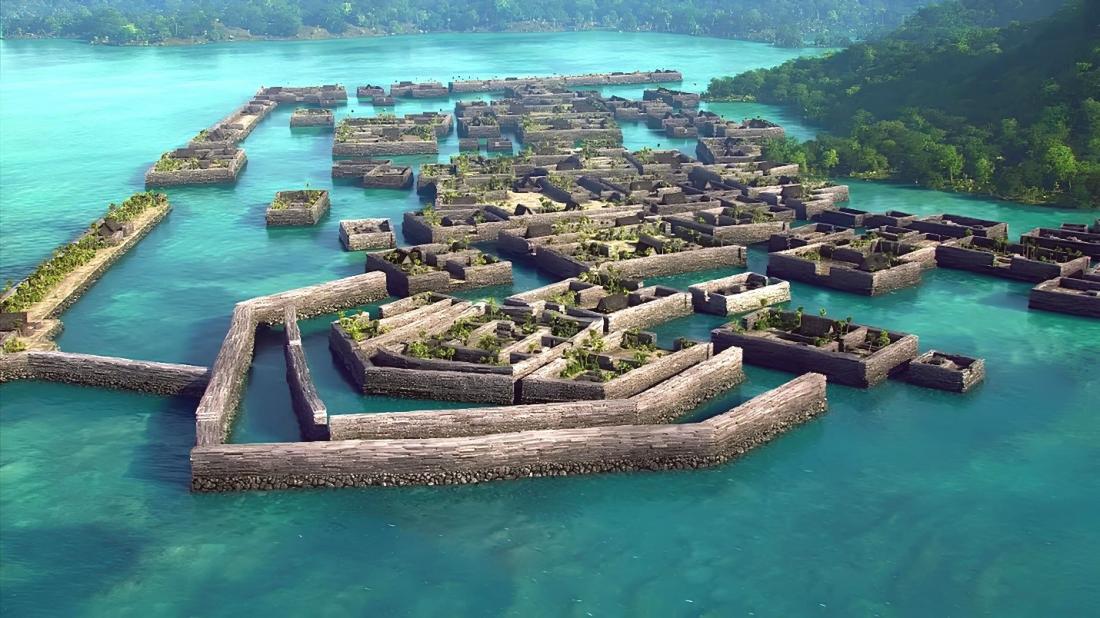


Nan Madol Is A City Built On Artificial Islets In The Middle Of The Pacific Ocean
Nan Madol is a unique archaeological site located on the southeastern coast of Pohnpei Island, in the Federated States of Micronesia, in the Pacific Ocean. Known as the “Venice of the Pacific“, this ancient city consists of more than 90 interconnected artificial islets linked by a complex network of canals, forming an impressive complex of megalithic ruins that testify to the ingenuity and social organization of its builders.
Origin And Construction In The Pacific Ocean
The construction of Nan Madol began around the 8th or 9th centuries, with the building of the first artificial islets at that location in the Pacific Ocean.
However, the characteristic megalithic architecture of the site started to be erected between 1180 and 1200 AD. The city served as the ceremonial and political center of the Saudeleur dynasty, which unified the population of Pohnpei under a centralized government.
-
She heard for decades that space was not a place for women, became a pioneer in aviation, was part of the Mercury 13, and at 82, finally traveled with Jeff Bezos before dying at 87.

-
Scientists investigate microplastics in the airways of patients with sleep apnea and reveal a new focus for research on environmental pollution, human exposure, and possible impacts on breathing quality.
-
For the first time, scientists have seen the ocean floor open up in real-time—plates moving apart by two meters in a few days and 160 million cubic meters of lava emerging on the seafloor.
-
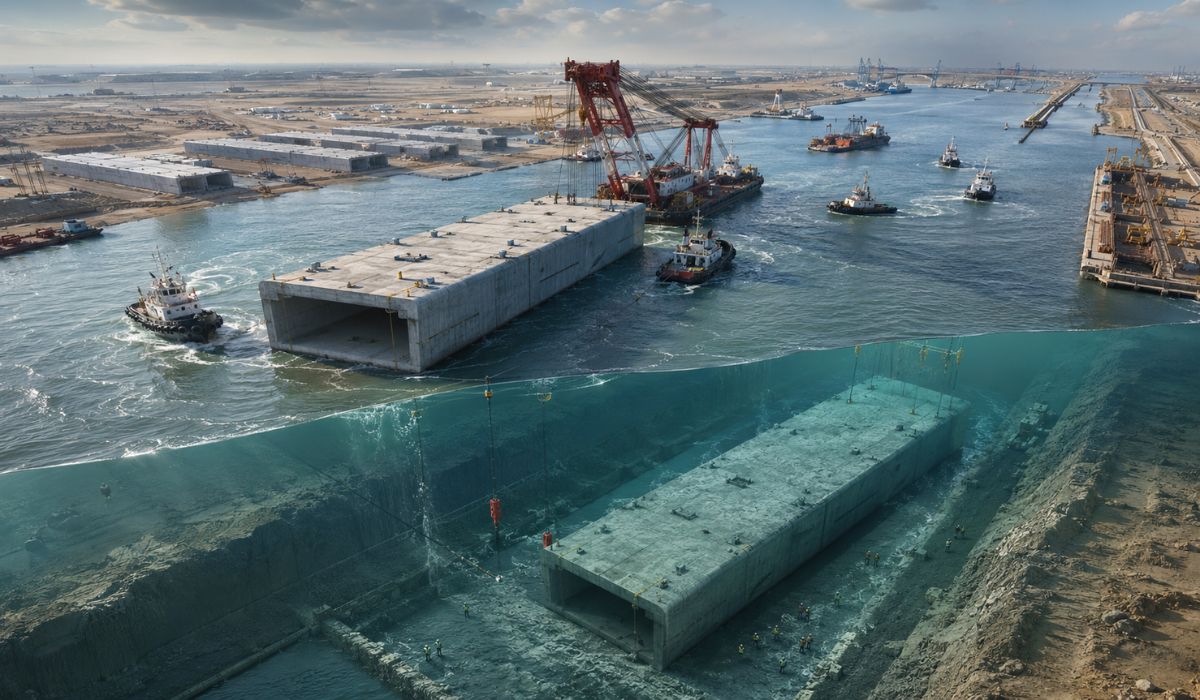
Iraq floats and sinks under an arm of the Euphrates 10 giant concrete boxes of 46,000 tons and 125 meters each to assemble a 2.4 km submerged tunnel and open a new land route between Asia and Europe.




The resident population of Nan Madol is estimated to have not exceeded one thousand inhabitants, including nobles, priests, and their servants.
The construction of the islets involved the use of basalt columns and coral blocks, forming elevated platforms over the coral reef.
The walls of some structures reach up to 7 meters in height, demonstrating an impressive knowledge of engineering and social organization on the part of the builders.

Social Organization And Ceremonial Functions
Nan Madol was not only a political center, but also played a crucial role in the religious and ceremonial activities of the Saudeleur dynasty.
The city was highly stratified, with the social hierarchy reflected in the size and complexity of the residences within the complexes.
The largest structures belonged to the ruling elite, while the smaller ones were intended for lower-status members.
Each islet within Nan Madol had a specific function, ranging from residences and meeting places to temples and tombs.
For example, Nandauwas is notable for housing a large royal tomb, surrounded by massive basalt walls.
Other islets were dedicated to canoe construction, food preparation, and other essential activities for the ceremonial and daily life of the city.
Decline And Abandonment
The Saudeleur dynasty ruled Pohnpei until approximately 1628, when it was overthrown by Isokelekel, a foreign invader who established a new system of government on the island.
After the fall of the dynasty, Nan Madol was abandoned around the 17th century, although the exact date is unknown, and it eventually became overgrown by vegetation and natural elements.
Recent studies suggest that climate changes and rising sea levels played a significant role in the decline of Nan Madol.
Carbon dating analyses indicate that the area where Nan Madol is located was solid ground in the past, and that the city was abandoned in the 15th century due to climatic factors.
World Heritage And Preservation Efforts
In 2016, Nan Madol was inscribed on the UNESCO World Heritage List, becoming the first site in the Federated States of Micronesia to receive such recognition.
However, due to threats such as siltation of waterways, uncontrolled mangrove growth, and the fragility of the structures, the site was also included on the List of World Heritage in Danger.
Currently, efforts are underway to preserve and protect Nan Madol. Preserving the site is crucial not only for understanding the history of Micronesia but also as a case study on the impacts of climate change on coastal civilizations.
Nan Madol remains an impressive testament to human ingenuity and the social complexity of ancient Pacific civilizations.
Its ruins offer valuable insights into the political, religious, and social organization of the Saudeleur dynasty, as well as serving as a reminder of the environmental challenges that can lead to the decline of entire societies.
With information from heritageadapts.






Nan Modal foi construída sobre ou próximo a ruínas muito mais antigas, da antiga cidade dos Deuses, Kahnihmweiso, na baía Madolenihmw . Com certeza essas ruínas são muito mais antigas e podem remeter ao continente Mukuliano, do povo de Mu. Baseado em relato do livro Cidades Perdidas da Antigas Lemúria e Pacífico de David H. Childress. Isso é muito comum, ruínas antigas estarem sobre ruínas muito mais antigas ainda pois os povos aproveitavam essas construções ao encontra-las Muitos tesouros muito mais antigos estão sob ruínas não tão antigas assim..e passam desapercebido….. propositalmente?
Muito interessante, eu não sabia da existência de Nam Madol
Excelente matéria. Parabéns.