






 Portuguese
  Spanish





Retired Japan Airlines plane underwent scientific renovations in Texas, arrived at Langley Research Center in Virginia, and will now be used by NASA to study storms, polar ice, Arctic, Greenland, North Atlantic, North America, and Europe
NASA has received a retired Boeing 777 aircraft that will now have a very different mission from commercial aviation. After a year of scientific renovations in Texas, conducted by L3Harris Technologies, the aircraft arrived at Langley Research Center in Virginia, ready to become the largest flying laboratory in the agency’s Earth Science fleet.
The plane stands out for its scale. It will be able to carry 34 tons of scientific equipment, reach an altitude of 13,100 meters, fly for up to 18 consecutive hours, and carry up to 100 researchers. With this structure, NASA aims to expand its studies on storms, polar ice, and extreme weather events in different regions of the planet.
Boeing 777 plane becomes flying laboratory to study Earth’s vital signs
Most Boeing 777s were made to transport passengers between major global centers. This plane, however, will have a scientific function: to collect atmospheric and environmental data on a global scale.
-
ChatGPT Alerts FBI to Prevent Planned Murder of 8-Year-Old in Brazil’s Espírito Santo

-
Scientists Discover 125-Million-Year-Old “Pregnant Fossil” with Preserved Embryos and Microscopic Larvae Inside Mollusk in England

-
17-Year-Old Justin Bernstein Develops Bacteria to Produce Glass on Arctic Ice to Reflect Sunlight, Wins $50,000 U.S. Scholarship

-
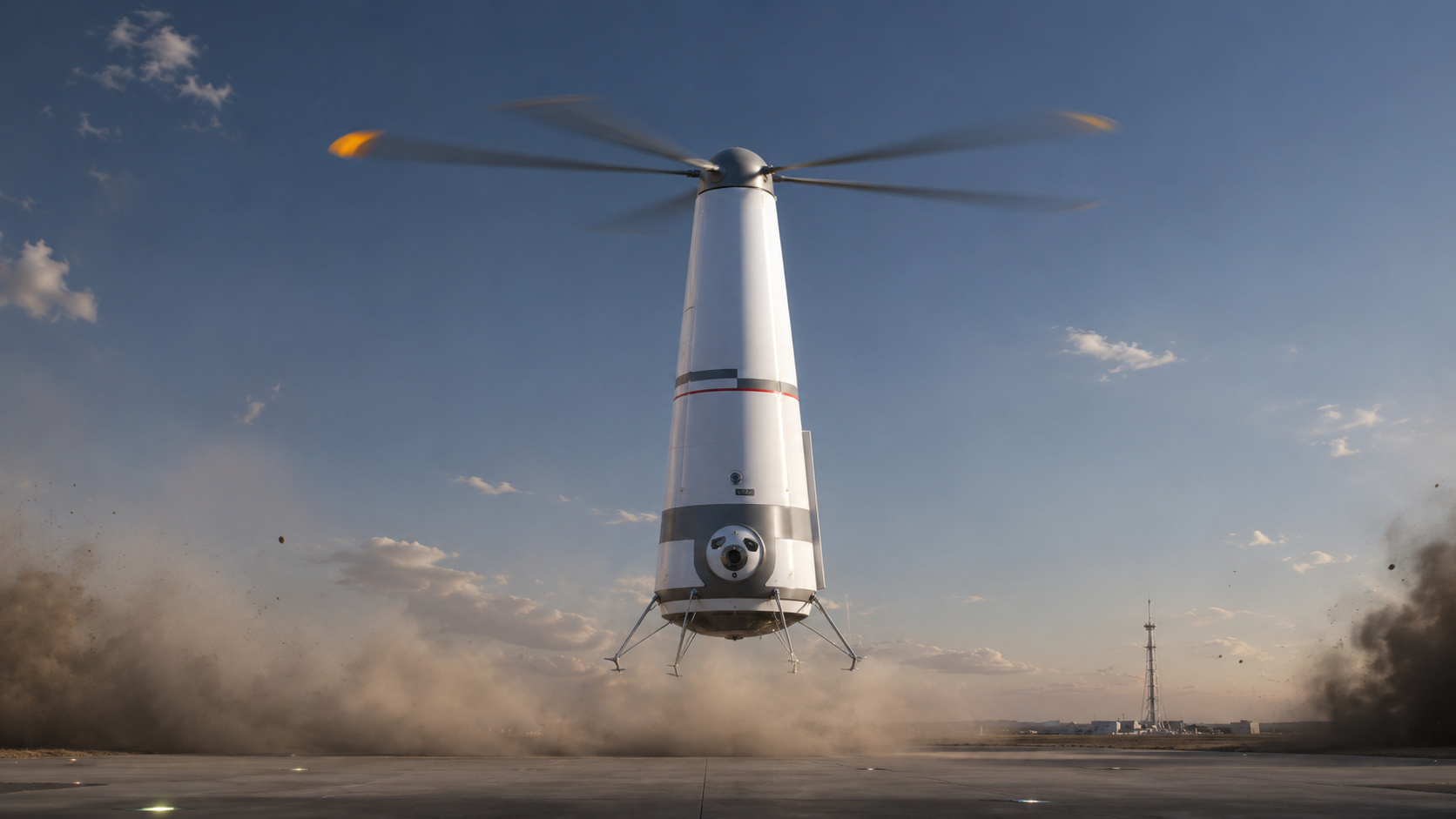
The 19-Meter Rocket-Helicopter: A Private Industry Prototype That Challenged Space Race Logic



According to Derek Rutovic, NASA’s Airborne Science Program manager, the 777 will be the largest airborne research laboratory in the fleet. The aircraft will use advanced instruments to improve understanding of the Earth system as a whole.
The new Boeing 777 replaces the DC-8, a retired aircraft that served for decades in scientific missions. The change represents a leap in autonomy, cargo capacity, internal space, and operational range.
The numbers that explain the size of NASA’s new laboratory

NASA’s new aircraft will be able to remain airborne for 18 consecutive hours, reach an altitude of 43,000 feet, approximately 13,100 meters, and carry 75,000 pounds of equipment, equivalent to approximately 34 tons.
The Boeing 777 also has a range of 9,000 nautical miles, allowing for long flights over remote areas. This includes regions such as the Arctic, the North Atlantic, and Greenland.
Another highlight is the capacity for up to 100 researchers. In practice, the aircraft ceases to be just an adapted plane and begins to operate as a complete research center in the skies.
How NASA modified the Boeing 777 to operate as a scientific laboratory
The transformation required profound structural changes. Since January 2025, engineers from L3Harris Technologies have carried out drilling, electrical installations, reinforcements, and adaptations to the fuselage.
The cabin windows were enlarged to function as observation viewers. Portals were also opened in the lower part of the fuselage, allowing sensors and remote sensing instruments to have a direct view of the surface below.
The aircraft received dedicated research stations and complex wiring to connect scientific payloads. Among the planned instruments are advanced sensors, such as lidar and infrared spectrometers.
Why this aircraft stands out within NASA’s scientific fleet

The DC-8 was one of the most important aircraft in NASA’s airborne research. For about 40 years, it helped study polar ice, volcanic ash, and other atmospheric and environmental phenomena.
Replacing this aircraft required a larger, more robust, and more capable platform. The Boeing 777 steps into this role with superior autonomy, more space for instruments, and the capacity to bring larger teams together on a single mission.
Kirsten Boogaard, NASA’s 777 program manager at Langley, stated that the aircraft will allow for more partners, more educational opportunities, and more instruments. For the agency, this should improve the quality and volume of data collected on future missions.
First mission begins in January 2027 and will focus on extreme weather events
The aircraft’s first major mission is already defined. It is called NURTURE, an acronym for North American Upstream Reconnaissance of Tropopause Characteristics and Uncertainty Experiment.
Scheduled for January 2027, the mission will take the Boeing 777 to study severe winter weather conditions. Data collection will cover North America, Europe, the Arctic, Greenland, and the North Atlantic.
The objective is to locate the so-called tropopause polar vortices, invisible atmospheric factors associated with severe cold waves and ice storms capable of paralyzing cities.
What changes in practice with this new NASA aircraft
With the Boeing 777, NASA gains a more robust platform to investigate weather phenomena directly from the sky. This allows for extensive measurements in hard-to-reach regions and under extreme environmental conditions.
The expectation is to improve the prediction of severe weather events. According to the base, more complete measurements can help save lives and reduce billions in infrastructure costs caused by storms, cold waves, and other extreme events.
Now that the jet has arrived at Langley Research Center, NASA continues with the engineering and analysis project to install the NURTURE mission’s payload, in parallel with modifications to the aircraft’s portals.
A new phase for NASA’s airborne research
The retired Boeing 777 leaves behind the routine of commercial flights and takes on a strategic role in climate science. It will be used to study the atmosphere, polar ice, tropical storms, and Earth’s vital signs.
With greater range, more autonomy, and increased cargo capacity, the aircraft becomes one of NASA’s most important tools for understanding extreme phenomena and improving predictions that directly affect life in cities.
In your opinion, could using a retired aircraft as a flying laboratory be one of the smartest ways to anticipate extreme weather events and reduce their impacts?


