






 Portuguese
  Spanish


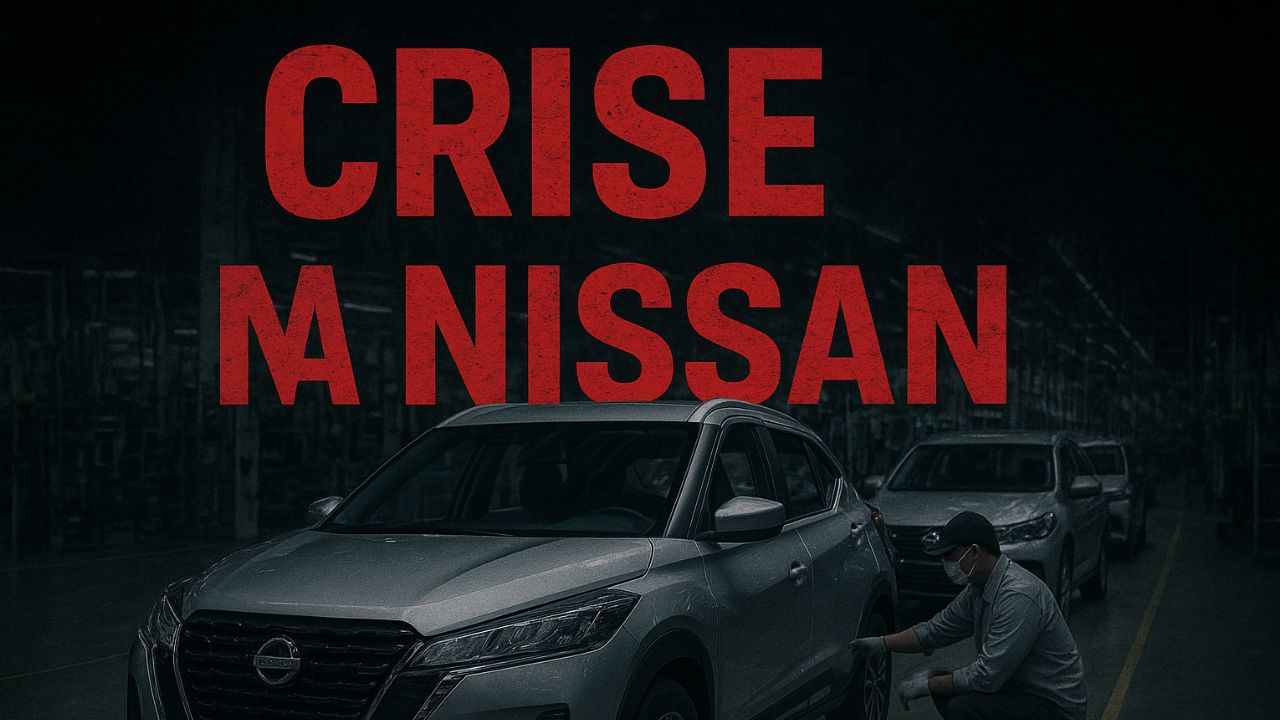

Nissan Faces Global Crisis and Bets on New Kicks and SUV Kait to Try to Recover Sales and Compete with Rivals Like GM, Honda, and Toyota.
Nissan is going through a delicate moment in the global scenario. The Japanese automaker is accumulating billion-dollar losses, facing a decline in competitiveness, and trying to rise again with strategies similar to those of GM in 2008.
Only in the fiscal year 2024, the company registered a gap of US$ 4.5 billion, the result of management failures, outdated products, and difficulties in competing in the electrified vehicles segment.
In Brazil, the situation is no different: the new Nissan Kicks arrived at a high price, with sales below expectations, and now the brand is betting on a refreshed SUV, the Kait, to try to win back the public.
-
BYD Patents Revolutionary System Using Computer Vision to Detect Animals Under Cars Before Starting, Preventing Tragedies

-
Study Reveals Why Cars Are More Expensive to Produce and Buy in Brazil Compared to Mexico, Highlighting Taxes, Logistics, and Industrial Costs as Key Factors.
-
Toyota to Open New Factory in Brazil by November 2026 with $2.2 Billion Investment, Creating 2,000 Jobs, and Ending Corolla Production in Indaiatuba

-
Brazilian Factory Restores Truck Engines and Parts, Reducing Raw Material Use by Up to 85% After 80 Years in Business



Global Crisis and Partnerships That Did Not Succeed
The imbalance at Nissan is not recent. The brand has faced years of losses and instability since the weakening of its alliance with Renault, which is nearing litigation.
Attempts at new partnerships, such as the approach with Honda, have failed.
The result is a deep cut in operations: 20,000 jobs are expected to be cut by 2027, along with the closure of factories in several countries.
In the United States, one of the automaker’s largest markets, the number of recalls has risen alarmingly, affecting the brand’s reputation.
Quality issues and service failures have become recurring, reducing consumer trust.
Nissan in Brazil: Limited Operation and Dependent on Kicks
In Brazil, the subsidiary reflects the impacts of the global crisis. The range of cars is aged and restricted, and production costs continue to rise.
Nissan is almost entirely dependent on the Kicks, manufactured in Resende (RJ), to maintain sales.
In 2024, 29,530 units were licensed, according to Fenabrave — an insufficient number for a plant with a capacity of up to 200,000 vehicles per year.
The launch of the new Kicks was seen as the brand’s big bet. However, the initial price of R$ 165,000, which can reach R$ 200,000, drove away some consumers.
The model still features the 1.0 turbo engine with 125 hp, produced by Horse (a joint venture between Renault and Geely), which has increased production costs.
Inevitable Comparison With GM in 2008
The crisis at Nissan resembles the drama faced by General Motors in 2008 when the American automaker needed to be rescued by the U.S. government.
At that time, GM Brazil survived with a limited lineup composed of low-cost models like Agile, Cobalt, Montana, and Classic.
The difference now is that the market has changed. Today, manufacturing a car is much more expensive, with safety and technology requirements that increase production costs by up to 40% of the final price.
“There are large brands that manage to achieve volume with lower margins, but that is not our reality,” said Marco Silva, former president of Nissan Brazil, back in 2020.
While competitors like Honda, Toyota, and GM invest in hybrid and turbo engines, Nissan continues with naturally aspirated engines and delays in its electrification.
Expensive Kicks and Discount Strategy to Regain Breath
Nissan believed that the good reputation of the original Kicks would support the new model, but the public reacted poorly to the prices.
After the launch, the brand started a discount campaign of up to R$ 25,000 and special financing conditions to stimulate sales.
Even so, the results are still concerning. By September, the Kicks (accounting for both the old and new versions) registered 40,588 license plates, according to Fenabrave data.
The Kicks Play, the more affordable version, accounted for 66% of sales, showing that Brazilian consumers still prefer the older model.
Kait: The “Japanese Agile” That Could Be the Salvation
To try to get out of the red, Nissan is preparing to launch the Kait, an SUV derived from the Kicks Play.
The model will be a deep update of the current one, following a strategy similar to that used by GM with the Agile — a reinterpretation of the Corsa to reduce costs and maintain sales.
The Kait will maintain the naturally aspirated 1.6 engine with 113 hp and is in advanced testing stages on the highways of the Southeast. Despite not bringing significant innovations, the new SUV aims to fill the gap between the Kicks and the hybrid models of competitors.
Meanwhile, rivals like Honda are preparing to launch the new WR-V, and Toyota is working on the Yaris Cross, both with an electrified engine option — a technology that still seems distant for the battered Nissan of Resende (RJ).
Uncertain Future, But With a Reaction Attempt
Even in the face of the crisis, Nissan is trying to reposition itself globally. The company aims to optimize costs, strengthen its image of reliability, and expand its presence in the SUV segment.
However, to reclaim the Brazilian market, it will need more than a new Kicks: it will be necessary to regain consumer trust and align prices and technology with what the public expects from its cars.


