Portuguese
  Spanish


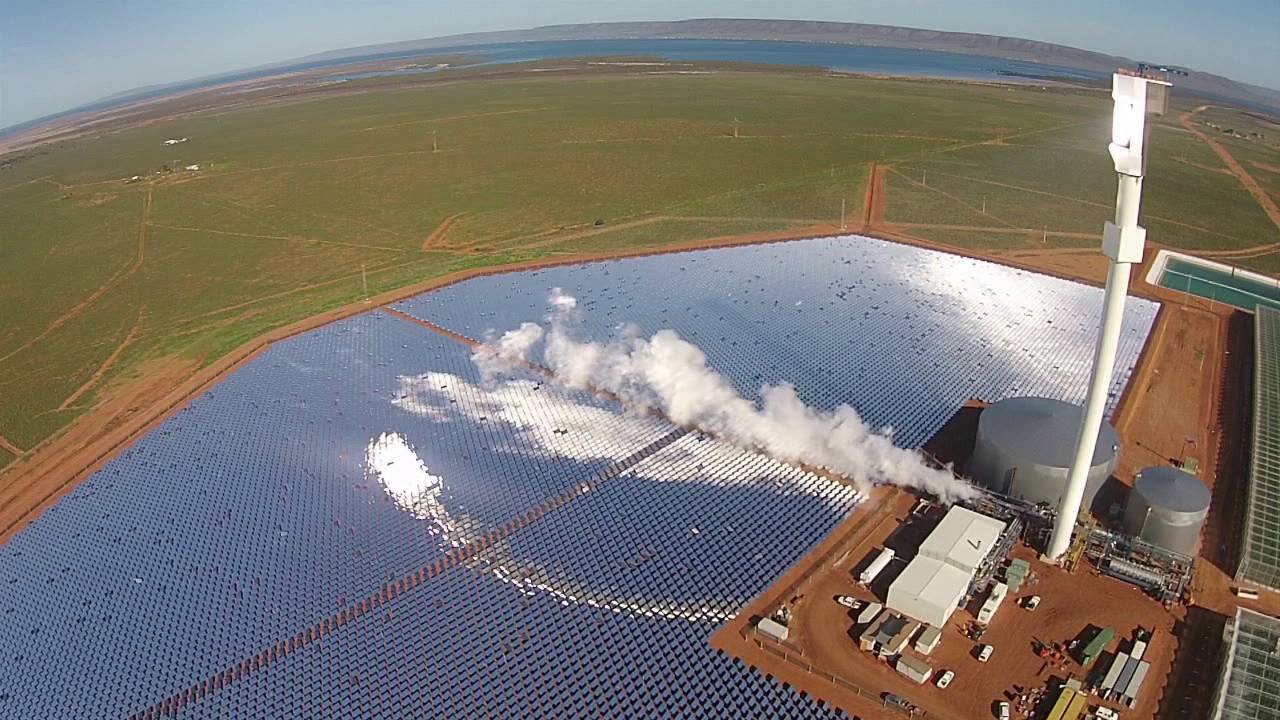


Sundrop Farms Produces Up To 15 Thousand Tons Of Tomatoes Per Year In The Australian Desert Using Desalinated Seawater And Concentrated Solar Energy.
In 2016, one of the most unusual agricultural initiatives ever implemented on an industrial scale became commercially operational near Port Augusta, in southern Australia. Sundrop Farms inaugurated a high-tech greenhouse complex designed to produce up to 15 thousand tons of tomatoes per year using exclusively desalinated seawater and concentrated solar energy as the main thermal source. The project has become a global benchmark in agriculture in arid environments by demonstrating that it is possible to cultivate food on a large scale without relying on local rivers or underground aquifers.
The facility was developed based on official data from the company itself and widely documented by international outlets, as well as Australian energy reports detailing the solar thermal power plant attached to the production system.
The Climatic Context And The Choice Of The Desert For Tomato Production
Port Augusta is located in an arid climate region, with low annual rainfall and high temperatures for a large part of the year. Traditionally, areas with these characteristics depend on intensive irrigation with underground water or water transfer from other basins.
-
Innovative Farm in Northeastern Brazil Combats Drought with Advanced Techniques, Aiming for 10,000 Liters of Milk Daily Production

-
Australian Desert Farm Uses Solar Power and Seawater to Produce 15,000 Tons of Tomatoes Annually, Resembling a Sci-Fi Agricultural Innovation

-
Brazilian Child Becomes National Role Model by Turning Financial Education Lesson into Thriving Poultry Business with 25 Hens and 150 Eggs Weekly
-
California’s Almond Industry Consumes Over 4 Trillion Liters of Water Annually Amid Drought, Relies on Trucked-In Bees for Pollination
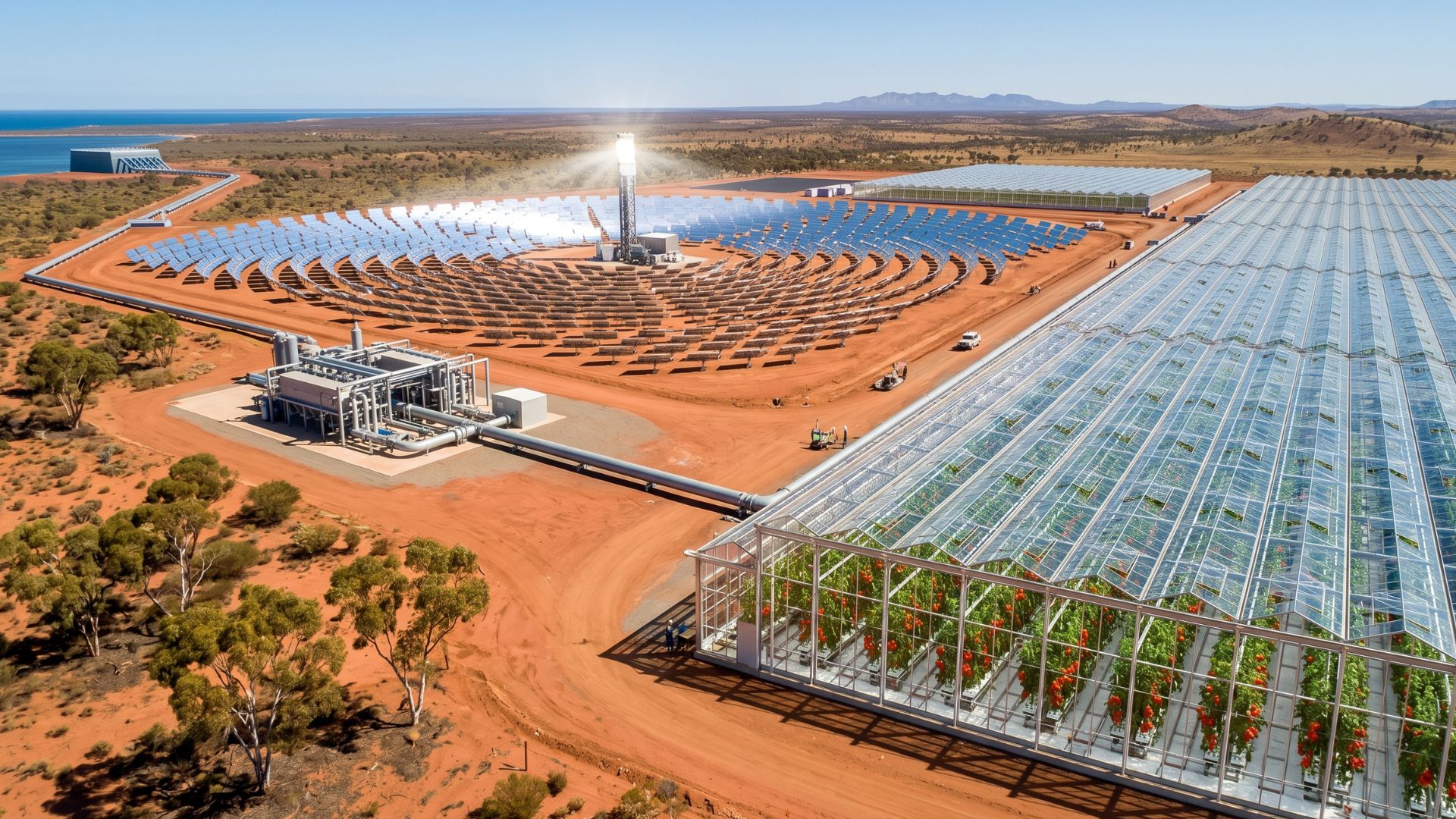

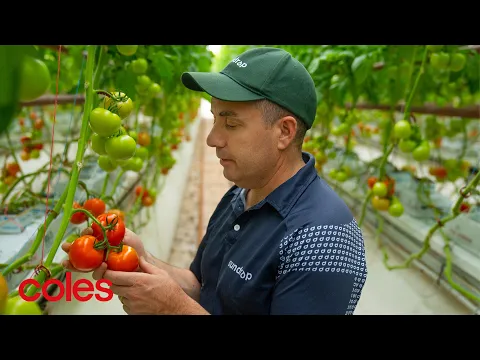

The Sundrop Farms proposal started from a different principle: using seawater from the Spencer Gulf, desalinating it on-site, and powering greenhouses controlled by thermal systems fueled by concentrated solar energy.
The idea eliminated dependence on scarce local water resources and transformed an environment considered unproductive into an agricultural export hub.
The Industrial Process: From Seawater To Harvested Tomato
The system begins with the capture of seawater, which is directed to the desalination unit installed at the complex. The water undergoes filtration and reverse osmosis processes to remove salt and impurities, making it suitable for agricultural irrigation.
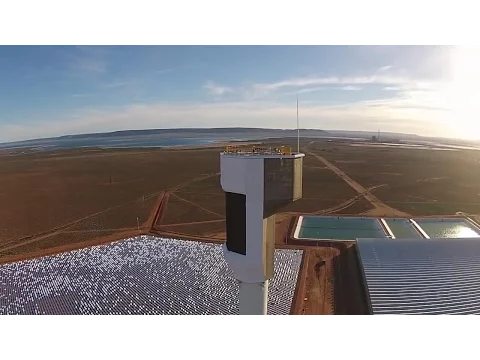
The desalination process, in turn, requires thermal and electrical energy. This is where the project’s differentiating factor comes into play: the concentrated solar power plant (CSP). Unlike conventional photovoltaic panels, the CSP system uses heliostats to concentrate solar radiation onto a central tower. The heat generated is used to produce steam and power thermal processes, including heating the greenhouses and supporting desalination.
Thermal energy is stored to ensure stability during periods of lower sunlight. This model reduces dependence on fossil fuels and makes the system more energy-autonomous.
After desalination, the water is distributed through highly controlled drip irrigation systems. The fertigation is digitally monitored, with dissolved nutrients being applied according to the growth phase of the plants.
The greenhouses utilize precise climate control. Sensors monitor temperature, humidity, CO₂ concentration, and light levels. Automated systems adjust ventilation and shading to optimize photosynthesis.
Applied Technology And Precision Engineering
Production occurs in a closed environment, which allows for high phytosanitary control. Pollination is performed using controlled insects, reducing the need for chemical interventions.

Cultivation is done in inert substrates, eliminating dependence on traditional farmland. This approach reduces the risk of contamination and allows for greater productive density per square meter.
The project’s engineering integrates three complex industrial systems:
- Capture and desalination of seawater
- Concentrated solar energy generation with thermal storage
- Climatized greenhouses with digital cultivation control
This integration is what differentiates the model from a simple conventional greenhouse.
Production Scale And Economic Impact Of Sundrop Farms
The announced annual capacity of up to 15 thousand tons refers to the projected production of the complete Port Augusta unit. This volume primarily supplies large Australian supermarket chains, reducing the need to import tomatoes during off-seasons.
It is important to differentiate installed capacity from effective annual production. Capacity represents the maximum potential when the system operates at full capacity. Actual production may vary according to operational conditions and market.
The project required investments estimated in the hundreds of millions of Australian dollars, establishing itself as one of the largest sustainable agriculture ventures in arid regions.
In addition to the productive impact, the initiative demonstrated the economic viability of combining desalination and concentrated solar energy on an agricultural scale.
Challenges And Technical Limits Of Sundrop Farms
Despite the operational success, the model presents significant challenges. Desalination is energy-intensive. Although concentrated solar energy reduces emissions, the initial infrastructure is expensive and requires specialized maintenance.
The system also depends on high operational efficiency. Failures in the solar plant or the desalination system can quickly affect the production cycle.
Another critical point is the need for strong logistical integration. Producing in the desert requires well-structured supply chains for the rapid distribution of fresh products.
Still, the project has demonstrated that agriculture in arid regions can be viable when combined with advanced energy and water engineering.
The production of up to 15 thousand tons of tomatoes per year in the heart of the Australian desert is not just an agricultural achievement. It is a practical demonstration that the integration of renewable energy, desalination, and climate control can expand productive boundaries previously considered unviable.
Sundrop Farms transformed seawater and intense solar radiation into high-quality fresh food. The project shows that in modern agriculture, natural limitations can be faced with technology and industrial planning.
In a global scenario of increasing water scarcity and climate change, models like Port Augusta point to a new category of agriculture: one that combines energy infrastructure and advanced water management to produce where aridity once prevailed.