Portuguese
  Spanish


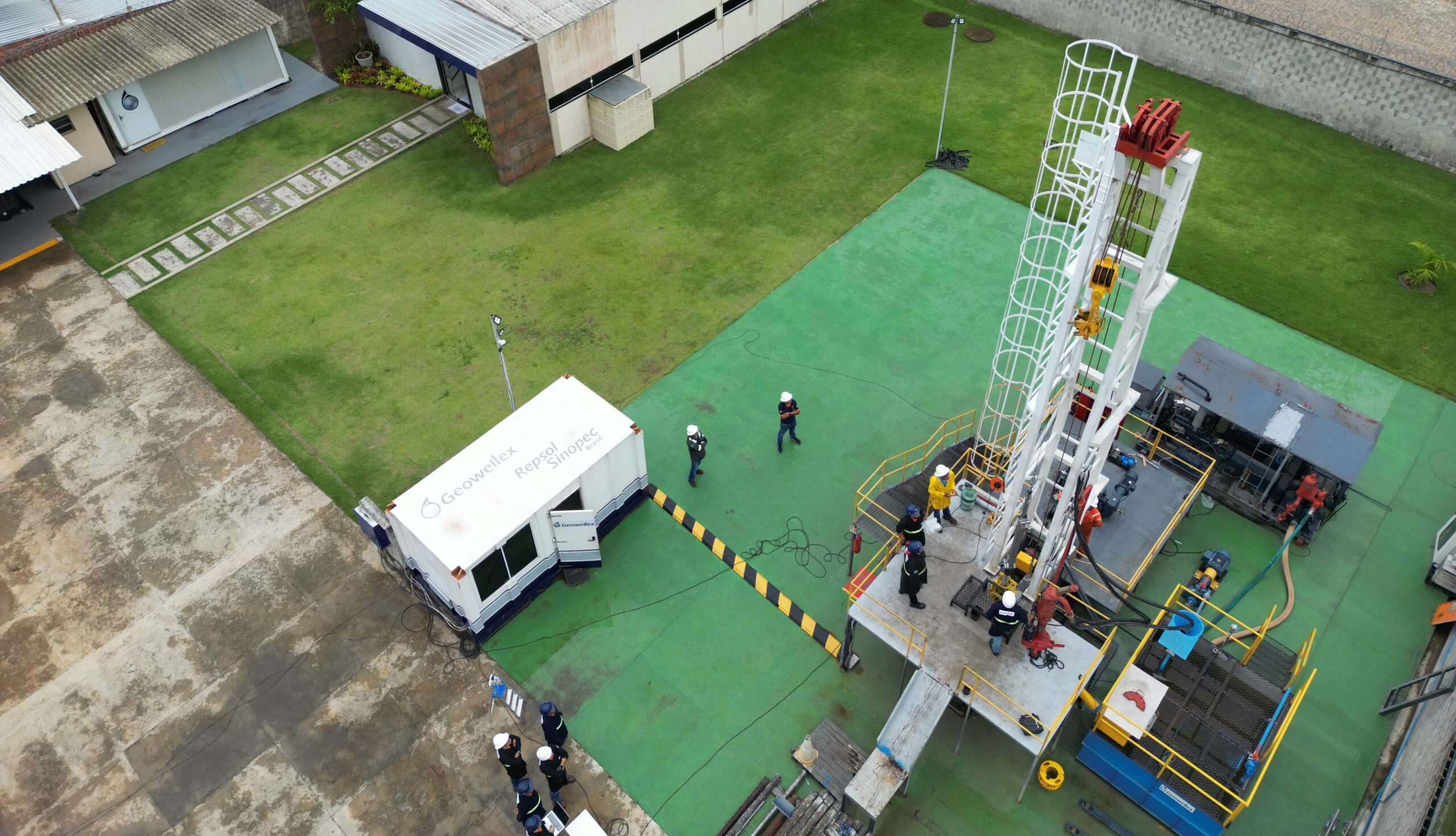


The WellRobot® Project at Well School Is Entering a New Phase of Development to Improve a Potentially Revolutionary Device for Assessing the Safety of Well Drilling.
The WellRobot® Project, an initiative of autonomous robots developed by Repsol Sinopec Brasil (RSB) in collaboration with Ouronova, has successfully completed its first large-scale test. The experiment was conducted in Macaíba, Rio Grande do Norte, using the Well School infrastructure, which includes an onshore drilling platform and a 120-meter deep well, built as part of RSB’s Automud project in collaboration with Geowellex.
This is a significant development in the technology used to autonomously inspect the safety of well drilling. Without significant interventions or production stoppages, the robot can serve as a direct connection instrument for the well. The main objective of this stage is to test the technology on dry completion wells on land or on shallow-water platforms.
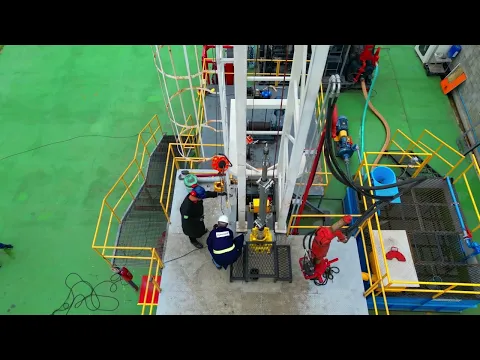
VIDEO: Robot Test in Action at Well School, RN

Research Manager in Well Technology at Repsol Sinopec, João Guandalini, highlights the importance of open innovation for carrying out R&D projects in the sector. “The partnership with major research centers, combined with the integration of projects, allows us to advance towards increasingly promising solutions for the sector,” he states.
-
Brazil Develops Its First Locally-Made 5G Radio Unit, Achieves Over 1.5 Gbps in Lab Tests, Paving the Way for Interoperable Equipment

-
El Niño Intensifies: Over 90% Chance of Persisting Until 2027, Raising Ocean Temperatures and Increasing Severe Weather Risks in Southern Brazil, Warns Federal Report

-
NASA Prepares Trio of Small Satellites to Track Tropical Storms and Capture Rapid Rainfall Development from Above the Clouds
-
$7,999 Isaac 1 Robot Aims to Tackle Household Chaos: Folds Clothes, Makes Beds, and Organizes, but Raises Privacy and Cost Concerns with Camera Reliance and Remote Human Assistance


The P&A Assistant is an automated cement profiling analysis tool being developed by RSB and Ouronova in conjunction with WellRobot. The TTILT project developed a profiling system prototype to assess cement quality during the installation of the production casing in cased wells, providing the basis for this solution (profiling through tubing). PUC-Rio collaborated in the first iteration of the WellRobot and TTilt Project. Throughout its development, these technologies have already received investments of R$ 35 million.
Ouronova and RSB have been working together for almost three years, and the latest Wellrobot field test and the first findings of the P&A Assistant prove that they are on the same page.
According to Eduardo Costa, president and CEO of Ouronova, two innovative solutions that allow for evaluating the integrity of wells will soon be brought to market in a simpler, faster, and cheaper way.
Facilitating Information Sharing on Drilling Wells
The Well School Project is responsible for the first full-scale test well conducted by an International Oil Company (IOC) in Brazil, allowing for the testing and improvement of new technologies, as well as assisting in the technical training of students from various Brazilian universities and the training of professionals in the oil and gas industry. This promotes communication and opens the door for new ideas to emerge, making the initiative a driving force behind progress.
“Sustainability paired with innovation is what drives Geowellex, in partnership with RSB, to develop impactful solutions for the industry and the energy transition,” states Leonardo Montalvao, CEO of Geowellex. These solutions include real-time fluid identification (GOLD Project) and lithology prediction through Machine Learning models (Automud).
Managed Pressure Drilling (MPD) is a new feature that will soon be added to the Automud Project to adapt the technology to the GOLD solution, which was also created in collaboration with Geowellex. This method, common in the pre-salt, helps drillers maintain tighter control of pressure in the well.
A Strategy Based on Technology Use and New Ideas to Serve the Offshore Oil and Gas Sector
Repsol Sinopec’s strategy in Brazil, which has just completed 25 years of strong trajectory and is focused on the sustainable development of the sector, includes investments in technology and innovation. To this end, RSB created the WellRobot/TTilt, Automud, and GOLD projects with resources from the PD&I clause of the National Agency of Petroleum, Natural Gas and Biofuels (ANP).