Portuguese
  Spanish


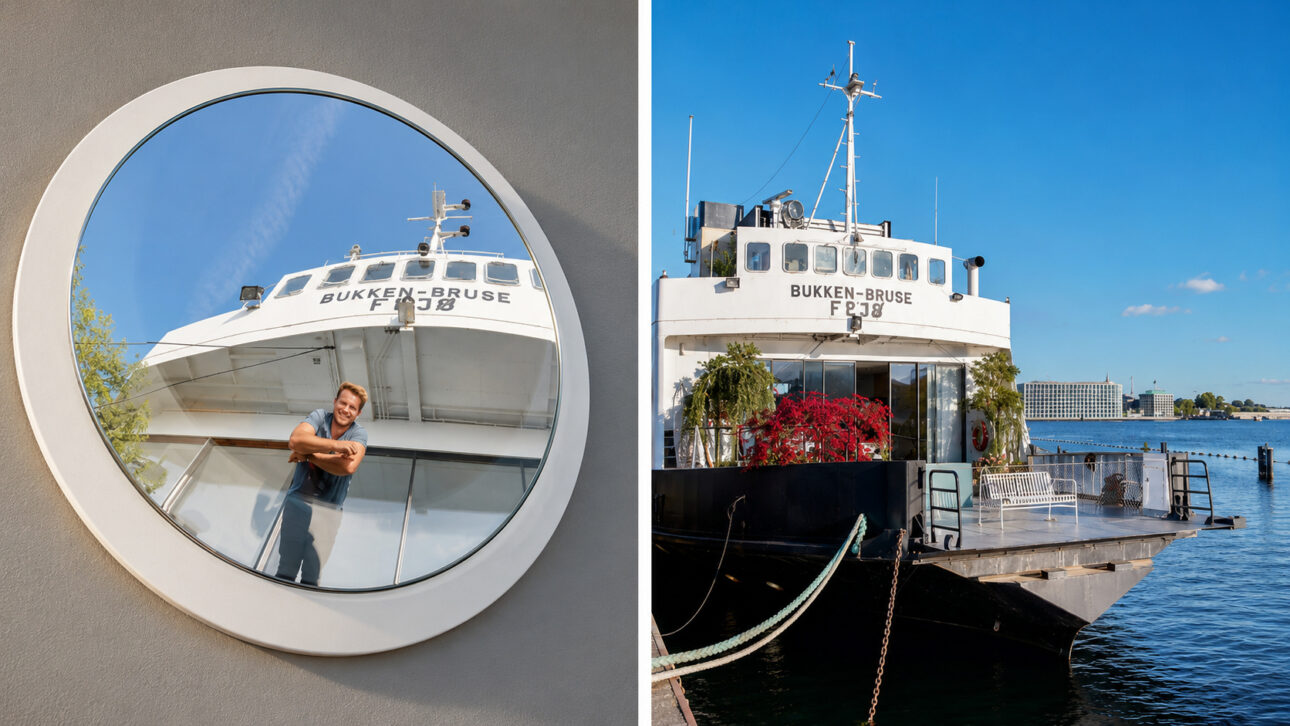
An old Norwegian ferry of about 38 meters, previously used for vehicle transportation, underwent a naval retrofit project at the port of Copenhagen, Denmark. The intervention repurposed the hull, preserved navigation elements, and converted operational areas into residential spaces.
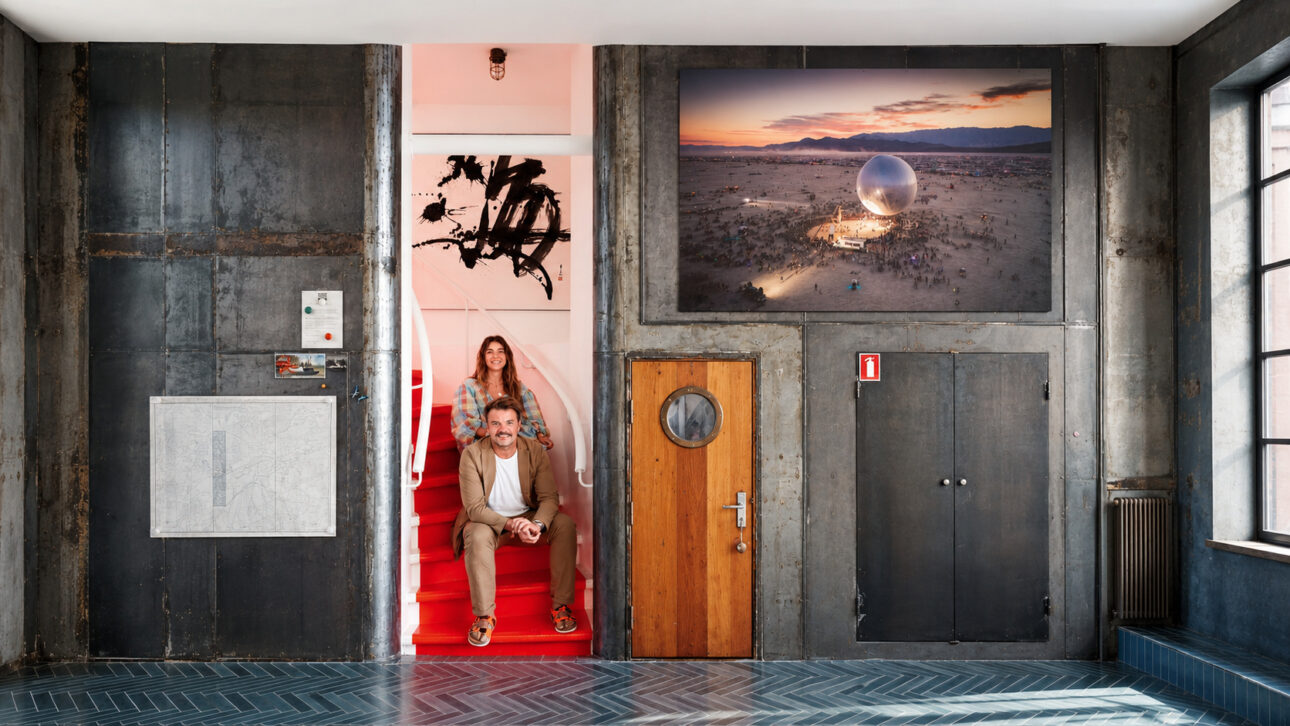
The project was led by architects Rut Otero and Bjarke Ingels and demonstrates how a decommissioned vessel can be given a new function without completely erasing its original structure. Instead of treating the boat as a conventional house, the renovation used the limitations of the hull, symmetry, and old equipment as starting points to define the new spaces.
Information about the vessel, the purchase at the end of 2016, the initial problems with insulation and running water, the sliding glass walls, the upper pavilion, and the hull adaptation were published in the report “Inside Bjarke Ingels’s Innovative Houseboat,” by Sam Cochran, for Architectural Digest, on October 7, 2020.
Decommissioned 38-meter ferry entered a naval retrofit project
When it was acquired at the end of 2016, the vessel had already received partial adaptations to serve as a dwelling. There was a container-like structure on the roof, used as a bedroom, but the set still retained much of the configuration of an out-of-operation ferry.
-
At 28, a Female Shipbuilder Restores a 30-Meter Yacht from 1962, Highlighting Women’s Often Overlooked Contributions in Shipyards

-
Belgian Port to Install Shore Power for Cruise Ships by 2027, Cutting Dock Emissions by Up to 5% and Meeting EU Regulations
-
Post-Katrina Engineering System Uses Steel Frames, Floating Blocks, and Guide Posts to Elevate Homes During Floods
-
1910 Sailing Ship Restored After Seven Years Sets Sail for the UK



The central point of the renovation was not just to create new rooms. It was to adapt an existing naval structure, with its own geometry, open areas, and physical constraints that do not appear in a construction made from scratch on land.
Thermal insulation and running water show that the hull is not enough
The first winter exposed one of the biggest challenges of the project: the vessel had little thermal insulation. At times, there was a lack of heating and interruptions in the supply of running water, making it clear that transforming a boat into a habitable space depends on internal systems, not just finishing and aesthetics.
In a retrofit of this type, insulation helps reduce heat exchange between the external environment and the internal rooms. In a city like Copenhagen, where winter imposes low temperatures, this factor directly impacts comfort, energy consumption, and the feasibility of permanent use of the vessel.
The case shows that repurposing a hull does not just mean installing walls, furniture, and windows. The structure needs to receive solutions compatible with temperature requirements, water supply, and daily use.
Hull symmetry became a rule to define new environments
The geometry of the vessel had a direct influence on the project. According to the report from Architectural Digest, the renovation sought to restore the symmetry of the barge on both axes, taking advantage of a characteristic of naval transport to organize the new spaces.
This type of approach prevents the retrofit from treating the vessel as a generic structure. The hull, curves, accesses, and elements that were once part of navigation began to guide the distribution of internal areas, terraces, and living spaces.
Deck previously used for cars gained sliding glass and terraces
The main area of the barge functioned as an open passage for vehicles. In the renovation, both ends of the deck received sliding glass walls, creating an internal environment connected to external terraces.
The solution altered the function of an area previously dedicated to car circulation but preserved the spatial logic of the vessel. Instead of completely eliminating the deck, the project transformed its central void into a continuously used area, illuminated and integrated with the harbor landscape.
The terraces were painted in a color close to the water’s tone, while the glazed surfaces increased the entry of natural light. The choice reinforces a common strategy in retrofit: using the available structure to reduce unnecessary interventions and repurpose existing areas.
Upper pavilion and lower hull repurposed navigation elements
At the top, the project installed a glass pavilion between large chimneys and elements related to old navigation. The intervention created a new internal area without completely erasing the visual marks of the vessel.
The lower area underwent a deeper transformation. The hull received round windows, a circular skylight, and continuous surfaces, which took advantage of the naval structure’s curves instead of hiding them behind conventional partitions.
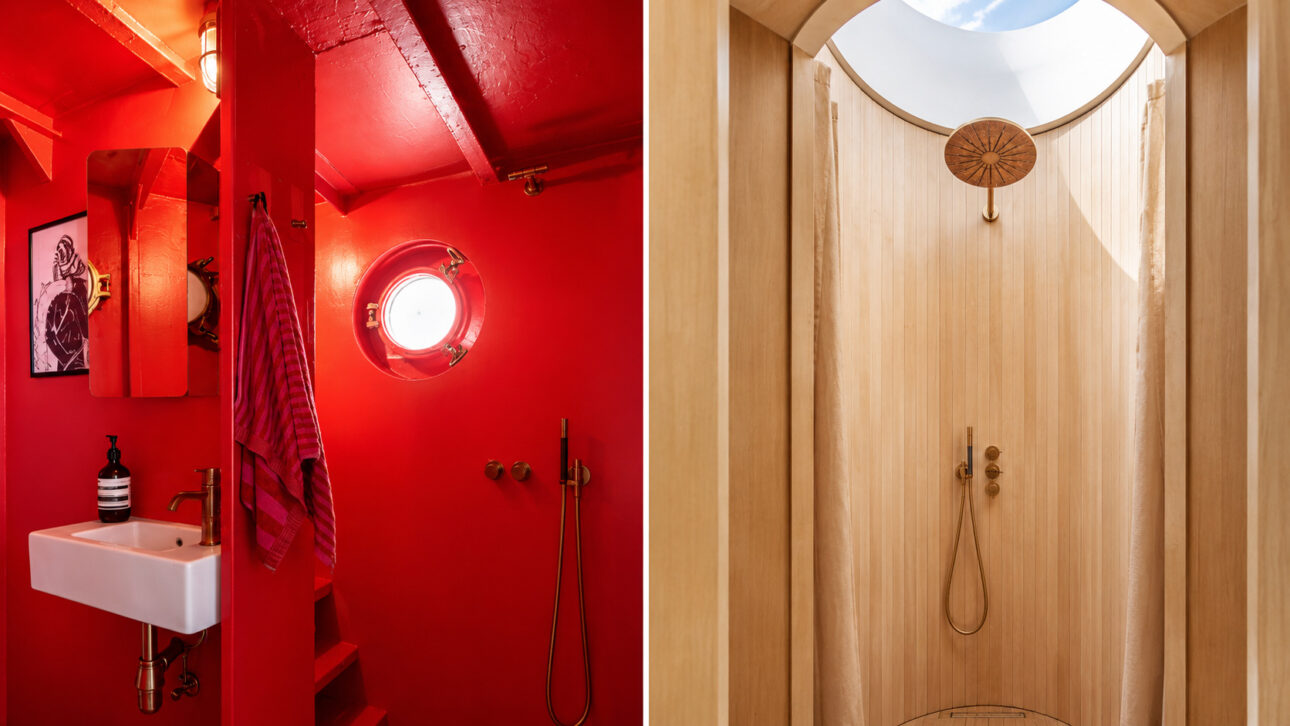
Two captain’s cabins were also maintained, including the vessel’s wheels. The preservation of these components reinforces the project’s reuse character, which did not try to hide the naval origin of the structure.
Project helps to discuss floating architecture, but does not replace coastal planning
Bjarke Ingels related the experience of living on water to the debate about rising sea levels and the ability of floating structures to accompany the variation of the water surface. The idea also appears in other works related to the architect, such as the Urban Rigger, a floating complex created in Copenhagen for students.
But an adapted barge should not be treated, in isolation, as a solution for coastal cities. An urban floating architecture project requires evaluation of infrastructure, access, supply, maintenance, integration with the port, and local water occupancy rules.
The case of Copenhagen is relevant because it shows a concrete possibility of reuse of decommissioned vessels. Instead of starting from a new construction, the project recovered an existing structure and faced technical challenges ranging from thermal insulation to adapting environments on a naval hull.
A decommissioned barge can become an urban asset, but what technical requirements should be mandatory before transforming old vessels into homes or workspaces in Brazilian ports? Leave your opinion in the comments.