






 Portuguese
  Spanish


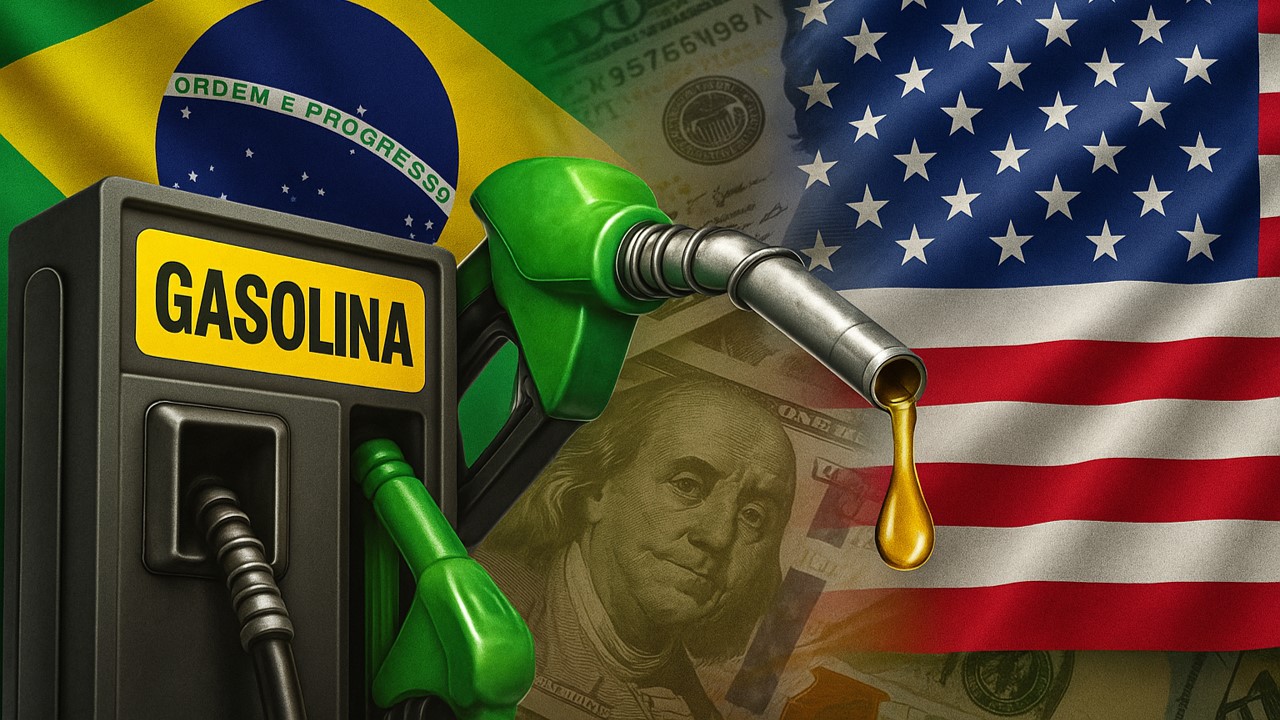


With Changes in Gasoline Mixing, Country May Become Dependent on Imported Ethanol and Prices at the Pumps May Skyrocket. Understand What’s Behind This Decision and How It Affects Your Wallet.
The Brazilian fuel market is about to undergo a turnaround. The proposal to increase the mix of anhydrous ethanol in gasoline—from 27.5% to 30%—could make Brazil multiply its import of the biofuel by more than five times, bringing significant repercussions for the entire production chain and for consumers’ wallets.
Increase May Exceed 1 Billion Liters of Imported Ethanol per Year
Currently, Brazil imports about 250 million liters of anhydrous ethanol annually. With the new mixing proposal, this volume could skyrocket to an impressive 1.3 billion liters.
A growth of over 400%, driven primarily by the need to meet the new requirement without compromising internal supply.
-
Northern Brazilian ports surpass the South as the country’s largest grain corridor amid record harvest

-
Amazon launches its own brand in Brazil a week before Prime Day, following a $3.7 billion investment and the establishment of over 300 distribution centers nationwide by 2025.

-
Trump’s 50% Tariff on Brazilian Goods Cuts U.S. Exports by 30%, Brazil Sets Records in 42 Countries and Germany Becomes Top Coffee Buyer
-
Brazil Harvests Record 358 Million Tons of Grain but Lacks Storage for 134 Million Tons


This not only puts pressure on the international market, but also raises an alarm about external dependence in a strategic sector of the national economy.
More Ethanol, More Dependence?
Although Brazil is one of the largest producers of ethanol in the world, the Northern region and part of the Northeast heavily rely on imported product—mainly from the United States, which are major exporters of corn ethanol.
With the increase in demand and the mandatory mix, these regions may become even more susceptible to price fluctuations in the international market.
Accelerated Change May Increase the “New Gasoline” Price
The primary concern is that, by relying more on imported ethanol—priced in dollars—the cost of gasoline at the pumps will rise. In other words, the end consumer may end up footing the bill for the transition, especially if there is no clear strategy to encourage local production or price control.
Although ethanol is a renewable and less polluting fuel, the rush to alter its proportion in gasoline may generate effects contrary to what is expected, especially at a time when Brazil is trying to keep inflation under control.
The argument is clear: without ensuring that national production can keep pace with the new rhythm, the measure may “open the gates” for the uncontrolled entry of foreign ethanol, weakening the Brazilian producer.
Additionally, there are concerns about the logistics and infrastructure needed to store and distribute this new volume of ethanol. Such a sharp increase may challenge ports, terminals, and transportation, creating bottlenecks and driving up costs further.
It Seems Simple but It’s Not!
The proposal to raise the mix of anhydrous ethanol in gasoline may seem simple, but its implications are profound. Brazil, which has always prided itself on its self-sufficiency in biofuels, now finds itself at risk of increasing its external dependence. And consumers may once again feel the direct impact at the pumps.
The debate is open, and the decisions made in the coming months will define not only the future of ethanol in Brazil but also the price you, the driver, will pay to fuel your car.





O que predomina no artigo é falta de firmeza, convicção do que está falando, o governo não seria tão irresponsável, leviano de propor um aumento da mistura de mais etanol a gasolina se não tivesse de onde tirar, é um governo que luta para abaixar o preço dos combustíveis e vem conseguindo, minha jovem falta fatos e dados nas suas alegações. Vc não afirma nada, pode ser , vamos aguardar pra ver, etc.
Seja mais objetiva, mais clara.
Toda notícia mal, colocada tem pontos que pode gerar , confusão falta de entendimento da massa. É uma vergonha sermos um dos maiores produtores de cana de açúcar, de petróleo somos basicamente alto suficiente nestas produção e não ter refinarias no nosso país que supra a nossa necessidade levando a outra pais e sermos escravos de cotação em dólar onde não ganhamos em dólar.. vendemos barato para comprar e pagar mais caro , e isso em todos os nossos produtos..
Parabenize desde Diumanta até o Nine por essa situação em que nos colocamos.Desde a “compra”da refinaria nos Estados Unidos(a que hoje ainda pagamos juros por ter virado sucata) até o Pré-Sal (que descobrimos mas não temos tecnologia—que coisa—para retirar o volume da coisa)esse desgoverno vende o País para China e acaba com a nossa “soberania” que tanta declamam.PATÉTICO.
Que matéria tendenciosa, que traz inúmeras distorções da realidade no Brasil. O Brasil é o maior produtor de cana de açúcar do mundo, ou seja, logo não terá necessidade de importação de etanol, onde o mesmo se tornará, com essa medida, quase que auto suficiente. E outra, essa matéria dizer, que essa mistura prejudica o motor dos veículos, só mostra o desconhecimento da jornalista!