






 Portuguese
  Spanish




National Rule on Physical and Digital Rearview Mirrors Takes Effect in June 2025 and Is Already Causing Concern Among Drivers
An important change in Brazilian traffic came into effect this month and has taken drivers by surprise in all regions of the country.
As of June 13, 2025, compliance with the updated requirements of Resolution No. 966/2022 from CONTRAN, which addresses physical and digital rearview mirrors, has become mandatory. The new regulation, although originally published in June 2022, will fully apply in 2025, with direct implications for passenger cars, buses, trucks, and motorcycles.
Penalties, which involve fines, points on the driver’s license, and even vehicle detention, have already begun to be enforced by traffic agents across Brazil.
-
Driver who “holds” the left lane can receive a hefty fine and 4 points on their driver’s license even if they think they are going at the correct speed for the road.

-
São Paulo Government puts R$ 343 million on the table and releases 31 km of duplication, 9.84 km of third lanes, 4 reinforced viaducts, and 8 grade-separated returns.

-
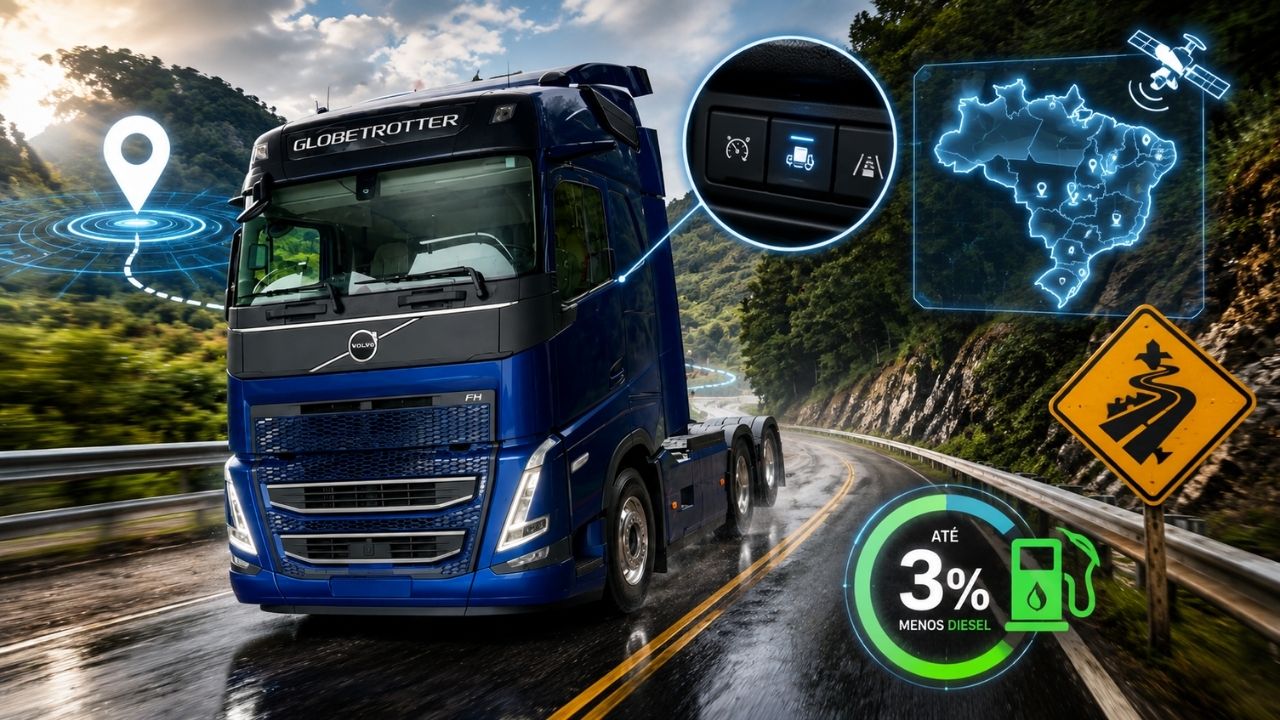
Volvo FH 2026 truck automatically reduces speed in risk areas in Brazil with GPS, activates engine brake without driver intervention, and combines safety with aerodynamics capable of saving up to 3% of diesel in some operations.

-
A viaduct over 40 years old in a city in Minas Gerais was closed due to the risk of collapse, blocked routes for months, exposed maintenance failures, and now requires a R$ 1.7 million project to prevent a collapse in the urban heart for decades.



What Changed with the New Regulation
According to the National Traffic Council (CONTRAN), the new legislation requires that all motor vehicles—whether domestic or imported—be equipped with two external mirrors and one internal mirror, properly approved.
Moreover, the text explicitly authorizes the installation of digital mirrors with cameras and monitors. However, for this replacement to be legal, the equipment must:
- Be certified by INMETRO
- Reproduce images in real-time with clarity, even in rain or direct sunlight
- Cover the same field of vision or greater than conventional mirrors
- Meet the minimum technical dimensions, with a reflective area greater than 69 cm²
According to the National Department of Traffic (DENATRAN), the measure aims to increase road safety, especially in urban areas with heavy traffic and high-speed roads.
Application of the Law Advances in Stages Since 2019
Although many drivers are just becoming aware now, the process of implementing the new rule has been ongoing for years:
- January 2019: measure took effect for motorcycles and mopeds
- October 2022: imported and domestic vehicles began to be gradually included
- October 2024: models produced in Brazil for passenger use were already required to comply with the standard
- June 2025: start of full national enforcement, including buses and heavy trucks
According to automotive safety expert Luiz Fernando Gonçalves from the Brazilian Institute of Traffic Safety, in addition to modernizing the sector, the regulation also aims to align Brazil not only with global trends in automotive technology use but also with the prevention of urban accidents, as the professional highlighted.
Fines, Detention, and Points Loss Are Already in Effect
With the start of intensive enforcement, drivers operating without the required mirrors will be penalized based on the Brazilian Traffic Code. The penalties include:
- Fine of R$ 195.23
- Five points on the driver’s license
- Immediate detention of the vehicle until the issue is resolved
Additionally, authorities have been using monitoring cameras on urban roads and highways to identify violations related to the absence or poor condition of mirrors.
According to the Brazilian Association of Traffic Engineering (ABET), mirrors are among the most neglected safety items, yet also the most decisive in preventing side and rear collisions.
Risks for Owners of Older Vehicles
The new rule has also directly affected owners of vehicles over 10 years old. This is because, although older cars may keep conventional mirrors, it is necessary to ensure that they are intact, properly secured, and within the required dimensions.
In case of replacement with digital mirrors, it will be mandatory:
- Purchase equipment approved by INMETRO
- Install at accredited workshops with the issuance of a technical report
- Present updated documentation when requested by authorities
According to automotive engineer Ricardo Matos from the National Vehicle Repair Federation, “many owners are already facing difficulties adapting their vehicles due to high costs and the shortage of accredited workshops in smaller cities.”
Measure Aims for Safety, but Worries Users
Although the objective is clear—to reduce accidents and expand the driver’s field of vision—many drivers have reported a lack of information and surprise regarding enforcement.
In an interview with Revista AutoMotor on June 10, traffic education coordinator Juliana Ribeiro stated that “the transition was not sufficiently publicized, and this has caused concern among drivers who were unaware of the requirement.”
Moreover, entities linked to the automotive sector point out that the number of fines for the absence or inadequacy of mirrors increased by 22% between May and the first week of June 2025.
More Rigid Enforcement Requires Attention from Drivers
With the national implementation of the new rules, therefore, drivers must, in addition, stay updated and consequently perform periodic checks. Specifically, they should pay attention to the following aspects:
- Check for cracks, play, or misalignments in the mirrors
- Ensure that digital equipment has valid certification and report
- Adapt the vehicle as per the guidelines established by Resolution No. 966/2022
Experts highlight that the measure aligns with international trends in modernizing traffic. However, the success of the implementation will depend on educational actions, encouragement for adaptation, and fair and transparent enforcement.
What Do You Think of the New Rule?
In light of this new scenario, an important question arises: should drivers prioritize rapid technological adaptation to avoid fines, or should the government extend the deadline and invest more in educational campaigns?
Leave your opinion in the comments!


