Portuguese
  Spanish





New Rule Raises Rental Taxes with IBS and CBS for Recurrent Lessors, Requiring Invoice, Accounting and Potentially Consuming Almost Half of Annual Revenue
If you rent properties through Airbnb or other platforms, the rental taxes you pay are about to reach another level. With Complementary Law 214, from the tax reform, the government has created new rules that could make almost half of rental income be paid in taxes, especially for those who earn more or have several regularly rented properties.
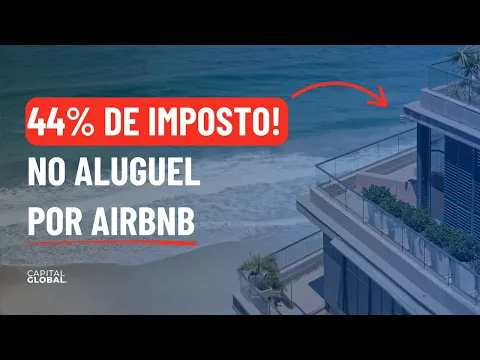
In practice, Brazil has started to see part of the rents as an activity of lodging and consumption, subject to IBS and CBS. This completely changes the game for individual lessors who operate regularly. Rental taxes, which were previously limited to Income Tax of up to 27.5%, can now reach 35.9% or even 44.3% in some scenarios, summing IBS and CBS on revenue.
What Changed with the Tax Reform

Complementary Law 214, which regulates the tax reform, created the IBS (Tax on Goods and Services) and the CBS (Contribution on Goods and Services), within the logic of the so-called dual VAT. The official proposal is to simplify the system by replacing taxes such as ICMS, ISS, PIS, and Cofins with two major consumption taxes.
-
Seniors Over 60 Can Travel for Free Across Brazil: Elderly Statute Ensures Two Free Bus Seats and 50% Discount When Full for Low-Income Passengers

-
Detran RJ starts requiring a toxicological test for those obtaining their first driver’s license in the car and motorcycle category starting June 29; see who will be affected.

-
Florida takes TikTok to court and accuses the Chinese giant ByteDance of ignoring the law that bars minors under 14, while parents and authorities demand more protection for children on social networks.
-
Chamber approves constitutional amendment reducing the age of criminal responsibility from 18 to 16 years; what now?




Up to now, rental of property by individuals was not taxed as consumption, precisely because it was not considered a service. The Supreme Court had a summary prohibiting the charging of ISS on rental properties for individuals. With the new law, this changes for those who rent regularly and generate relevant income. Recurring rentals are now treated, in many cases, as activities akin to lodging, especially when involving platforms like Airbnb.
Who Starts Paying IBS and CBS on Rentals
The new legislation created objective criteria to classify the lessor as a taxpayer of IBS and CBS, even if they are individuals. In summary, those who:
- In the previous year, earned more than 240 thousand reais in rentals and has more than 3 rented properties
- Or, in the current year, exceeds 288 thousand reais in rental revenue, even without having three properties
If these triggers are met, the individual lessor is treated, in practice, as a lodging business: they need to issue invoices, calculate IBS and CBS, collect rental taxes, maintain accounting, and be subject to much more intense oversight.
In other words, rental taxes are no longer just Income Tax on profits and also start to apply to revenue, bringing it closer to the treatment logic of a hotel or inn.
Short-Term vs Long-Term: How Much Can Rental Taxes Increase
The duration of the contract itself influences the size of the tax burden. Within the new rules:
- Long-term rentals, with contracts over 90 days, enter a taxation model for long-term properties, with a combined burden that can reach 35.9% of revenue in certain scenarios
- Short-term rentals, up to 90 days, typical of Airbnb and seasonal rentals, are classified as lodging, with heavier taxation, potentially reaching up to 44.3% on revenue, adding IBS and CBS
It is true that there are base reducers and not all taxpayers will reach these maximum rates. But, in practice, rental taxes can double compared to the cap of 27.5% that applied only with the Income Tax for individuals, especially in structured operations as a business. For many hosts, this changes the economic viability of seasonal rentals as supplementary income.
More Bureaucracy and More Oversight on Rental Properties
In addition to the increase in rental taxes, the package comes with more bureaucracy and more oversight. The logic is clear: if the recurrent lessor is treated as a business, the State wants to have total control over this income.
Among the control instruments mentioned are:
- Specific systems to monitor platforms like Airbnb
- The development of Drex, which integrates financial data in a digital environment
- The creation of the Brazilian Real Estate Register (CIB), a type of CPF for properties to cross-check information between notaries, banks, and rental platforms
In practice, rents received through digital platforms tend to become increasingly visible to the tax authorities, making informality more difficult. Those who receive payments and do not declare them are at real risk of oversight, penalties, and fines that can reach 150% of the tax due in cases of bad faith.
When Is It Worth Migrating to a Legal Entity
For those with few properties and renting sporadically, it is possible that nothing will change in the short term, as long as they do not exceed the criteria for revenue and number of properties defined by the law. But those with multiple properties, high rental frequency, or earnings above the thresholds are likely to be directly impacted by the new rental tax rules.
In this scenario, the idea of migrating to a legal entity gains traction, especially through structures like asset holdings. Depending on the chosen taxation method, such as presumptive profit, it is possible that the total burden stays between 11% and 14%, instead of something close to 36% or 44%, depending on the operation.
Besides the potential reduction of rental taxes, the legal entity can offer:
- Greater asset protection
- Facilitation in succession planning
- Formal organization of real estate assets
But the warning is clear: the company cannot be a façade. It must have real properties, regular accounting, coherent contracts, and economic substance. Otherwise, the tax authorities may disregard the structure and charge taxation as if everything were in the individual name.
Declining Informality and Rising Tax Burden
The advance on rental taxes occurs in a Brazil that already collects more than 34% of GDP in taxes, with a burden that many see as a brake on growth. At the same time that it collects at record levels, the State still faces difficulties in balancing the accounts and providing services commensurate with what it collects.
Today, around 45% of property hosts on Airbnb in Brazil use this income to pay everyday bills and supplement their livelihood. For this audience, the increase in the burden on rental taxes means less money on the table for basic expenses unless adjustments are passed on to the daily rates.
This passing on, in turn, could raise the cost of tourism and affect Brazil’s competitiveness against other destinations. A foreign tourist comparing the cost of lodging in different countries may simply choose another place if they perceive that prices have skyrocketed here.
Planning Now, Not When the Tax Is Already at Its Peak
The tax reform is entering a transition phase, with rates gradually rising to the final level. But the criteria for classification for IBS and CBS are already effective as of now. This means that if the lessor waits for the final rate to take action, they may be late:
- The property may already be less competitive compared to other markets
- The tax authorities will be more prepared and attentive to data cross-checking
- The room for adjusting structure and legally reducing rental taxes tends to be smaller
Therefore, the warning is direct: those investing in properties for rental income need to break free from inertia and plan before the rule heavily impacts their finances. This includes sitting down with a lawyer, accountant, or asset planning company, doing the math, simulating scenarios, and deciding whether it is worth remaining an individual taxpayer, migrating to a structured legal entity, selling property, or completely redesigning the rental strategy.
And you, in light of these new rules regarding rental taxes, do you think the government has gone too far in treating recurrent Airbnb lessors as if they were a hotel, or do you believe that this equating was inevitable to formalize the market?