






 Portuguese
  Spanish
  3 min of reading
  0 comments


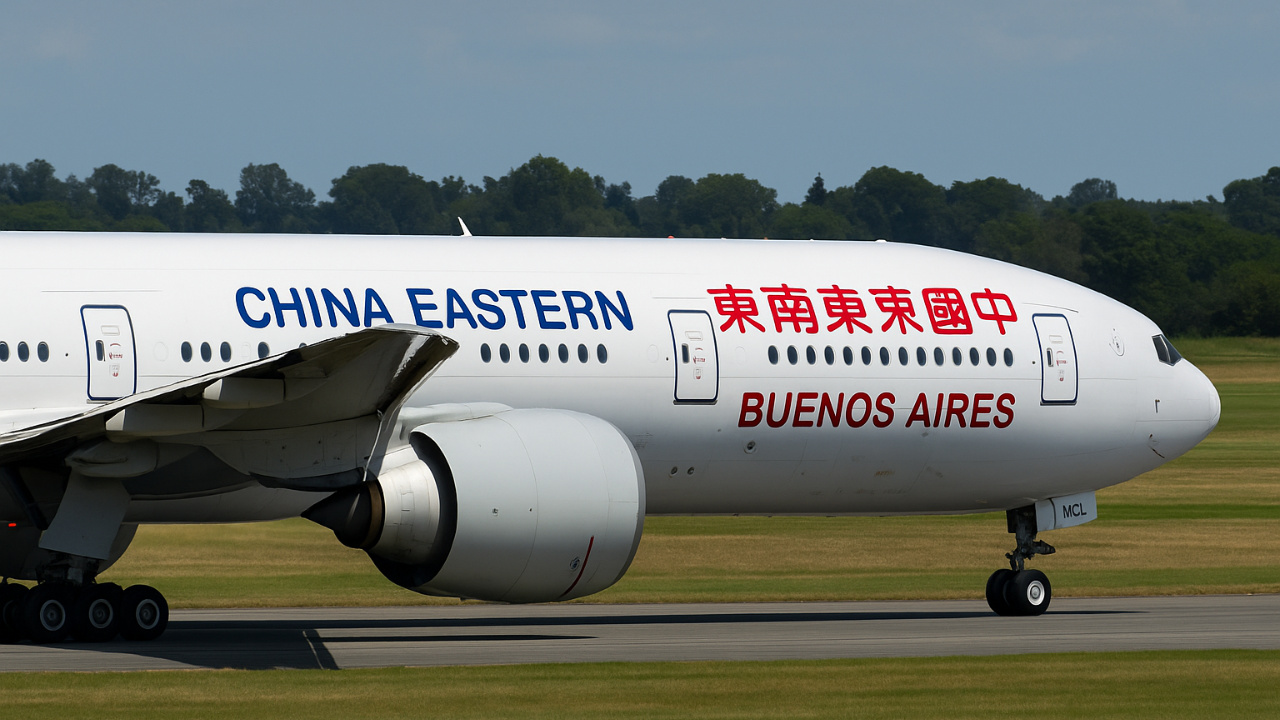
China Eastern Launches Shanghai–Buenos Aires Route and Inaugurates New Milestone for Ultralong Flights in Commercial Aviation.
What Happened? China Eastern Airlines officially launched the Shanghai–Buenos Aires route, considered the longest flight in operation in the world at the moment.
Who Carried It Out? The Chinese airline.
When? On Thursday (4), during the first official flight of the route.
-
Offshore air transport soars in Brazil, surpasses 2.5 million passengers, and reveals how oil has transformed Rio’s airports into key pieces of national logistics.

-
Latin America becomes the “global champion” of aviation taxes, tickets may become more expensive in Brazil, and IATA’s warning exposes risk for flights, tourism, and passengers.

-
Brazil has lost 85 air routes since 2019 and is still flying less than before the pandemic, leaving passengers with fewer destinations, fewer frequencies, and a more limited air network.

-
Anac and Decea are behind iFood’s drones in Barueri and explain how aerial delivery got the green light in Brazil, as orders leave the mall, cross the sky in a few minutes, and reveal the behind-the-scenes of new commercial drone deliveries in the country.




Where? Departing from Pudong International Airport in Shanghai, with a stop in Auckland, New Zealand, and arriving at Ezeiza International Airport in Argentina.
How? Aboard a Boeing 777-300ER configured for 316 passengers.
Why? To meet the growing demand for connections between Asia and South America and to open a new long-haul air corridor, reducing the number of connections in trips that traditionally exceeded 30 hours.
A New Chapter for Ultralong Flights
The inaugural flight lasted about 29 hours and covered approximately 20,000 kilometers, consolidating the operation as a game changer in the ultralong flight segment.
Although the route is not entirely direct, the stop in Auckland represents only a technical stop of two hours, which drastically reduces the total travel time between the two continents.
China Eastern Airlines classified the new route as “the first commercial link between antipodal cities”, highlighting that it integrates a bold intercontinental corridor between the Asia-Pacific and South America.
According to the company, the initiative “fills a historical gap”, by establishing a direct link between two important economic hubs.
Growing Demand Strengthens the Shanghai–Buenos Aires Route
Before the debut, passengers traveling between China and Argentina relied on multiple connections, often exceeding 30 hours of travel time.
Data from the Simply Flying portal reinforces the relevance of the new operation: more than 55,000 Chinese people currently live in Argentina, forming a rapidly expanding community — which increases the need for more practical and accessible air alternatives.
This movement reinforces the potential of the Shanghai–Buenos Aires route as one of the most strategic today, both for passenger transport and for economic and cultural flow between the two regions.
Aircraft, Schedules, and Operation: How the New Route Works
To operate the service, the company chose the Boeing 777-300ER, an aircraft known for its robustness and efficiency in long-haul flights.
The route will operate twice a week, remaining active throughout the year and offering more predictability for leisure and business travelers.
Ticket Prices and Commercial Interest
Prices vary depending on the selected class.
In economy class, fares range from US$ 1,525 to US$ 2,254, while business class is around US$ 4,994.
Even though the prices are not low, experts say that the launch is expected to stimulate the market.
Global Trend: Ultralong Distances Gain Strength
The new route arrives at a time when major airlines are heavily investing in long-duration routes.
Australian Qantas, for example, is preparing the ambitious Project Sunrise, scheduled to enter operation in 2026.
The initiative will feature customized versions of the Airbus A350-1000, equipped with additional fuel tanks to cover up to 16,900 kilometers.
Currently, Qantas already operates one of the longest direct routes on the planet: London–Perth, with approximately 17 and a half hours.
A Future Shaped by Increasingly Extensive Routes
The technological advancement of aircraft and fuel efficiency is accelerating the expansion of ultralong flights.
The route inaugurates a phase in which traveling almost half the planet in a single itinerary is no longer an exception but a trend.
Thus, the operation of China Eastern Airlines becomes a clear symbol that commercial aviation is entering a bolder new era.









Be the first to react!