Portuguese
  Spanish


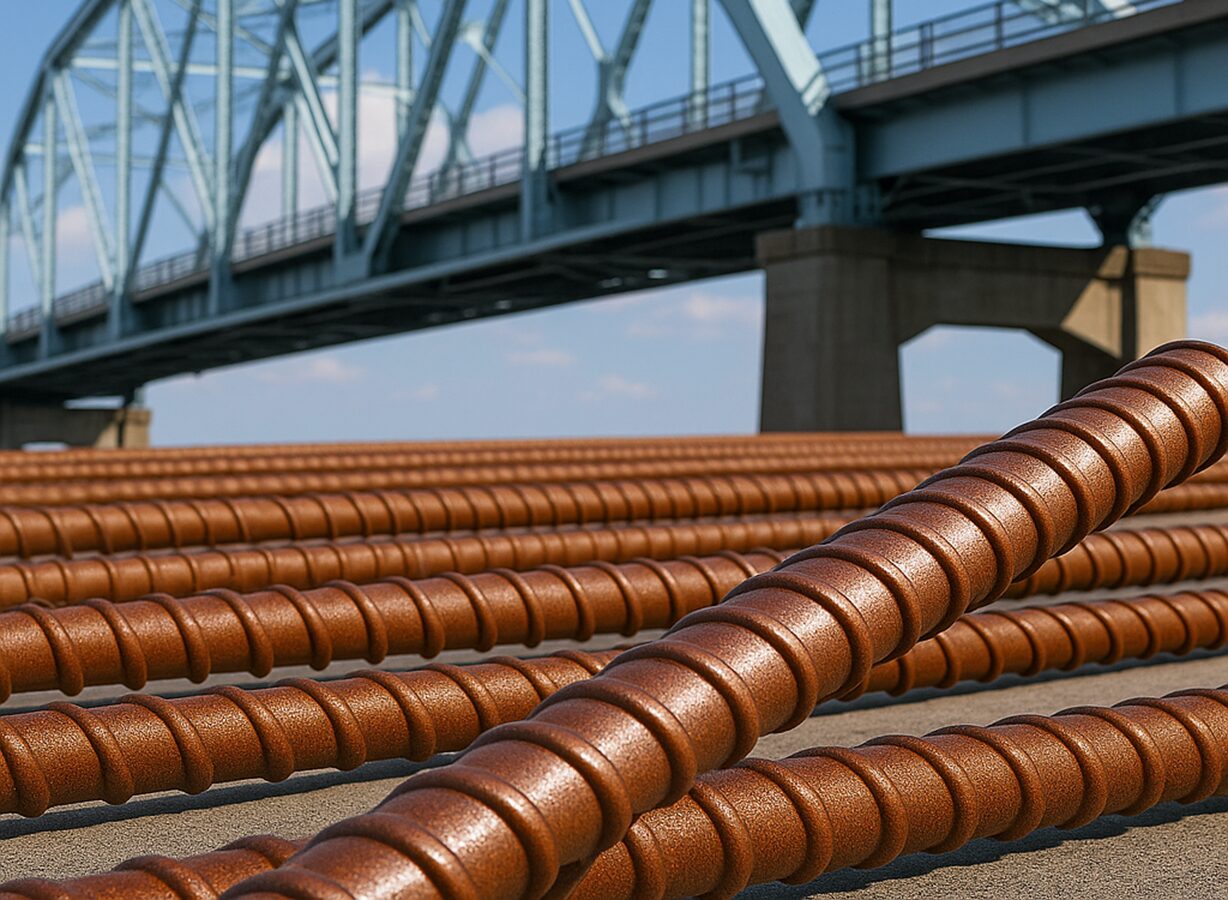

Startup Founded by MIT Doctors Develops Technology That Coats Steel Bars With Stainless Steel, Promising to Triple the Durability of Bridges and Has Already Started Applying the System in the USA.
Scientists from the United States announced a breakthrough that could change the way bridges are built and maintained with an incredible innovation in stainless steel.
Allium Engineering, a startup founded by two doctors from MIT, developed a technology that uses stainless steel to protect structures from corrosion.
According to the company, this can increase the lifespan of bridges and other infrastructure by up to three times.
-
Brazilian Researcher Develops Protein Supplement from Tilapia Waste, Combining Innovation and Sustainability with Economic Potential

-
Women in São Paulo Unknowingly Tracked by Coin-Sized Tags Hidden in Cars and Belongings, Raising Stalking Concerns
-
Near a $750 million AI data center in Brazil, a resident’s well runs dry, leaving her unable to afford the $25,000 needed for repairs.

-
16-Year-Old from Brazil’s Sertão Wins Young Scientist Award for AI Predicting Rainfall with 94.5% Accuracy to Aid Farmers


A Solution Against Corrosion
The new technology works by applying a coating of stainless steel to traditional steel bars.
This coating creates a barrier against rust, which typically weakens structures over time.
The buildup of rust on steel bars can cause cracks and damage the surrounding concrete, making bridges more vulnerable and dangerous.
With the new system, Allium claims that bridges could last up to 100 years, compared to the current average of 30 years. This represents a huge gain in the durability and safety of constructions.
More Than 200,000 Bridges Need Repair
In the United States, the situation regarding infrastructure is concerning. A survey by the American Road and Transportation Builders Association indicated that one in three bridges needs replacement or repair. This represents over 200,000 bridges across the country.
Allium’s CEO, Steven Jepeal, states that many of these problems arise because the materials used in constructions were not the most suitable. “Infrastructure aged faster than expected. We are trying to take advantage of this moment of reconstruction to create something that lasts longer,” he explains.
Integration With the Current Industry
One of the strengths of the new technology is its compatibility with the processes already used in steel mills. Allium designed its system to be easily integrated into industrial operations without the need to change the functioning of the plants.
According to Jepeal, “we integrated our system with factories so they don’t need to do anything different.” The company adds the protective layer directly in the production process, without interrupting the flow. Thus, any steel mill can start producing this new type of rebar.
Practical Results and Production
The company reported that about 45,000 kilograms of these coated bars have already been used in construction projects in the United States.
The expectation is that the process can be quickly expanded to other steel mills in the country.
Currently, Allium’s first production unit has the capacity to produce 1,000 tons per year. However, the plans are ambitious: the startup aims to open more facilities close to partner plants, with the goal of fully integrating the new system into the operations of the steel mills.
Process Similar to Pasta Production
The company also highlighted that one of the initial challenges was to create a way to apply the corrosion-resistant material without increasing costs and without interrupting the traditional production flow.
The manufacturing process starts with large blocks of steel being shaped at high temperatures by machines called rollers. According to Jepeal, this procedure resembles large-scale pasta production.
Focus on Durability and Sustainability
With the application of the stainless steel coating, Allium hopes to contribute to more durable, economical , and sustainable infrastructure. “This is what needs to happen for the entire world’s infrastructure to be more durable,” concluded Jepeal.
The expectation is that, with large-scale adoption, the new technology will help reduce maintenance costs and increase the safety of millions of people who use these structures every day.