Portuguese
  Spanish


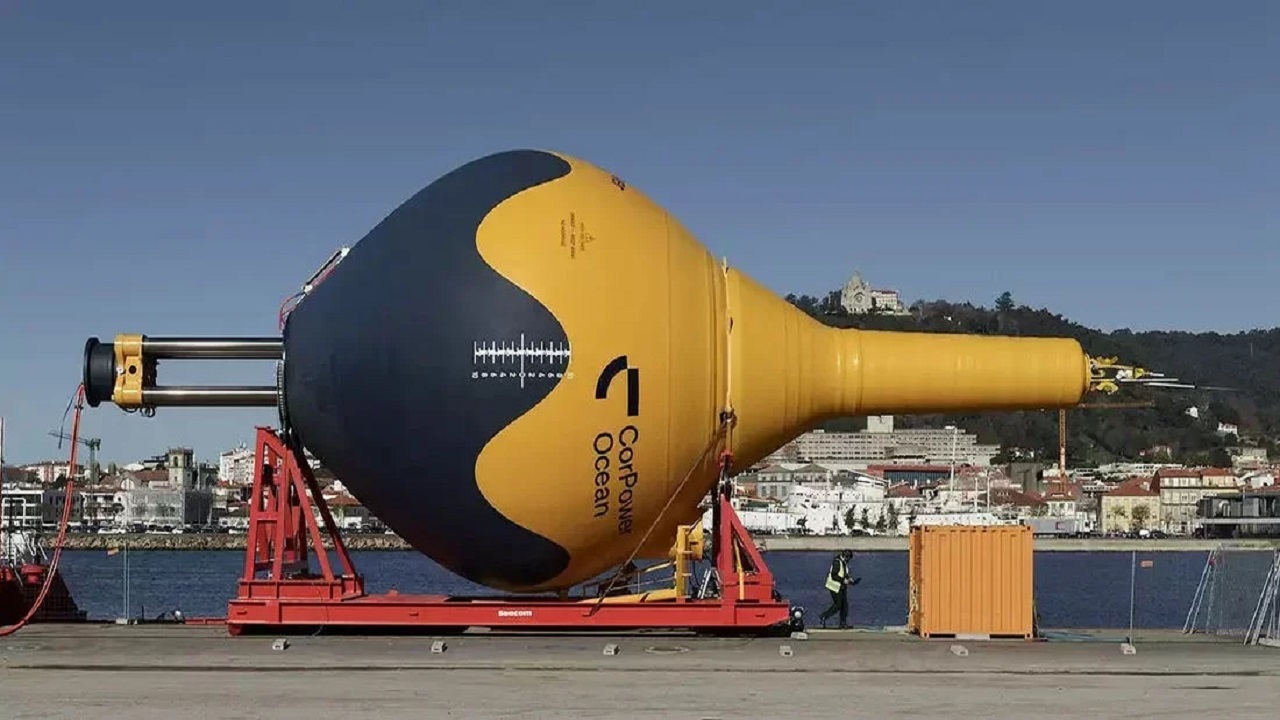

Swedish Company Develops Floating Turbines Capable of Generating Renewable Energy Using Seawater. The Equipment Uses Wave Energy to Power Hundreds of Homes.
A CorPower Ocean, a Swedish company recognized in the sustainability sector, is developing an excellent solution to generate renewable energy from the sea. By utilizing wave energy, the company has created a system that converts the motion of water into electricity to sustainably power cities.
CorPower Technology Promises to Be Efficient and Practical


The solution is extremely practical in open water, as the floating turbines can absorb energy generated from all directions, making renewable energy generation more efficient. The solution developed by CorPower Ocean is low-cost and designed to be efficient and practical. The system includes a converter that captures wave energy and transforms it into electricity.
For this process to be successful, the design of the floating turbines employs a pre-tension system that pulls the buoy down while the waves push the buoy up. The stored pressure generates the necessary return force to push the buoy down, generating renewable energy in both directions.
-
Brazilian mechanic invents simple solar lamp using water and chlorine in a PET bottle, providing up to 60 watts of light during the day

-
Swiss glaciers melting fast enough to fill an Olympic pool every 6 seconds, France confirms 3,700 heatwave deaths, and WMO predicts strong El Niño intensifying extremes until 2027

-
Sudden Sea Recession in São Paulo Sparks Tsunami Alert and Online Debate on Giant Wave Risks in Brazil

-
China Launches World’s First 307-Meter Floating Wind Platform to Supply Oil Rigs, Aiming to Cut 35,000 Tons of CO2 Annually


According to Patrik Moller, CEO of CorPower Ocean, the wave energy system can generate five times more energy per ton than other similar systems, demonstrating its advantage over other projects.
Furthermore, the design of the floating turbines was conceived to be practical and efficient, making the system’s assembly simple and quick. CorPower Ocean’s technology is a revolutionary, creative, and sustainable solution for renewable energy generation.
Floating Turbines Can Reach Several Other Places
Using the functioning of the heart as inspiration, the company transformed the theory of the biological field into something viable for physics, resulting in a highly efficient and dynamic system capable of generating sustainable electricity.
It is worth noting that the company’s idea is being developed in accordance with the UN’s Sustainable Development Goals for 2030, which establish the need to move towards a more sustainable society through investment in clean energy.
Several countries are using sustainable processes to contribute to this initiative. Thus, if the efficiency of the system is proven in the long term, CorPower Ocean’s solution can be taken to other parts of the world, generating sustainability on a large scale.
Largest Wave Energy Plant in the World
In December of last year, Eco Wave Power (EWP), from Sweden, signed an agreement with Oren Ordu Eneas for the development of the largest wave energy plant in the world, which will be installed on the Turkish coast of the Black Sea.
The company, which patented a smart and cost-effective technology to generate clean energy from ocean and marine waves into green energy, was founded in Israel in 2011, while Oren Ordu Eneas is an affiliate company of a local Turkish municipality.
The project began with a 4 MW pilot and soon advanced to a 77 MW plant consisting of a fixed and modular matrix of articulated steel floats equipped with pistons. This wave energy plant mechanism would push a working fluid through a submarine umbilical pipeline to a transformer on land, generating clean energy.
Initially, the project will have an initial value of US$ 150 million; however, no completion date has been announced. According to the CEO of Ordu Enerji, Mustafa Kemal Macit, with the aim of building a self-sufficient network in the region, the company sees EWP as an essential project to harness the sea’s potential and utilize its limitless energy source to supply its power grid.