Portuguese
  Spanish


The New Technology Promises to Revolutionize the Lives of Communities in Arid Regions by Transforming Humidity into Drinkable Water.
The new technology, developed by researchers at the University of Nevada, Las Vegas (UNLV), uses solar energy to capture water from the air, opening incredible possibilities for arid regions and directly addressing the water crisis. Capable of producing up to 3.7 liters of drinkable water per square meter per day, even in extreme low humidity conditions, this advancement is a milestone in the field of sustainability.
The device, which utilizes solar energy, goes beyond in areas with higher humidity: its capture capacity triples, reaching impressive 11 liters per square meter. This reinforces its potential to serve vulnerable communities in various parts of the world.
How Does This New Technology Work?

At the heart of this new technology is a hydrogel membrane that captures water vapor from the air and transports it to a lithium bromide desiccant solution. This process allows water to be collected quickly and efficiently, overcoming limitations of traditional methods that rely on slow cycles or solid sorbents.
-
Xiaomi Unveils Smart Pressure Cooker That Cooks Meat Up to 40% Faster

-
Antarctic Mystery: Study Uncovers Over 500 Hidden Earthquakes 150 km Deep, Challenging Traditional Theories
-
Excavation for Solar Park in Germany Uncovers Rare Celtic “Princely Tomb” with Elite Warrior Buried with Gold, Weapons, Etruscan Jug, and Two-Wheeled Chariot in Bad Camberg

-
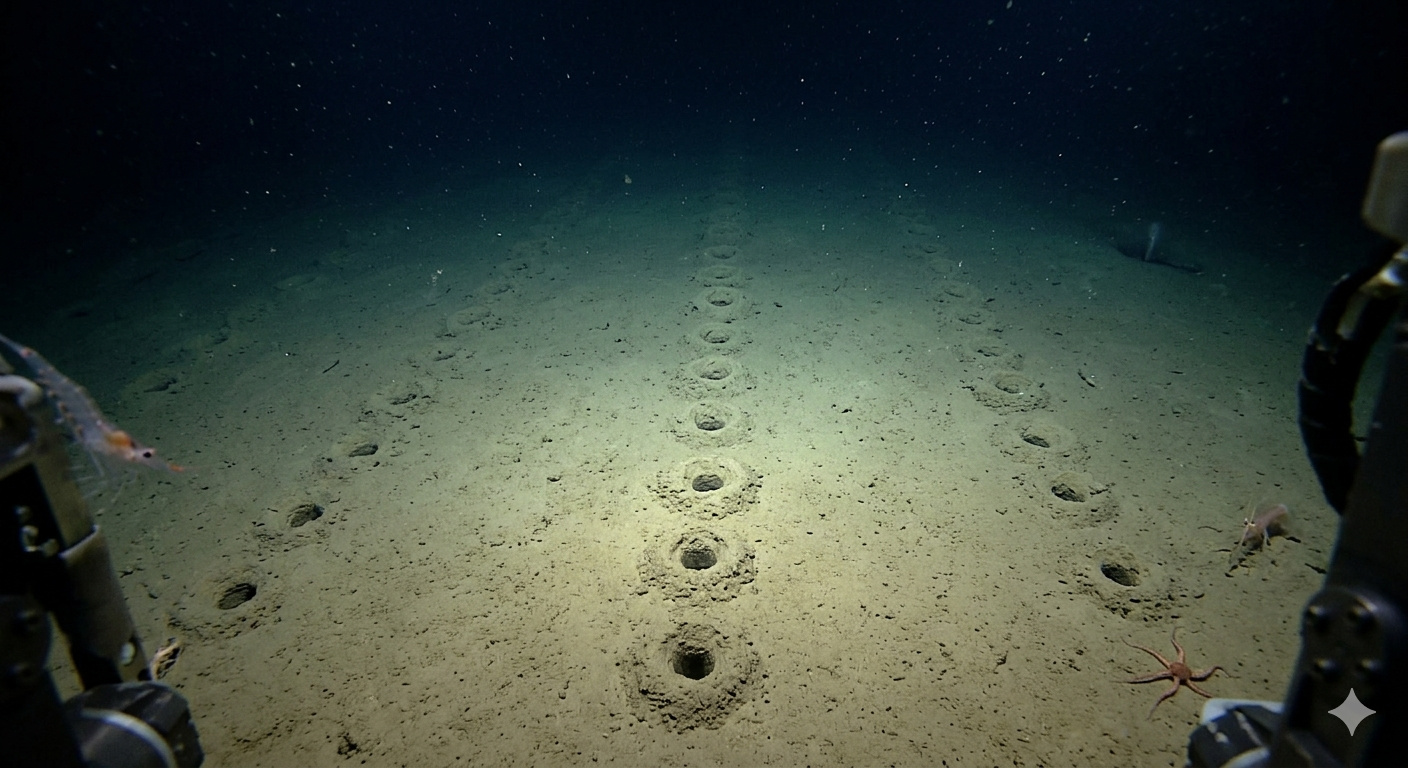
NOAA Scientists Discover Mysterious, Perfectly Aligned Holes on the Mid-Atlantic Ridge Seafloor, Origin Still Unknown



Inspired by nature, the technology mimics mechanisms found in plants known as air plants and the skin of certain amphibians, which can capture and store moisture from the air. The hydrogel membrane operates similarly, optimizing the collection and transport of water to a liquid solution where it can be stored.
Tests conducted in Las Vegas, one of the driest regions in the United States, proved its effectiveness even when the humidity in the air is below 10%. This is a significant achievement since other technologies fail under such extreme conditions.
Efficient and Sustainable Solar Technology
In addition to operating autonomously through solar energy, the new technology is simple to operate and requires little maintenance. This combination of efficiency, sustainability, and ease of use makes it ideal for isolated or rural communities where infrastructure is limited and access to water is costly or nonexistent.
One of the most notable features of the device is its ability to enhance its efficiency with a low-energy fan, which improves water vapor capture. With this addition, the output reaches 5.5 kg/m²/day, placing this solar technology that captures water from the air among the most advanced in the sector.
Transforming the Future of Arid Regions
The new technology is not just an innovation; it is a promise of transformation. With the potential to revolutionize access to water in remote areas, it could be the answer millions of people have been waiting for to address water scarcity.
As communities around the world face the challenges of climate change, this solar technology that captures water from the air stands out as a symbol of hope and innovation on the path to a more sustainable future.