Portuguese
  Spanish


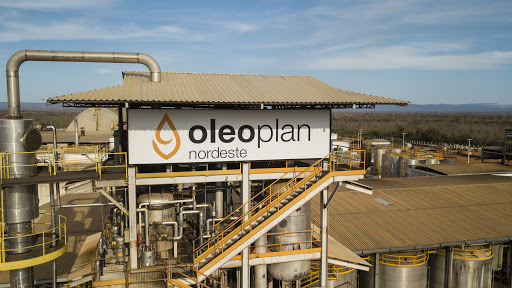

If Realized, Oleoplan’s Biodiesel Plant Will Be the First Project of the Company from the State of Pará. Many Jobs Could Be Generated
A new biodiesel plant from Oleoplan may be installed in the municipality of Tomé-Açu, in the state of Pará. The company from Rio Grande do Sul that operates in soybean processing and biodiesel production may build its first project in the state, where investments of R$ 148 million are expected. There is great expectation for the generation of more than 50 direct job openings, and thousands of indirect positions.
- For R$ 95 million, Petrobras sells 3 thermoelectric plants in Camaçari, Bahia
- Baker Hughes Signs New Contract with Petrobras to Supply Subsea Equipment for Marlim and Voador, in the Campos Basin
- University Students in Uberlândia Create Brazil’s First Electric Motorcycle, Which Goes from 0 to 100 km/h in Three to Four Seconds
- Enrollment Opens for Free Electrician Course in the State of Espírito Santo
- Funding of R$ 1.5 billion Approved for Largest Mining Project in Mato Grosso. Approximately 2,350 Jobs Will Be Created
Investments and Jobs with the New Plant in Pará
The construction of the new biodiesel plant in the state of Pará was the main topic discussed in a meeting between the Director of Institutional Relations of Oleoplan, Leonardo Botelho Zilio, and the management of the Pará Economic Development Company (Codec), with the presence of the head of the state agency, Lutfala Bitar. During the meeting, the creation of new jobs was mentioned, and the expectation is to generate more than 50 jobs directly and thousands indirectly in the state of Pará.
In the meeting, another topic discussed was the installation of a second biodiesel plant in the municipality of Marabá, in the southeastern region of Pará, where the Pará Economic Development Company (Codec) is primarily responsible for managing the industrial district of the city.
-
Brazilian Forests Could Expand by an Area Twice the Size of Switzerland by 2035, but Agricultural Sector Holds the Key, Study Finds

-
Microsoft Lays Off 4,800 Employees, Cuts 20% of Xbox Staff Amid AI Pressure on Major Tech Firm
-
Brazilian Student Develops Solar-Powered Agricultural Machine Capable of Processing 250 Kilograms per Hour

-
Brazil’s ANP Opens 86 New Oil Blocks in the Equatorial Margin, Expanding the Amazon River Mouth Frontier


Installation of Oleoplan’s Biodiesel Plant
Leonardo Botelho stated that the installation in Pará is a major strategy, where soybeans and palm are essential for biodiesel production. According to Botelho, it will be very beneficial to add value in the state through the biodiesel plant, considered an emerging sector, where Oleoplan achieves significant results and national prominence. He also emphasizes that the company’s move to Pará will enable the state, which currently stands out in the North and Northeast regions for palm production, to also excel in biodiesel, making it possible to supply this fuel even to other regions.
Manoel Ibiapina, Director of Investment Attraction at Codec, states that the new biodiesel plant in Pará will promote competitiveness, attract other investments, and generate new jobs. He highlights that the state is the largest producer of palm oil in Brazil and notes that it is very significant for attracting businesses like those in biodiesel, as the raw material is located in Pará.
Operations of Oleoplan Throughout Brazil
Currently, the company that operates in soybean processing and biodiesel production has two processing units for biodiesel and soybean production, one located in the city of Veranópolis (RS) and another in the municipality of Iraquara (BA). The biodiesel plant in Veranópolis is the largest in Rio Grande do Sul and, along with the plant in Iraquara, produces 10% of the national output of this biofuel.
In addition to the two industrial parks, the company has a corporate office in Porto Alegre (RS), a hydro terminal in the city of Canoas (RS) for the shipment of its exports, and more than 20 branches for grain reception spread across the northwestern and northeastern regions of Rio Grande do Sul.