






 Portuguese
  Spanish


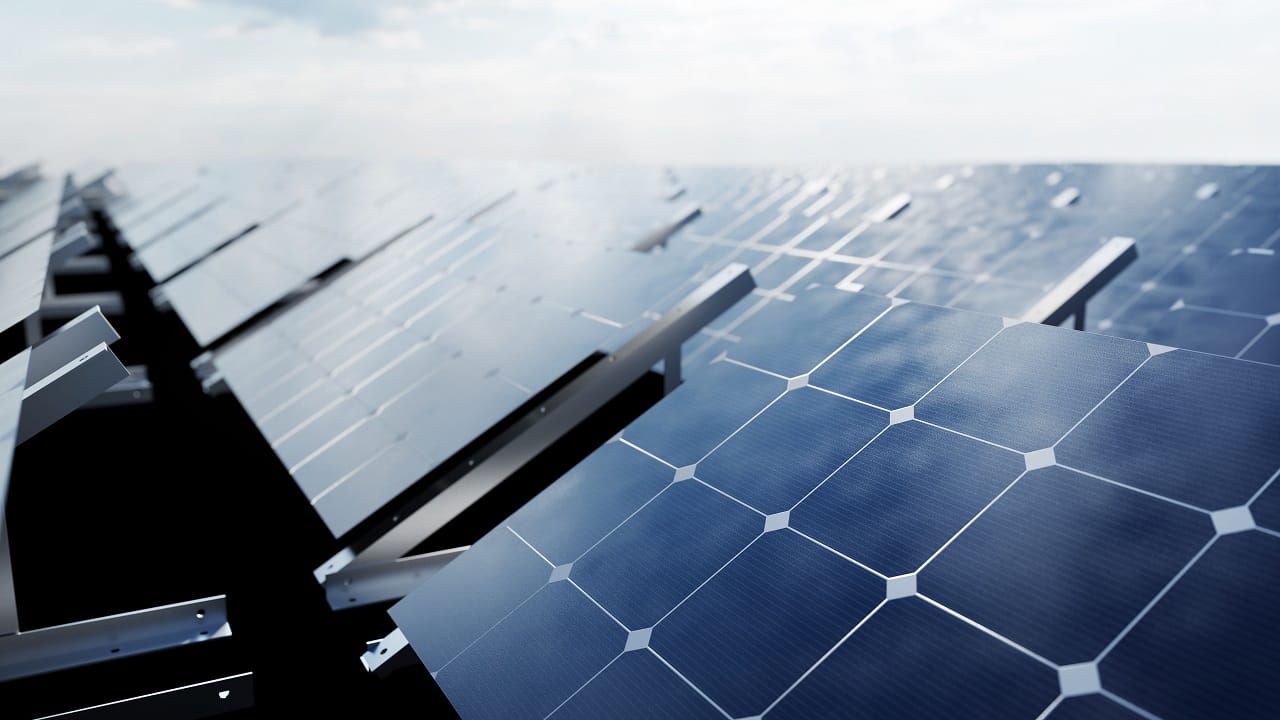

Scientists Establish New Efficiency Record In Solar Cells, Promising More Effective Solar Panels And A Significant Advancement For The Solar Energy Sector.
Korean engineers have achieved a significant milestone in quantum dot solar cell efficiency, a crucial step towards commercializing this next-generation solar panel technology. Quantum dots, already used as pixels in modern screens due to their ability to convert energy into light with high efficiency, now show their revolutionary potential in solar energy generation.
Quantum Dot Technology Achieves Greater Efficiency Than Conventional Solar Panels
It is worth mentioning that these quantum dots can also function in reverse, taking light and converting it into energy, which has led to great interest in using them as solar panels. According to professor Sung-Yeon Jang from the Ulsan National Institute of Science and Technology, the developed technology has reached an impressive efficiency of 18.1% in quantum dot solar cells.
The innovative approach to the solar energy sector involved synthesizing perovskite quantum dots based on organic cations, ensuring exceptional stability while suppressing internal defects in the photoactive layer of the solar cells. The prototypes maintained their efficiency even after long-term storage.
-
Brazilians Earn Up to $120 an Hour Training AI Systems, Despite Lacking Programming Skills or Degrees

-
In Alaska’s -40°C Cold, a Scientist-Turned-Farmer Uses Vegetables’ Heat to Store Food Without Power
-
Oil Company Robots Discover 3,300-Year-Old Canaanite Shipwreck in the Mediterranean, Proving Ancient Mariners Navigated Open Seas Using Stars Long Before Historians Thought

-
Helicopter Drops 180 Tons of Sand and Gravel on Swedish River to Revive Ecosystem Damaged by Decades of Exploitation



Sang-Hak Lee, who is responsible for the innovation, highlighted that previous research on quantum dot solar panels predominantly used inorganic QDs. Through this study, the potential was demonstrated in overcoming challenges related to organic QDs, which proved difficult to utilize.
It is important to note that QD stands for quantum dot of perovskite. The efficiency is still less than half that of the most advanced traditional semiconductor solar cells; however, this achievement is being celebrated because it overcomes a hurdle that had been hindering the development of this new technology and consequently, the advancement of the solar energy sector.
QDs Catch Attention And Can Be Used In Solar Panels
Quantum dots are semiconductor nanocrystals with typical dimensions ranging from a few to tens of nanometers, with their photoelectric properties varying according to their size.
The interest in them has grown even more after, last year, the three scientists who discovered and developed these semiconductor nanoparticles received the Nobel Prize in Chemistry.
QDs, in particular, have attracted significant attention due to their excellent photoelectric properties. Furthermore, their production process involves simple spraying or solvent application, reducing the need for substrate growth processes.
This simplified approach enables high-quality production in various manufacturing environments at a very low cost, lowering the prices of solar energy equipment. However, their practical use as solar cells depends on a technology that reduces the distance between quantum dots through a ligand exchange, a large molecule that connects to the surface of the quantum dots to interlink them.
Team Uses Unique Strategy To Achieve Greater Efficiency In Solar Energy
Organic perovskite quantum dots are more problematic, exhibiting defects in their crystals and surfaces during the substitution process. In contrast, inorganic perovskite quantum dot solar cells are plateaued at an efficiency close to 16%.
The team broke this barrier by employing a strategy of ammonium iodide-based ligand exchange, effectively replacing the ligands with organic perovskite quantum dots, achieving excellent solar energy capture.
This advancement enables the creation of a photoactive layer of quantum dots for solar panels with high replacement efficiency and controlled defects.
Consequently, the efficiency of organic QDs, previously limited to 13% using existing ligand exchange technology, has significantly improved to 18.1%. Furthermore, these solar cells demonstrate optimal stability, maintaining their performance even after long-term storage for over two years.










Boaz