






 Portuguese
  Spanish


At Offbeet Farm in Fairbanks, former engineer Sam Knapp designed a shed that uses Alaska’s extreme cold and the heat from the vegetables’ respiration to store food without energy. The result ensures food security and fresh vegetables from summer until the following spring, without electric refrigeration.
There is a shed in the interior of Alaska where, at the height of winter, the problem is not the cold coming in, but the excess heat. Outside, the thermometer drops to 40 degrees below zero, and yet, inside the structure, cooling fans need to turn on to expel the heat. The heat is produced by the vegetables stored there, which remain alive and breathing after being harvested. It’s Sam Knapp’s contraption, and it reverses everything that seems obvious about preserving food in the coldest place in the United States.
The story was reported by the website CompreRural in February 2026 and shows how Knapp solved a problem that seemed impossible: storing food without energy in a climate that kills any garden between September and May. Instead of spending fortunes on refrigeration or heating, he designed a shed that lets nature do both jobs for free. The extreme cold outside cools when needed, and the vegetables heat the environment on their own. All this at Offbeet Farm, near Fairbanks, where he built the structure in 2020.
The turnaround: in a place of -40°C, the problem becomes the heat
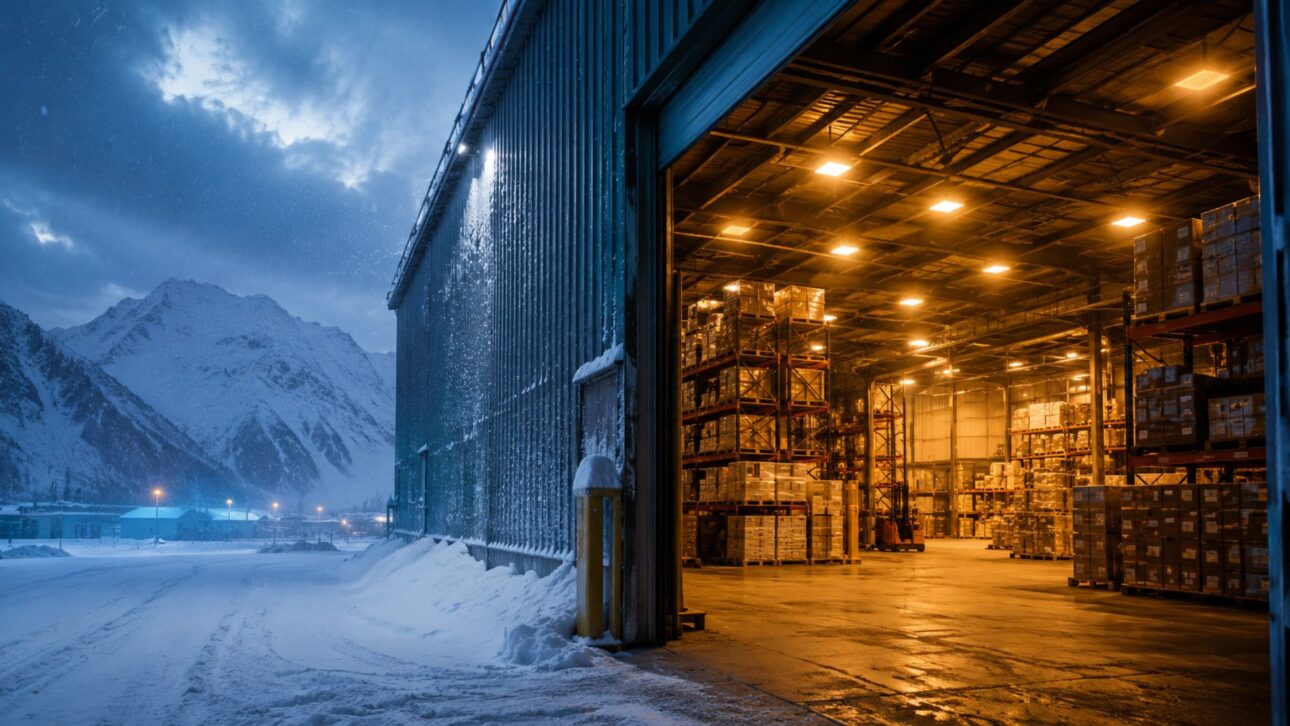
“Last winter, there was a time when it was -25 degrees outside, and my cooling fans turned on”, he recounted. Pause for a second to absorb that. It was 25 degrees below zero outside, cold enough to freeze exposed skin in minutes, and yet the machine understood it needed to cool the environment.
-
Oil Company Robots Discover 3,300-Year-Old Canaanite Shipwreck in the Mediterranean, Proving Ancient Mariners Navigated Open Seas Using Stars Long Before Historians Thought

-
Helicopter Drops 180 Tons of Sand and Gravel on Swedish River to Revive Ecosystem Damaged by Decades of Exploitation

-
Brazilian Company Launches Retro Smartphone with 48 MP Camera, T9 Keyboard, and Privacy Features for Social Media-Free Use

-
Self-Taught Chinese Farmer Builds 5-Ton Submarine from Scrap, Launches It in Anhui River



The reason is what makes the idea brilliant. The warehouse is so well insulated that the extreme cold of Alaska hardly penetrates the walls. Inside it, the heat released by the vegetables as they breathe accumulates and pushes the temperature upwards, too close to the ideal storage limit, which is just above zero degrees. When this happens, instead of turning on an expensive air conditioner, Knapp simply opens the air intake and lets the winter outside do the job, blown in by low-consumption fans.
This is where the beauty of storing food without energy in the way he does lies. The same extreme cold that would be the villain of the story becomes the cheapest ally there is, a natural air conditioner with plenty of power. There is no compressor, no refrigerant gas, no high electricity bill to keep the vegetables firm. There is well-thought-out physics, top-notch insulation, and a handful of fans.
Why Vegetables Heat Up on Their Own After Being Harvested
Many people imagine that a harvested vegetable is dead, but that’s not quite the case. After being pulled from the ground, the vegetable remains alive and breathing for weeks or months. The cells continue to burn the sugars accumulated during growth, consume oxygen, and release carbon dioxide, water vapor, and, most importantly, heat. This is what science calls respiration heat, and it is real enough to heat an entire warehouse.
This process is precisely what causes food to spoil. The faster the vegetable breathes, the faster it wilts, softens, and rots. That’s why cellars and storage chambers worldwide work to keep products at a cold and humid point, just above freezing, with plenty of moisture in the air. The cold slows down respiration, and slow respiration means firm vegetables for much longer. Maintaining this narrow temperature range is the key to all serious preservation.
In Alaska, this challenge takes on a unique aspect. Most places need to spend energy to cool food. Knapp has plenty of cold at the door, almost all year round, and his job has become controlling the excess heat that the vegetables themselves generate. This inversion is what he turned into a method, and that’s why being able to store food without energy there makes so much sense for the region’s food security: the environment provides the cooling, and the living load provides the heating.
The Scientist Who Swapped Thermal Modeling for the Hoe
Sam Knapp is not just any farmer, and that explains everything. According to the Fairbanks Daily News-Miner report, he has degrees in physics and chemistry, as well as a postgraduate degree in plant ecology, and worked as an engineer before getting his hands dirty. The detail that perfectly matches the story is that his specialty was thermal modeling, that is, calculating how heat moves through environments. It’s hard to imagine a better background for designing a shed that dances with temperature.
The turning point came when he developed a taste for agriculture and decided to combine the two passions instead of choosing one. He brought the rigor of a scientist into Offbeet Farm, treating storage as an engineering problem to be optimized, with spreadsheets, measurements, and fine-tuning. It’s not guesswork or tradition passed down from generation to generation, it’s calculation. This is the kind of mindset that looks at the cold of minus 40 degrees and sees an opportunity, not just a threat.
Knapp gathered everything he discovered in a book called Beyond the Root Cellar, published in 2024. The work was born from a gap he himself felt: there was almost no material aimed at small producers who wanted to store vegetables with commercial quality throughout the winter. What existed was aimed at home hobbyists, not those who need to sell beautiful vegetables in the middle of a cold January.
The $55,000 shed he built with his own hands
Knapp built the shed in 2020, on a plot of about 0.6 hectares, with an initial investment of approximately $55,000, and much of the work was done by his own hands. The base rests on special concrete forms, highly insulating, which are precisely the secret to blocking the extreme cold and keeping the internal temperature stable.
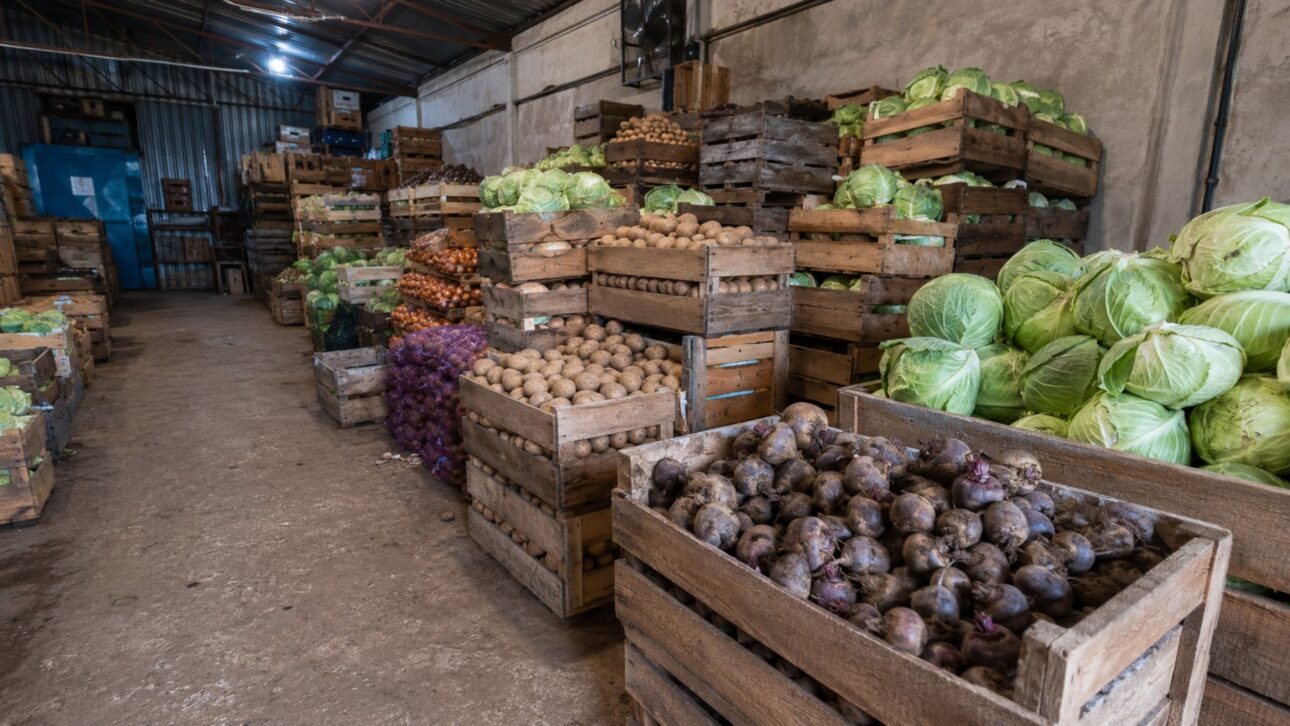
The capacity is impressive for its size. The shed holds between 35,000 and 40,000 pounds of products, or between 16 and 18 tons of food, and in the reported season, there were about 25,000 pounds stored, roughly 11 tons. All of this is preserved without electric refrigeration, only with the interplay between insulation, the cold outside, and the heat inside. For a climate where nothing grows for more than half a year, it’s a stockpile that changes the game.
The project’s affordability is part of the message. It didn’t require a factory or cutting-edge technology to store food without energy on a large scale, just well-applied common materials and a lot of knowledge. It’s the kind of solution that other cold regions could replicate, adapting the logic to the local climate. The genius lies less in what he bought and more in how he thought.
What goes into the warehouse and what lasts until the next summer
Not every vegetable behaves the same inside, and monitoring these differences has become a craft. Knapp grows and stores potatoes, beets, turnips, winter squash, kale, garlic, onions, rutabagas, and cabbages, among others. The champion of endurance is cabbage, which holds firm until the next summer, almost a year after being harvested, when stored under the right conditions inside the warehouse.
Others are more stubborn. Onions, for example, are troublesome because they need sun to cure before storing, and Fairbanks’ subarctic summer offers little of this light. Each crop has its ideal temperature and humidity point, which is why fine control matters so much. Missing the range by a few degrees can spoil tons of food at once, the opposite of what is desired when the goal is food security for the entire winter.
This mastery over the behavior of each vegetable is what sets Knapp’s warehouse apart from a simple giant refrigerator. He not only stores but understands what he is storing. The combination of controlled extreme cold, the right humidity, and managed respiration heat is what allows the food to remain stationary for months and still arrive firm at the buyer’s table.
Food that doesn’t rely on trucks: food security in Alaska
Behind the contraption lies a serious concern. Fairbanks is far from everything, and much of the food that reaches Alaska comes from outside, transported over long distances. When the pandemic disrupted supply chains, the risk of relying on imported food in an isolated place became clear. This was part of what motivated Knapp to invest so deeply in local production and storage, according to reports.
The business model reinforces this purpose. Offbeet Farm sells through a community-supported agriculture program, the CSA, and serves about 120 families, with sales extending until March, precisely the time of year when there is almost no fresh local produce. While other producers sell in the summer and disappear, Knapp does the opposite: he plants in the short season and sells in the long winter, offering food security when it is most scarce.
There is a human bonus in this choice that Knapp himself sums up well. “I rarely feel exhausted by farming”, he said, explaining that spreading sales throughout the winter relieves the pressure of harvesting and selling everything at once. Being able to store food without energy, in this case, not only sustains the community’s pantry but also the sanity of the producer. Offbeet Farm has become proof that food security and quality of life can go hand in hand, even in extreme cold.
A lesson that goes far beyond Alaska
The case of Sam Knapp is small in scale, but big in idea. It shows that it is possible to face one of the most hostile climates on the planet with physics, patience and simple materials, instead of brute force and huge electricity bills. Transforming the enemy, the extreme cold, into the main ally is the kind of mindset shift that solves problems anywhere. What he does at Offbeet Farm points a way for cold regions around the world to rethink how they store food and enhance food security without burning energy.
And you, were you familiar with this idea of using the heat that vegetables themselves release to store food without energy? Share in the comments if you think such a solution would have a place in the colder regions of Brazil, or if our climate would require a very different adaptation.




Be the first to react!