Portuguese
  Spanish


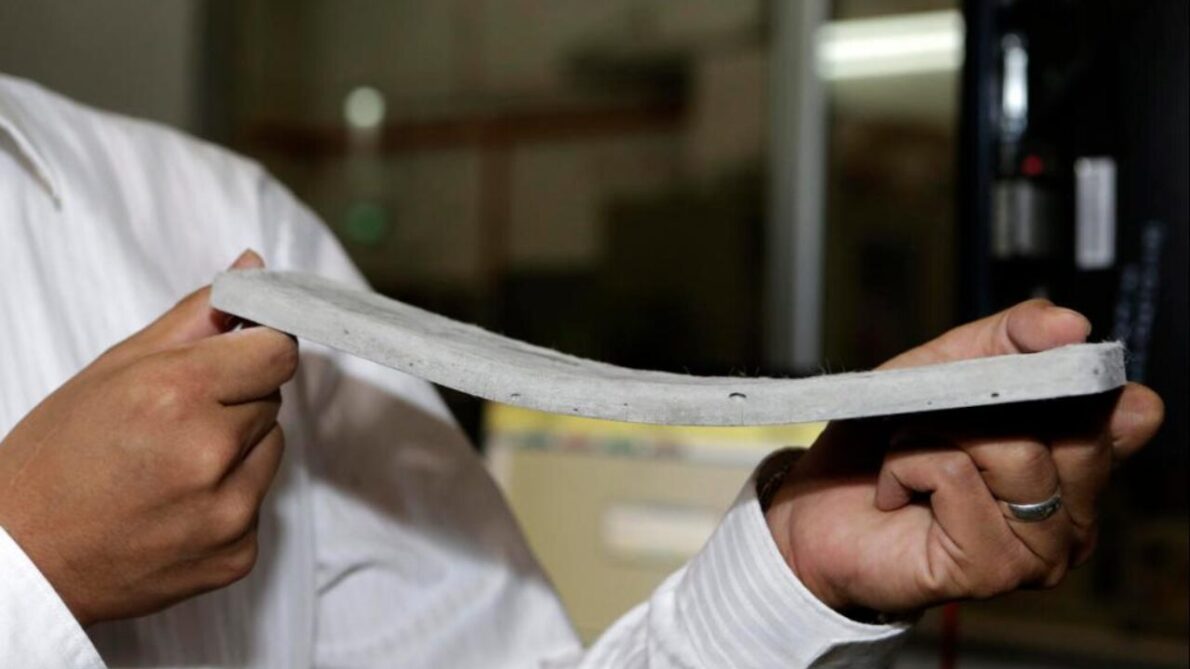

Flexible Concrete in Singapore Could Revolutionize Paving With Simple Installation and Superior Durability to Asphalt.
Scientists from Nanyang Technological University (NTU Singapore) are developing a new type of concrete that promises to revolutionize the construction industry. The material, known as Conflexpave, is a flexible concrete that could be a significant alternative to asphalt in the coming years. With the potential to reduce costs and increase the durability of pavements, Conflexpave could change the way we build and maintain roads and pavements.
What Is Conflexpave?
Conflexpave is a type of flexible concrete developed to offer a more efficient solution for paving.
Unlike traditional concrete, Conflexpave is designed to be pre-fabricated in the form of slabs.
-
World’s First Lithium-Sulfur Battery Factory Launches, Promising to Double Range Without Relying on China

-
AI Data Centers Now Feature Built-In Nuclear Power Plants and Have Ordered Non-Existent Reactors
-
In India, thousands earn about $2.50 an hour cooking and cleaning with a phone strapped to their heads, as every move is recorded to train humanoid robots for jobs they might one day replace.

-
Nuclear Fusion Study Proposes Transforming Mercury into Gold Using Tokamak Neutrons, but Real-World Application Remains Uncertain




These slabs can be installed more easily, allowing for quick and simple replacement of worn sections.
This not only simplifies the installation process but also reduces maintenance time and costs.
Development and Properties of Flexible Concrete
The development of Conflexpave began in 2016 and involved a careful combination of traditional materials with modern additives.
According to Professor Chu Jian, one of the researchers involved, the new concrete can be produced with a thinner and lighter profile, making installation easier.
“We have developed a concrete that significantly reduces the thickness and weight of precast pavement slabs. This allows new externally prepared slabs to easily replace the more worn ones,” says Chu Jian.
The secret behind Conflexpave lies in the combination of materials. By using gravel, cement, sand, and water, the researchers added polymers that give the concrete flexibility and greater strength.
Professor Yang, who is also part of the research team, explains: “With a detailed understanding, we can select ingredients and design the adaptation of components so that the final material meets the specific requirements needed for road and pavement applications.”
Benefits and Potential
Conflexpave not only promises a faster and easier installation, but it can also bring significant benefits in terms of cost and durability.
The ability to quickly replace worn sections reduces the need for constant maintenance, which can save money in the long run.
Additionally, the flexibility of the material may allow it to better adapt to changing weather and traffic conditions, increasing the lifespan of pavements.
Testing Flexible Concrete and the Future
Despite the promising advancement, Conflexpave is still in the testing phase. After the initial development, the material needs to undergo an additional three years of testing on a larger scale.
These tests will be conducted in partnership with the JTC, a government agency in Singapore responsible for industrial and infrastructure development.
The goal is to evaluate the performance of Conflexpave under real-world conditions and assess its effectiveness compared to traditional paving methods.
Ongoing research and development are essential to ensure that Conflexpave meets expectations and can be adopted on a large scale.
If the tests are successful, Conflexpave could become a viable and competitive option to asphalt, offering a more durable and economical alternative for road paving and other infrastructure.
Conflexpave is an example of the potential of innovation in the construction sector.
With its enhanced flexibility and strength, this new type of concrete could become one of the main competitors to asphalt in the coming years.
If future tests confirm its qualities, Conflexpave could not only improve the efficiency and durability of pavements but also transform the way we approach the maintenance and construction of infrastructure.