Portuguese
  Spanish


Government Insists On The Exploration Of The Equatorial Margin While Experts Warn Of Environmental Impacts And Unfulfilled Repeated Promises
The new oil auction promoted by the federal government in 2024 signals, once again, the choice for the continuation of fossil fuel exploration. Despite public promises to finance the energy transition, the model adopted repeats old patterns, reinforcing the dependence on an energy matrix that contributes to the worsening of the climate crisis.
Old Promises And Questionable Results
Since the first term of President Luiz Inácio Lula da Silva, the discourse around the pre-salt has been presented as a solution to the country’s major problems. In 2007, Lula promised that the pre-salt resources would solve issues such as health, education, and tax burden, in addition to financing a robust Sovereign Fund.
However, more than 15 years later, Brazil still faces structural challenges in the same sectors. The promise made during the Lula I and II administrations has not materialized as expected, according to economic experts such as Adriano Pires from the Brazilian Infrastructure Center (CBIE).
-
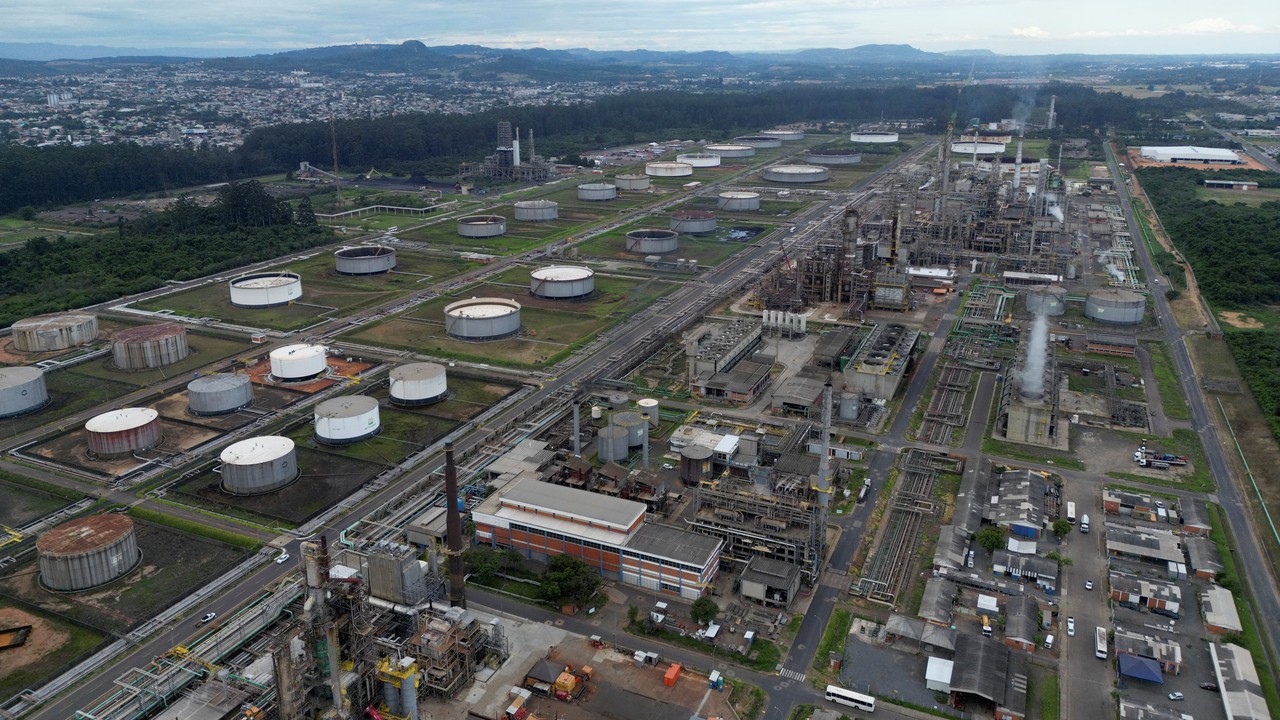
With a record production of nearly 3 million barrels per day, Petrobras resumes importing diesel in July, highlighting the bottleneck in Brazilian refining.

-
Qantas and Airbus Invest in Company Aiming to Convert Unsorted Household Trash into Jet Fuel

-
Brazil’s ANP Opens 86 New Oil Blocks in the Equatorial Margin, Expanding the Amazon River Mouth Frontier

-
OPEC+ Boosts Oil Supply by 188,000 Barrels per Day in July 2026, Leading to Price Drop from $112 to $89 per Barrel in Under Two Months



Therefore, although pre-salt exploration has advanced significantly, the social and structural gains have fallen short of what was announced.
The Return Of The Discourse With A New Package
Recently, in 2023 and 2024, the president has once again advocated for new exploration projects in the Equatorial Margin, especially at the mouth of the Amazon River. According to him, the exploration of the so-called “New Salt” could finance the energy transition, generating jobs, income, and cheap energy for the population.
On several public occasions, such as the opening speech at COP 28 in Dubai, Lula reiterated this argument. However, the narrative resembles the previous one, with grand promises and little clarity on how the model will be applied in practice.
Moreover, environmental institutions and scientists warn of the socio-environmental risks of oil exploration in sensitive areas like the Amazon coast. According to data from the Climate Observatory, the Equatorial Margin houses unique marine ecosystems that could be permanently affected by oil spills and indirect impacts.
Arayara Warns: Brazil Repeats The “Siren’s Song”
According to Juliano Bueno, PhD in Energy and Director of the International Institute ARAYARA, the new oil auction highlights Brazil’s deepening choice to become a major exporter of the climate crisis.
According to him, even during the Lula I and II administrations, the country had already heard the “Siren’s Song of Oil”, when it was promised that the pre-salt would solve the main national problems. “We will create the Sovereign Fund, solve the issues of health and education, and lower taxes with the pre-salt, the then-president said at the time,” recalls the expert.
However, none of this has fully materialized. Now, with a new cycle of promises, the government claims that the exploration of the so-called “New Salt,” on the Amazon coast and at the mouth of the Amazon River, will finance Brazil’s energy transition, generate jobs, income, and provide cheap energy.
Juliano Bueno counters the speech and states categorically: “I do not believe in sirens, nor in the bravado of politicians who choose alliances with climate villains and become partners in the global crisis”.
The Choice For Fossil Fuels In A Climate Emergency Scenario
Even in the face of warnings from the global scientific community, Brazil chooses to strengthen its role as an exporter of crude oil. The National Agency of Petroleum (ANP), in November 2024, authorized yet another auction of blocks off the northern Brazilian coast, attracting large international oil companies.
This move goes against the recommendations of the Intergovernmental Panel on Climate Change (IPCC), which advises an immediate reduction in fossil fuel exploration to curb global temperature rise.
Experts like Suely Araújo from the Climate Observatory argue that investing in renewables and energy efficiency would be more effective and sustainable in the long run. However, the official narrative continues to bet on the immediate gains from oil, even at the cost of evident climate and environmental risks.
Growing Distrust And Criticism Of The Adopted Model
In light of a history of unfulfilled promises, part of civil society and experts express skepticism about the federal government’s new statements. For many, the insistence on exploring the Equatorial Margin reveals a clear choice to maintain ties with agents responsible for the global climate crisis.
Recent public statements from climate activists and indigenous leaders reinforce criticism of the government’s stance, which, although advocating for the energy transition in international forums, internally adopts contradictory measures.
Indeed, the expansion of Brazilian fossil production compromises the country’s image in the climate commitments made under the Paris Agreement and in environmental summits. Therefore, the current scenario raises doubts about the real priority given to the environmental agenda.
Brazil At An Energy Crossroads
Finally, the oil auction promoted in 2024 makes evident a strategic choice by Brazil in favor of the fossil economy, even in the face of increasing climate urgency. The promise of using the profits from exploration to boost the energy transition sounds, to many, like a repetition of the “siren’s song” of the past, which no longer convinces as it once did.
Meanwhile, opportunities for world leadership in clean energy continue to be neglected, and the country goes on reinforcing its image as a partner of the main climate villains of today.
After all, how long will Brazil continue to believe in promises that are repeated but never fulfilled?