






 Portuguese
  Spanish


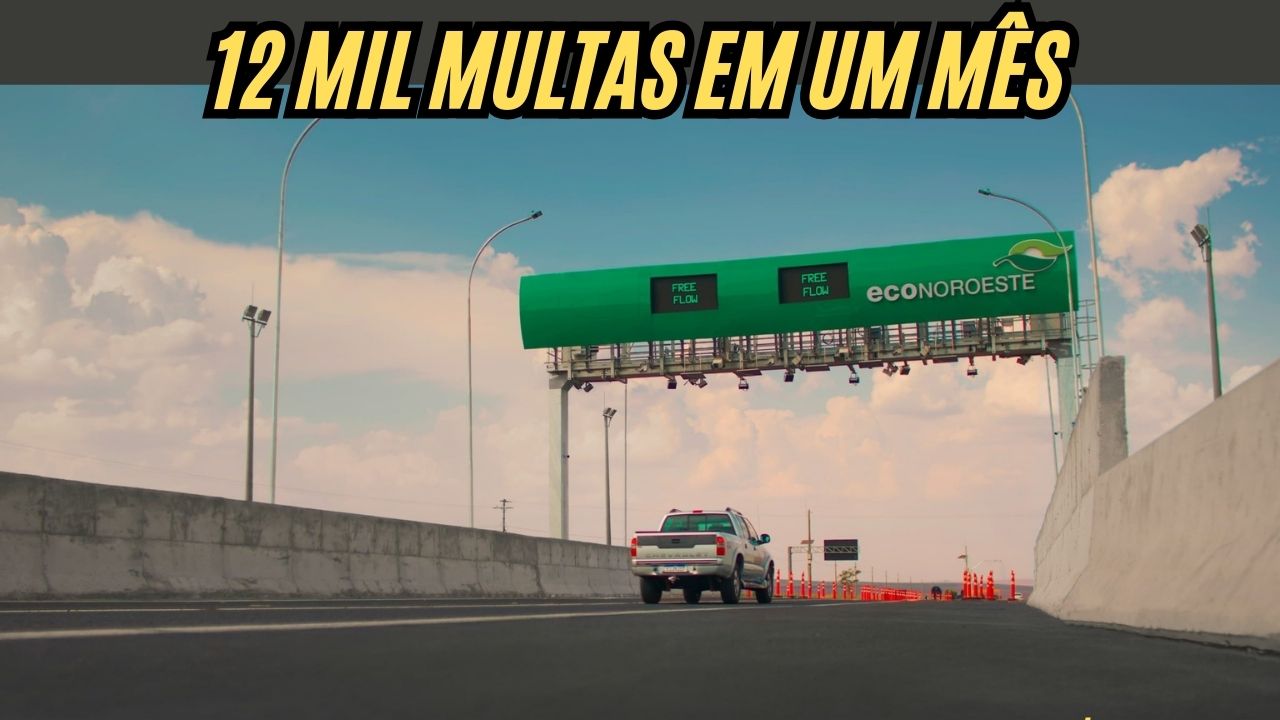

Free Flow System Debuts in the Interior of São Paulo and Surprises with Expressive Numbers of Infractions, Although Below the Government’s Expectations.
The new electronic toll began official operation in the interior of São Paulo, revolutionizing the way charges are collected on the roads. Operating at km 179 of the Laurentino Mascari highway (SP-333), in the Itápolis region, the system recorded 12,000 fines for toll evasion in just one month. Although the number is high, the São Paulo government considered the rate lower than expected.
From September 4 to October 4, about 143,000 vehicles passed through the electronic toll managed by the EcoNoroeste concessionaire, at the base of km 179. Of these, 8.4% were fined for evasion, resulting in just over 12,000 fines.
The fee for the stretch is R$ 8.90, and the model allows drivers without a charging tag to make payment within 30 days, but many still have not adopted the system, leading to the fines.
-
Brazil’s 2026 Tax Refund: Record 9.58 Million Filers in Largest Payout Ever, But a Key Detail on Priority Recipients Draws Nationwide Attention

-
Itaú Alters Hybrid Work Model, Increasing Office Days from 2028, Prompting Employees to Adjust to New Routine
-
Facing Labor Shortage, Japan Plans to Invest $34 Million to Attract Foreign Workers in Construction, Healthcare, Industry, and Commerce

-
Brazilian City Makes Remarkable Leap, Becomes 4th Wealthiest in the Country with GDP of R$ 134.1 Billion




A New Model, But With Challenges
The new electronic toll, also known as Free Flow, eliminates traditional booths and lines, charging only for the stretch actually traveled. However, for many drivers, the system is still new and may seem complicated. Payment can be made via apps, the operator’s website, or at service stations on the road, and there is a 5% discount for those who use the charging tag.
Those who do not pay by the stipulated deadline are subject to a fine of R$ 195.13 and five points on their driver’s license (CNH). According to experts, Free Flow is a trend in Brazil, adopted by several states to modernize charges and increase efficiency on the roads.
Next Steps
Despite the impressive number of 12,000 fines, the government sees potential for drivers to adapt to the new electronic toll. The system is already being expanded to other stretches in São Paulo, such as the Northern Rodoanel, which will be the next to adopt the technology.
In the meantime, drivers who frequently use the stretch with the electronic toll need to familiarize themselves with the new rules to avoid issues. The modernization promises smoother and fairer traffic, but it relies on a learning curve for both users and managers.









Mais fácil multar do que orientar.
Esclarecer os usuários.
Multas rendem muito mais.
12 mil multas a R$ 195,13. Eu conto ou vocês contam…