Portuguese
  Spanish


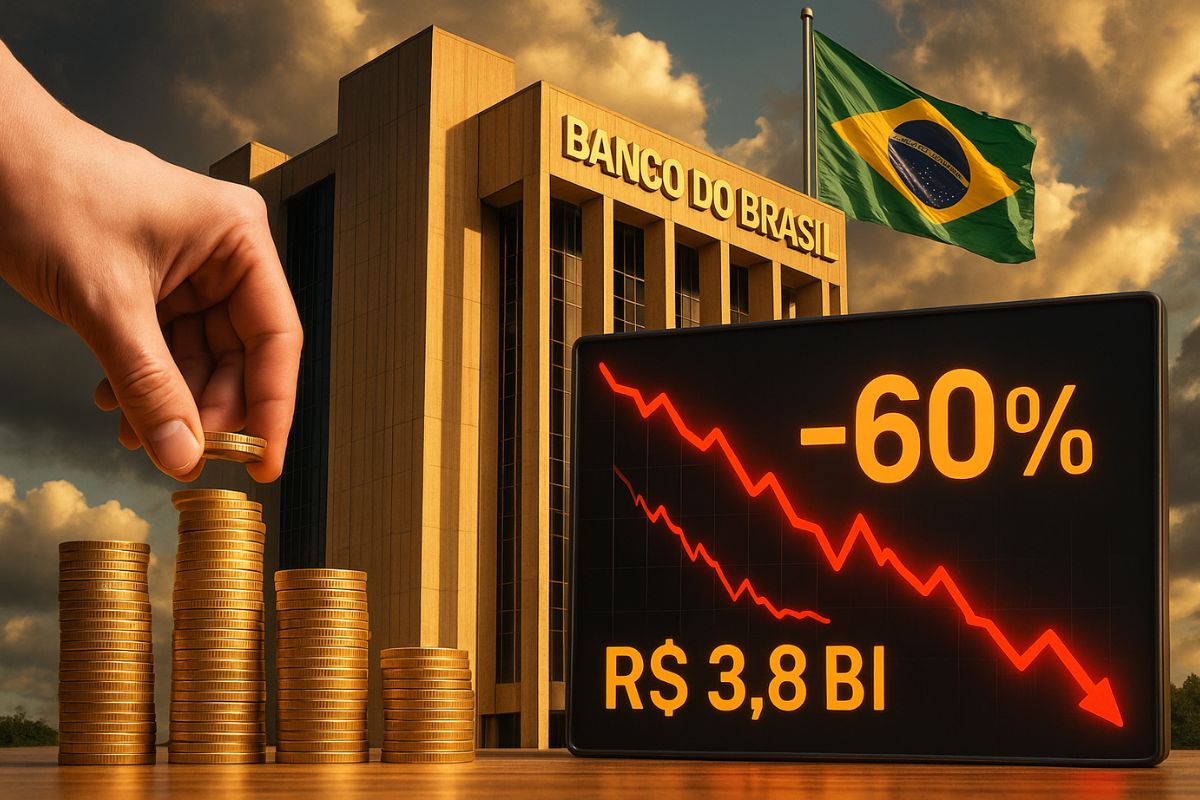


Banco do Brasil Reports Lowest Profit in Almost Five Years and Cuts Dividend Payments. Institution Saw a 60% Decline in Adjusted Profit in the Second Quarter and Significant Increase in Provisions for Losses
The Banco do Brasil reports its lowest profit in almost five years and has decided to reduce its dividend payout ratio, marking the first decrease of this kind since 2020. In the second quarter of 2025, the institution’s adjusted profit fell by 60% compared to the same period last year, totaling R$ 3.8 billion, according to a statement released this Thursday (14).
The drop in results is directly linked to the sharp increase in provisions for credit losses, which surged by 104% over 12 months, reaching R$ 15.9 billion. Additionally, the return on equity (ROE) dropped to 8.4%, the lowest level since 2016.
Decline in Profit and Change in Dividend Policy
The new dividend payout ratio has been set at 30% of profit, down from the previous range of 40% to 45%. The decision comes at a time of accounting adjustments required by new rules, which compel banks to allocate more resources for provisions and to stop accounting for interest on low-quality operations.
-
Major Company Shuts Down 70-Year-Old Factory in Brazil, Relocating Production and Impacting Over 100 Families

-
Toyota Shuts Down Brazilian Plant After Producing Over 1 Million Vehicles, Plans Special Destination for Final Corolla Produced Following $2.1 Billion Investment and Expansion.
-
Shoe Factories Close, Leaving 528 Workers Jobless in Sudden Turn of Events Affecting Hundreds of Families After Decades of Operation.
-
Chinese Automaker Plans Second Mega Factory in Brazil with $2 Billion Investment to Produce Electric and Hybrid Cars in Strategic Location.


More than half of Banco do Brasil’s shares are owned by the federal government, and the reduction in dividends directly impacts the federal budget. The last time the bank had reduced this percentage was during the financial restrictions imposed by the Covid-19 pandemic.
Pressure on Agribusiness and Adjustments to Projections
The strongest impact of the new rules was felt in the agribusiness portfolio, already pressured by the increase in bankruptcy filings among rural producers. In May, Banco do Brasil withdrew its profit projection for the year due to rising delinquency in the sector, a move that caused a 13% drop in shares in a single day — the largest devaluation in over five years.
Now, the institution has resumed its estimates, forecasting a decline of at least 34% in annual profit compared to 2024. CEO Tarciana Medeiros labeled 2025 as “a year of adjustment, before the resumption of growth.”
Market Reaction and Future Outlook
Banco do Brasil’s shares have accumulated a decline of 17.9% in 2025, after already dropping 13% last year. Analysts believe that, although the results align with a more cautious scenario in the banking sector, the combination of lower profit, reduced dividends, and increased provisions is likely to keep the market on alert.
The bank’s performance in the second half will depend on the recovery of credit, the evolution of delinquency in agribusiness, and the institution’s capacity to adapt to stricter accounting requirements.
Do you believe that the reduction in dividends and the increase in provisions were the right decisions to preserve Banco do Brasil’s financial health? Share your opinion in the comments.