






 Portuguese
  Spanish
  3 min of reading
  5 comments


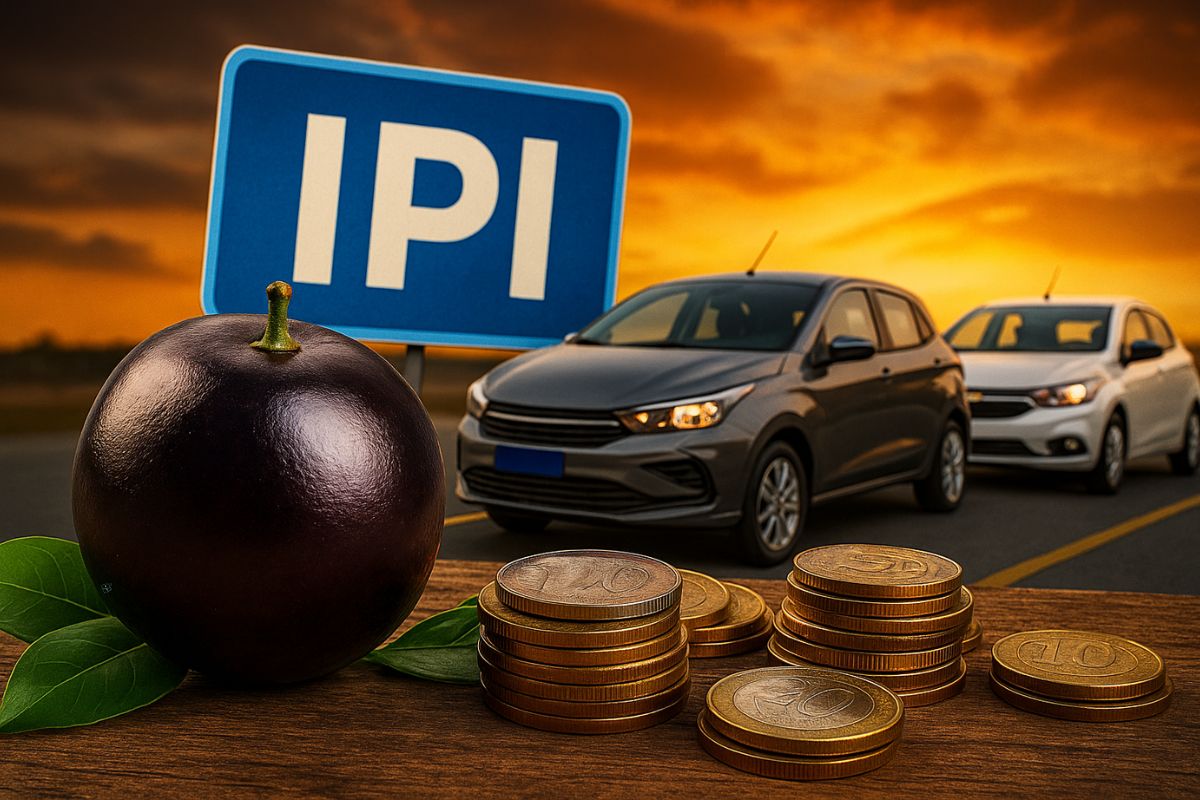


Taxes Shape Cars: 42% of the Brazilian Market Is 1.0 Due to the IPI, While 51% of Indians Drive Cars Up to 4 M
The Brazilian automotive market is often cited as an example of distortions caused by taxation. According to analysis by businessman Sérgio Habib, 42% of vehicles sold in the country in 2025 have 1.0 flex or turbo engines, not by consumer preference but because the IPI (Tax on Industrialized Products) is lower for this category.
The rule has created a mass market based on small engines, even in larger models like compact SUVs.
In practice, Brazilians do not “choose” the 1.0 engine — they are driven to it by tax logic.
-
Two new 300cc models from QJ Motor are expected to arrive in Brazil as SBM to target the CB 300F and shake up the low-displacement market, with more power and liquid cooling than Honda.

-
Camaro may reappear in 2027, but not as you remember: Chevrolet prepares the return of the icon with four doors, manual transmission, and an extreme performance version to face the new era of sports cars.

-
Is the BYD Song Pro worth it? The Anderson Sincero channel says it doesn’t exceed R$ 140,000, and the price dropped by R$ 47,000, reinforcing the depreciation of the plug-in hybrid in the Fipe table.
-
Caoa Changan CS75 arrives for R$ 199,990 with 4.77 m in length, a trunk of up to 1,620 liters, 8-speed Aisin transmission, 180 hp, 37.2 inches in screens, and Zero Gravity seat with massage.


Models with naturally aspirated 1.0 engines (80–90 hp) or turbocharged (115–130 hp) dominate, while engines above this range are penalized with higher rates.
The result is a portfolio in which manufacturers prioritize 1.0 versions to compete on price, even in cars that could have more powerful options.
The Indian Case: Less Than 4 Meters
If in Brazil the limit is engine displacement, in India the distortion comes from vehicle length.
There, cars up to 4 meters pay less tax, while larger ones face an additional burden of up to 15%.
The effect was immediate: in 2024, 51% of cars sold in the country were less than 4 m, including SUVs, sedans, and “shortened” hatches to fit into the benefit category.
This model has already derailed international projects. In 2008–2009, Renault tried to launch the Sandero in India, but at 4.07 m, the car fell outside the benefit.
The failure led to the factory’s closure and a billion-dollar loss.
This episode illustrates how taxation can determine not only consumer preference but the survival of a global strategy.
Historical Parallels: When Tax Defines Design


Distortions are not exclusive to the automotive sector. Between the 18th and 19th centuries, France implemented a tax on doors and windows, leading families to build houses with very few openings — an architectural trait still visible today.
The parallel shows that when tax overrides engineering or aesthetic logic, it directly shapes the products available in the market.
In the Brazilian case, the “tax jabuticaba” also limits the entry of foreign automakers.
Many Chinese brands do not have 1.0 turbo flex engines, automatically excluding them from almost half of the market.
To add to this, 70% of sales are below R$ 160,000, while only 6% exceed R$ 300,000, making the premium segment even more restricted.
The conclusion is clear: both in Brazil and India, tax defines the car that the consumer drives.
Here, it pushes towards 1.0 flex engines; there, towards shortened vehicles.
This reality forces manufacturers to adapt global designs to local particularities, at the risk of losing relevance and market.
And you, do you think it’s fair that taxation defines the car that hits the streets? Do 1.0 flex engines really meet the needs of Brazilians, or do they only exist because of the IPI? Leave your opinion in the comments — we want to hear your view on this automotive “jabuticaba”.


O Brasil é um país de ****
Aguardem o imposto safa…ops, do pecado entrar. Talvez carroça pague menos.Mas depende de quantos ****.
Brasil metade do que vc ganha é taxado,e ainda tudo que vc compra também é taxado,não sobra nada do salário é gov federal,estadual, municipal todos taxando o mesmo produto!