Portuguese
  Spanish


Get To Know The Journey Of Alcides Carvalho, Brazilian Scientist Who Transformed Coffee Cultivation With Innovative Research, Boosting National Production And Strengthening Brazil’s Role As A World Leader In Coffee
Brazil reached a significant milestone in the 2024/25 crop: it produced 54.2 million bags of coffee, generating US$ 15.7 billion, equivalent to R$ 86.3 billion in export revenue (exame.com). This advancement is largely due to the work of Alcides Carvalho, a geneticist and a reference in the improvement of national coffee. His research solidified Brazil’s position as a world leader and shaped the modern coffee sector.
Throughout this article, you will get to know the journey of this Brazilian scientist, from his education to the behind-the-scenes of the research that changed the agricultural history of the country. You will also see how his discoveries translate into concrete economic results, which challenges the coffee sector has faced and continues to face, and how his legacy continues to shape national production. Finally, we will discuss the strategic role of science in agribusiness and how it remains a key element in keeping Brazil at the forefront globally.
Economic Legacy Of Alcides Carvalho
In 2024/25, Brazilian coffee production reached 54.2 million bags, a result that reflects decades of investment in research and innovation. The sector’s revenue hit R$ 86.3 billion, driven by exports totaling US$ 15.7 billion.
-
Thailand Converts 8 Tons of PET Bottles into 3,500 School Backpacks, Showcasing Circular Economy with Over 40 Factories Involved

-
Mysterious Bats Spotted in Paris’s Père Lachaise Cemetery, Drawing Tourists to the “Vampire Cemetery”

-
From Selling Street Food to Leading a $300 Million Construction Firm: The Journey of a Brazilian Entrepreneur

-
Abandoned Penthouse in Houston Reveals Million-Dollar Suite with 24-Karat Gold, Tiffany Crystals, and Opulence Even Elvis Might Have Snubbed




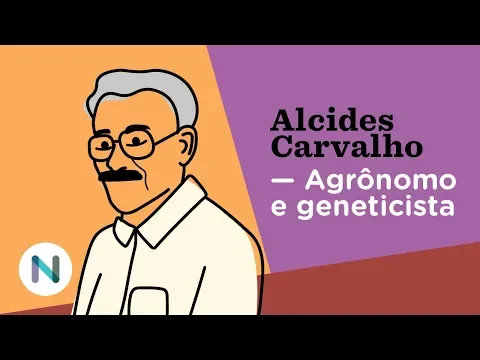

A large part of this productive efficiency is a direct inheritance from Alcides Carvalho‘s work at the Agronomic Institute of Campinas (IAC).
As a geneticist, he introduced genetic improvement techniques that increased productivity, reduced losses, and created pest-resistant varieties, especially to coffee rust — a disease that threatened to devastate crops in Brazil.
Who Was The Brazilian Scientist Who Revolutionized Coffee
Alcides Carvalho was born in Piracicaba, São Paulo, in 1913. He graduated in agronomy from ESALQ/USP in 1934 and the following year, joined the IAC, an institution that would mark his entire professional journey. In 1948, he took over as head of the genetics section of the institute, a position he held until 1981.
During more than four decades of research, Carvalho was responsible for the development of 65 varieties of Arabica coffee, which today represent about 90% of the cultivation of this species in Brazil. These varieties combined high productivity, beverage quality, and disease resistance, transforming the country into the largest global exporter.
In addition to scientific achievements, he also led the creation of a robust germplasm bank, gathering genetic material from different countries and producing regions. This collection remains essential for new studies and crossings.
Scientific Advances In Coffee Cultivation
The work of Alcides Carvalho brought innovations that changed the way coffee is cultivated in Brazil. He used controlled crosses to combine desirable characteristics — such as flavor, resistance, and climatic adaptation — in new cultivars.
An example is the creation of rust-tolerant varieties, a pest that arrived in the country in the 1970s. At that time, the disease represented a real risk of collapse for national coffee cultivation. Thanks to research conducted at the IAC, it was possible to replace susceptible varieties with resistant plants, preserving production and ensuring economic stability for the sector.
Carvalho also contributed to the dissemination of more efficient cultivation and management techniques, increasing the longevity of coffee plantations and reducing costs for producers.
The Economic Impact Of Brazilian Coffee
Coffee is historically one of the pillars of the national agribusiness. Currently, Brazil accounts for about 31% of global production and exports to around 120 countries. The revenue of R$ 86.3 billion obtained in 2024/25 represents not only economic strength but also the strategic relevance of the sector in the Brazilian trade balance.
The contribution of Alcides Carvalho is evident: his varieties allowed the country to maintain high productivity even in the face of climatic and phytosanitary challenges. This made Brazil capable of offering a competitively priced and high-quality product, winning over consumers and industries worldwide.
In addition to the direct economic impact, coffee generates millions of jobs, from rural production to industrialization and export. In many municipalities, it is the main source of income and a driving force for local development.
Recognition And Legacy Of The Scientist Who Revolutionized Coffee
The prestige of Alcides Carvalho transcended borders. He received the title of Doctor Honoris Causa from ESALQ in 1976, the National Science and Technology Award in 1982, and was named emeritus researcher by the State of São Paulo in 1983.
The Coffee Research Center at IAC now bears his name, perpetuating his memory and keeping alive the mission to develop technologies for the coffee sector. Many of the cultivars created by Carvalho continue to be planted on a large scale, proving that his work remains relevant and up to date.
His approach, which combined applied science and long-term vision, is an example of how public research can generate concrete impacts on the economy and people’s lives.
The Integration Between Science And Agribusiness
The story of Alcides Carvalho – Brazilian Scientist Who Revolutionized Coffee illustrates how science can be decisive for the competitiveness of agribusiness. The application of genetic improvement methods not only increased production but also created a more resilient and adaptable sector to changes.
Today, coffee cultivation faces new challenges, such as climate fluctuations and the demand for sustainability. Carvalho’s legacy provides the genetic and methodological basis for researchers to develop varieties adapted to these demands, keeping Brazil at the forefront globally.
This synergy between research and production is a model to be replicated in other areas of agribusiness, demonstrating that investing in science is investing in the future.
Why The Story Of Alcides Carvalho Matters Today?
With Brazil established as a coffee power, it is essential to recognize that economic achievements such as those of 2024/25 are the result of decades of scientific and strategic work. Alcides Carvalho, with his dedication and competence, was a key player in this process.
His legacy goes beyond numbers. He represents the ability of the Brazilian scientist to generate innovative solutions for complex problems, to connect academic research with the reality of the field, and to transform knowledge into economic development.
For producers, researchers, and consumers, understanding this story is understanding that each cup of Brazilian coffee carries not only flavor but also science, tradition, and collective effort.