Portuguese
  Spanish


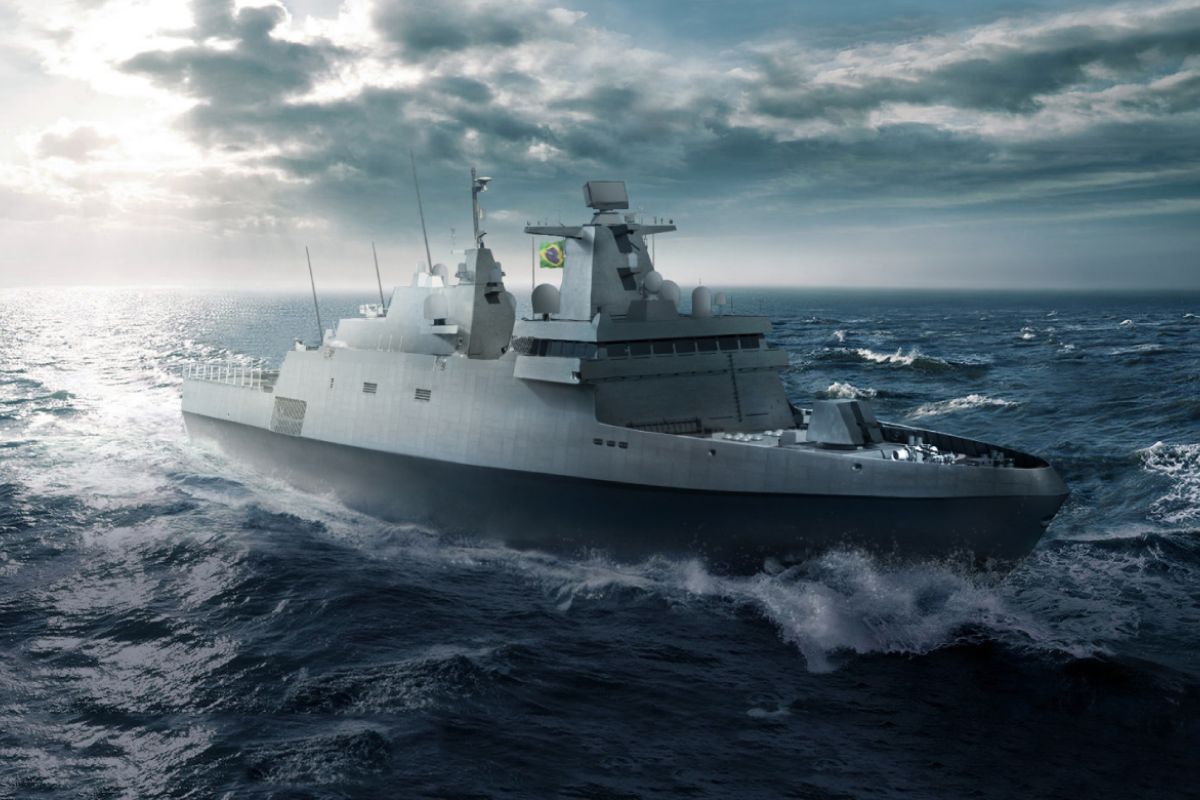


With Construction in Itajaí (SC), the Four New Frigates of the Brazilian Navy Promise a Technological Leap. Learn About the Project, the Challenges, and the Capabilities of These That May Be the Most Modern Warships in South America.
We will address the engineering behind these that may be the most modern warships in South America, the impact of the project on the national industry, and the challenges for its realization.
The Tamandaré Class Frigate Program (PFCT) is one of the most significant modernization undertakings of the Brazilian Navy. With an initial investment of R$ 9.1 billion, it envisions the construction of four advanced warships on national soil. The goal is to equip Brazil with modern means to protect its vast maritime area, the “Blue Amazon”.
What Is the Tamandaré Class Frigate Program?
The PFCT is the Brazilian Navy’s response to the need to modernize its fleet and protect its interests in the South Atlantic. The main justification is the protection of the “Blue Amazon”, an area of over 5.7 million km² rich in natural resources, such as the pre-salt.
-
The FLIP: A 108-Meter Ocean Laboratory That Stood Vertically for 60 Years, Dismantled in 2023

-
North Korean Fiasco: Launch of the Largest Warship Ends in Sinking

-
While giant ships still burn heavy fuel and the maritime sector races against climate targets, Maersk and Vale are starting to bet on ethanol as a new route to reduce emissions at sea.

-
China begins construction of the world’s largest LNG ship, a 344-meter giant capable of supplying 4.7 million homes for a month, carrying 271,000 m³ of gas, and placing QatarEnergy in the largest naval order ever recorded in world history.


The program’s objectives are multifaceted. The aim is to re-equip the fleet with modern and versatile means, capable of conducting everything from traditional defense to search and rescue missions and combating illicit activities. Equally important is the absorption of technology and strengthening the national defense industry, with high levels of local content.
The Engineering Behind the Most Modern Warships in South America

The Tamandaré Class frigates are based on the MEKO A-100 design from the German thyssenkrupp Marine Systems (TKMS). With a length of 107.2 meters and a displacement of 3,500 tons, they will incorporate a set of cutting-edge systems.
The sensor suite will be led by the Hensoldt TRS-4D active electronically scanned array (AESA) radar. The armament will include Sea Ceptor surface-to-air missiles, with vertical launch (VLS), and domestically produced anti-ship missiles MANSUP. Each frigate will be able to operate an anti-submarine helicopter, such as the SH-16 Seahawk, and unmanned aerial vehicles (drones).
The Billion-Dollar Contract and Its Impact on the National Industry
The contract for the construction of the four frigates was signed in 2020. The initial value of R$ 9.1 billion has already been adjusted to over R$ 11.1 billion. The execution is the responsibility of the “Blue Waters” consortium, formed by TKMS and Brazilian companies Embraer Defense & Security and Atech.
The technology transfer is a cornerstone of the program. Atech, a subsidiary of Embraer, is responsible for developing the Combat Management System (CMS) and the Integrated Platform Management System (IPMS). The local content goal is around 40%. The program is projected to generate up to 23,000 direct and indirect jobs and strengthen the Brazilian Defense Industrial Base (BID).
The Tamandaré in the South American Scenario
Defense experts and naval analysts point out that the Tamandaré Class will represent a significant capability leap for the Brazilian Navy. Upon entering service, the new frigates will rank among the most modern warships in South America.
The combination of an AESA radar with the VLS Sea Ceptor missile system provides an air defense capability superior to that of most regional fleets. In comparison, the Chilean frigates (Type 23) are robust competitors but older. The fleets of Colombia and Peru operate ships from earlier generations, although Peru has plans to acquire new frigates. Experts warn, however, that the success and sustainability of the program depend on a consistent flow of funding, a challenge for long-term defense projects in Brazil.
The Progress of the Project and the Future of the Brazilian Fleet


The construction of the frigates occurs at thyssenkrupp Estaleiro Brasil Sul (tkEBS) in Itajaí (SC). The first unit, F200 “Tamandaré,” was launched in August 2024, with delivery scheduled for the end of 2025.
The second frigate, F201 “Jerônimo de Albuquerque,” is already in an advanced construction stage, and the third, F202 “Cunha Moreira,” had its construction begun in November 2024. The forecast is that all four vessels will be delivered by 2029. The program, which could be expanded to eight ships, is a fundamental step for the future of the Navy and for consolidating Brazil as a naval defense construction hub.