Portuguese
  Spanish


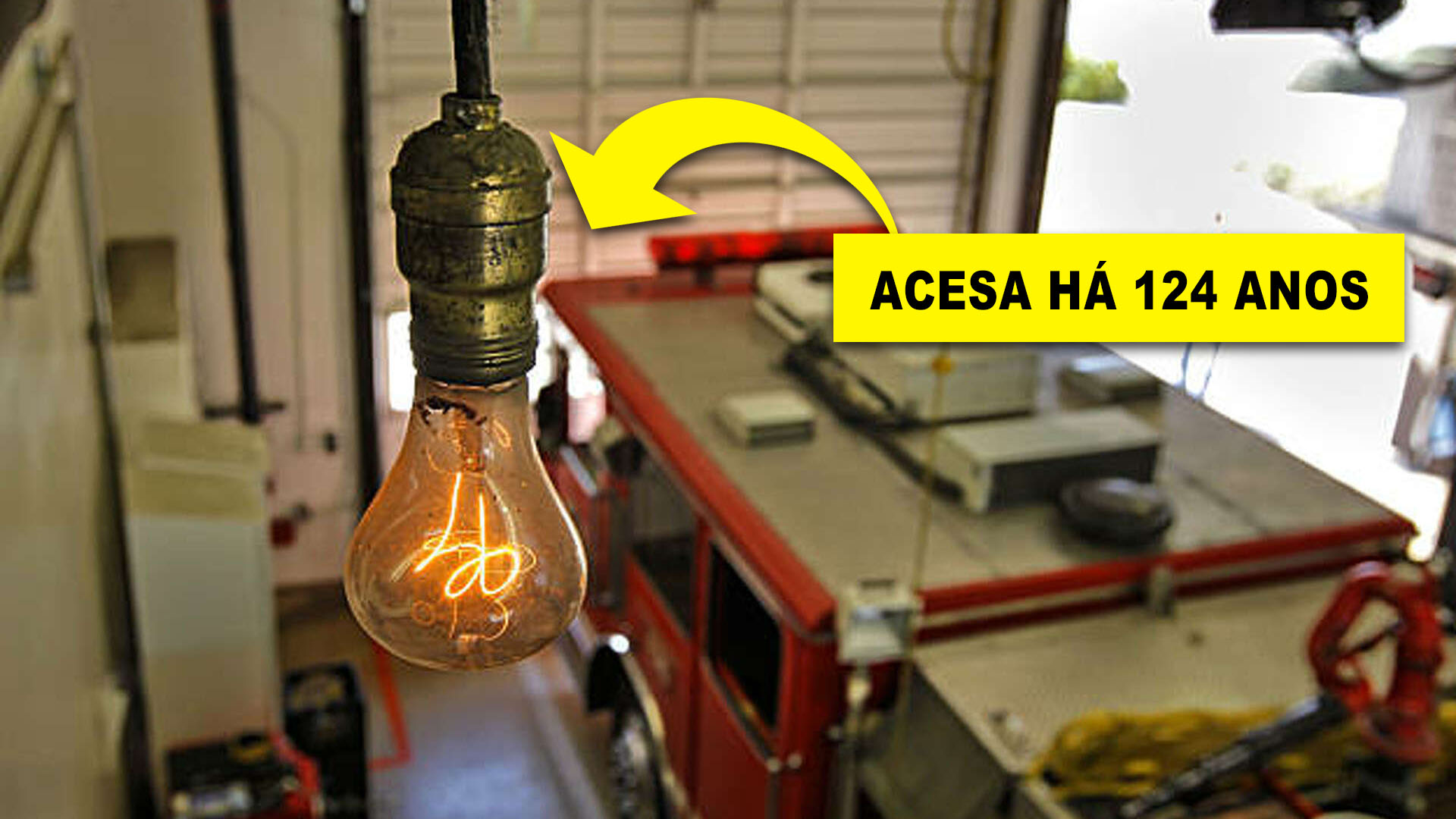


The “Centennial Light”, Which Has Been Burning Since 1901 in a California Fire Station, Remains Lit and Becomes a Symbol Against Planned Obsolescence. Understand the Technical Reasons, the Numbers, and the Controversy.
The world’s most famous light bulb has been burning since 1901 in Livermore, California. Recognized by Guinness, it currently emits about 4 watts, serving as a silent sentinel in the local fire station.
Handmade by the Shelby Electric Company, a historical rival of Edison, the bulb has become an attraction with a dedicated website and 24-hour camera. Its story has been solidified by press records and a local committee.
In 1976, the “Centennial Light” moved to a new building with escort and was only in the dark for 22 minutes. In 2013, it went out due to a no-break failure, not filament burnout. In this scenario, the record continues according to Guinness.
-
Bruno Guimarães, 28, Misses Crucial Penalty Against Norway in World Cup After Replacing Vinicius Jr.

-
Inspired by a school lesson on Africa’s water crisis, a young boy raised money through chores to fund a well that transformed a Ugandan community.

-
Brazilian Construction Worker Moves to France, Earns Up to €2,500 Monthly with Home Renovations, Gains Social Media Attention

-
US Navy Sinks USS Oriskany with 230 kg of C-4, Creating World’s Largest Artificial Reef in 37 Minutes





Documented Record and Impressive Numbers
The Guinness organization confirms that it is the longest-lasting bulb in continuous operation. Installed in 1901, it operates 24 hours a day with brightness close to 4 W, and continues to be monitored.
Historical reports and official pages detail the trajectory of the bulb, which was a donation to the fire department, having changed addresses and adopted dedicated power to avoid interruptions.
There are public records of short pauses, such as the transfer in 1976 and the power interruption in 2013. In neither case did the filament burn out. The bulb has never “died”.
Engineering, Not Magic: Why It Lasts So Long


The bulb uses carbon filament in a hand-blown bulb. Unlike modern tungsten, carbon has a particular electrical behavior and operates at temperatures and voltages that favor longevity.
Tests with Shelby bulbs from the same period, conducted by physicist Debora M. Katz (U.S. Naval Academy), indicate a thicker filament and robust construction, key factors for less wear.
Another technical point that may justify its lifespan is the avoidance of turning on and off. The thermal shock at startup creates microfractures in common incandescent bulbs. The Centennial remains always on, reducing filament stress.
From 60 W to 4 W: The Drop in Brightness as a Survival Strategy
Historical accounts indicate that the bulb started with around 60 W and, over time, stabilized at a brightness equivalent to 4 W, similar to a night light. Less power, more lifespan.
The dedicated power supply and continuous use minimize voltage variations. In 2013, when the no-break failed, the bulb lit up again after the circuit was restored, reinforcing the integrity of the filament.
This “low metabolism” has been described in interviews with Katz, a helpful comparison to explain its extraordinary durability to the lay public.
Old Controversy: Planned Obsolescence Returns to the Center of the Debate
The documentary The Light Bulb Conspiracy (2010) popularized the thesis that manufacturers limited the lifespan of bulbs in the Phoebus cartel in 1924, to increase sales.
Experts see the Centennial as a counterpoint: an example that has crossed more than a century questions short product cycles. The theme reappears in media and technology analyses since the 2000s.
Although the definitive “proof” against obsolescence depends on industrial documentation, the case of Livermore keeps the discussion alive and inspires calls for more durable products.
Culture, Fan Club, and Lessons for Consumers in Brazil
The bulb has become a pop symbol, has a website, webcam for monitoring, anniversaries, and even receives visitors. The narrative helps educate about design quality, maintenance, and responsible energy use.
In the age of LEDs and “smart” bulbs, the case reignites questions about minimum lifespan standards, replaceable parts, and the right to repairability, topics already addressed by experts.
What the Numbers Tell and What Still Intrigues Science
Over 1.2 million hours of estimated operation supports the record. The robustness of the filament, the low power, and continuous operation form the technical tripod of success.
There are still unknowns, including the microstructure of carbon, the exact conditions of gas in the bulb, and possible differences in manufacturing. What is known is that research on Shelby bulbs continues as a historical reference.
The consensus among technical and historical sources is that this is not a miracle. It is careful engineering, a context of stable use, and meticulous preservation by the firefighters.
The Centennial Bulb is not a trick from the past. It is a reminder that design, materials, and use can multiply the lifespan of a product. In the midst of rapid cycles, its brightness challenges the standard.
Do you believe that the industry shortens lifespan on purpose or that the Livermore case is an unrepeatable exception? Leave your comment, the controversy of obsolescence vs innovation deserves technical arguments, numbers, and real examples.