






 Portuguese
  Spanish


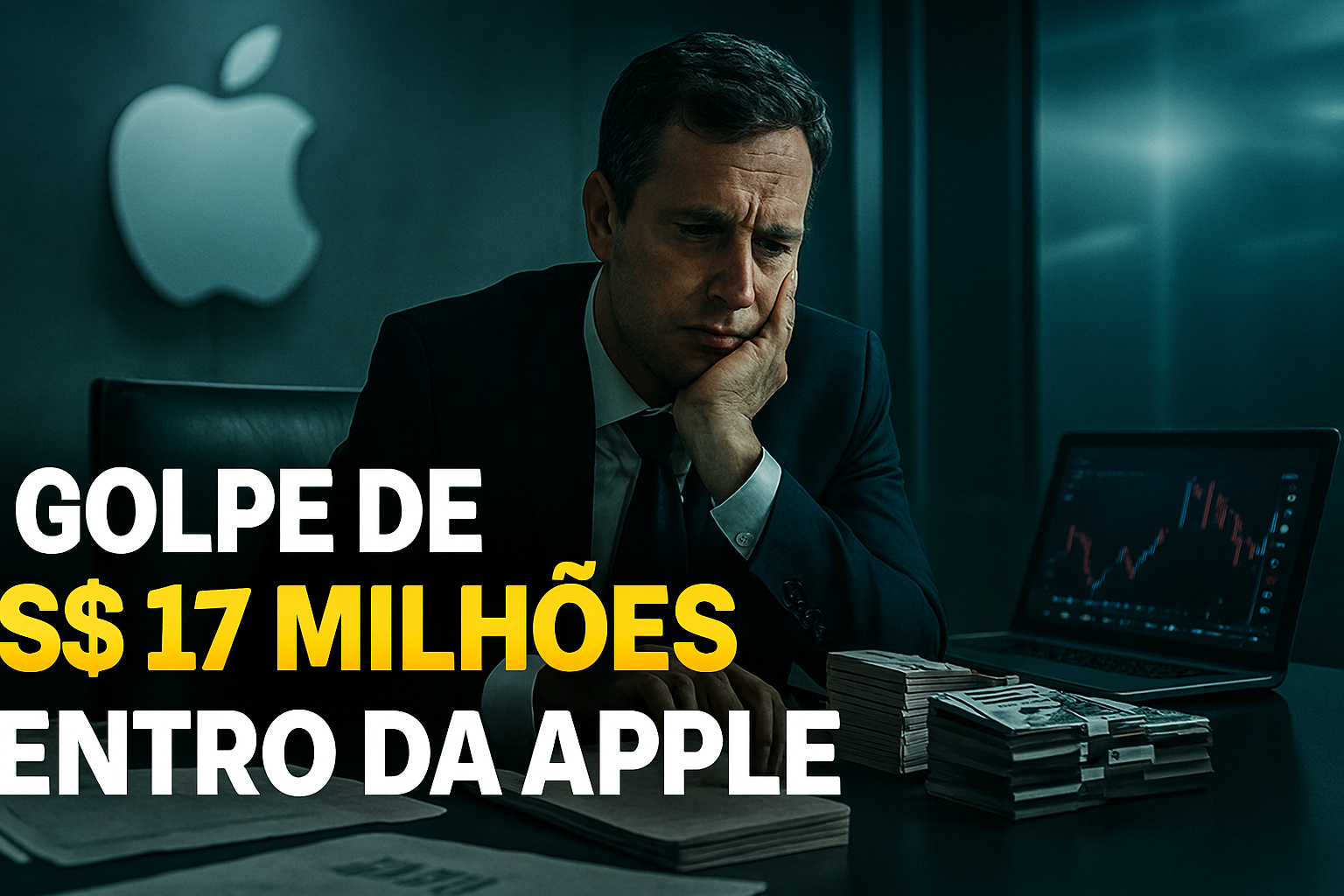


Former Apple Employee Sentenced In The US For Embezzling US$ 17 Million In Seven-Year Scheme; Case Revealed Internal Failures And Shocked Silicon Valley.
Between 2008 and 2018, a man named Dhirendra Prasad, then 52, lived one of the biggest corporate hoaxes ever seen in Silicon Valley. While holding a trusted position in the Apple Global Supply Chain Division, Prasad orchestrated a million-dollar scheme that embezzled over US$ 17 million from the company.
The case only came to light years later when an internal audit revealed the depth of the fraud, a scheme that even exposed the vulnerability of the world’s largest technology company.
The Man Behind The Scheme
Prasad was a veteran and respected employee. He worked in the strategic sourcing area, responsible for negotiating contracts and approving supplier requests. It was precisely this position—which gave him access to values and technical specifications—that made him one of the largest fraudsters ever identified in Apple’s history.
-
Mother discovers she may have won £12 million in the lottery but faces an agonizing wait after the shopkeeper threw the ticket in the trash.

-
A couple bought a house in Sheffield and, when removing the carpet from the hallway, found a trapdoor leading to a secret 23 m² basement with a 2-meter ceiling height, a discovery that eliminated the need for an expensive extension and, according to them, added £70,000 to the property’s value.

-
A nurse bought for 20,000 a 1955 house abandoned by a hoarder in Texas, and months later, rain revealed a buried pool in the backyard valued at $160,000, which he restored himself for about $10,000, a fraction of the cost of building a new one.
-
The United Kingdom is transforming dog feces left on trails into gas to light a streetlamp through an unlikely and surprising project that shows how even one of the most rejected wastes in cities can generate energy.




According to documents from the United States Department of Justice (DOJ), the former employee created a complex scheme involving two Apple suppliers, who collaborated with him to issue false invoices, inflate services, and even charge for products that were never delivered. The money would return to Prasad disguised through shell companies and indirect transfers, washed as “business payments.”
How The Fraud Worked For 7 Years
For seven years, Apple’s internal system detected nothing unusual. The scheme went unnoticed because Prasad had the authority to validate contracts and approve low- and medium-value payments—exactly the type of transactions that did not require constant auditor review.
He used this power to double payments, create fictitious purchase orders, and authorize improper reimbursements. Additionally, he stole computer components and electronic parts for parallel resale.
The result: over US$ 17 million embezzled between 2011 and 2018, according to the final calculation presented by the U.S. government. The fraud only began to be suspected when Apple, while reviewing old contracts, noticed inconsistencies between reported values and delivered services.
Discovery And FBI Investigation
The company notified authorities in 2018. The FBI and the Internal Revenue Service (IRS)—the U.S. tax enforcement agency—initiated an investigation that revealed the depth of the scheme.
During the searches, agents found accounting records and emails proving the partnership between Prasad and the suppliers. He had also evaded taxes by omitting illicit gains from his income return.
In November 2022, Dhirendra Prasad pleaded guilty to wire fraud and conspiracy to defraud the United States. By April 2023, he was sentenced to three years in federal prison, in addition to being required to repay US$ 17.4 million to Apple and US$ 1.8 million to the IRS, totaling around US$ 19.2 million.
Apple’s Reaction And The Impact On Silicon Valley
The case shocked the company and exposed security flaws in the internal purchasing approval system. According to sources close to the investigation, Apple immediately strengthened auditing protocols and implemented a stricter policy for supplier control.
The federal prosecutor Ismail Ramsey, responsible for the case, stated that the scheme was only possible due to “excessive trust in employees with access to contracts and payments.” In an official statement, the DOJ classified the incident as “a reminder that even trillion-dollar companies can be deceived when there are internal gaps and collusion with suppliers.”
“Prasad abused Apple’s trust and exploited flaws in the system for his own benefit. For seven years, he maintained a lifestyle funded by money that never belonged to him,” said Ramsey.
A Global Alert On Corporate Corruption
Dhirendra Prasad’s case has become a example in the United States of how corporate fraud can remain hidden in large multinationals, even under sophisticated compliance systems.
Corporate governance experts point out that the incident reinforces the importance of independent audits, rotation of trusted positions, and automated transaction monitoring—practices that Apple began adopting after the scandal.
The US$ 17 million fraud within Apple leaves a clear lesson: vulnerability lies not only in machines or systems but in the people who operate them. And even under the watchful eyes of executives and security algorithms, the most dangerous fraud can be executed silently—within the company itself.






É inacreditável como a APPLE, empresa de alta tecnologia deixou isso acontecer. Acreditou em quem não deveria. Excesso de confiança? Talvez!.…