Portuguese
  Spanish


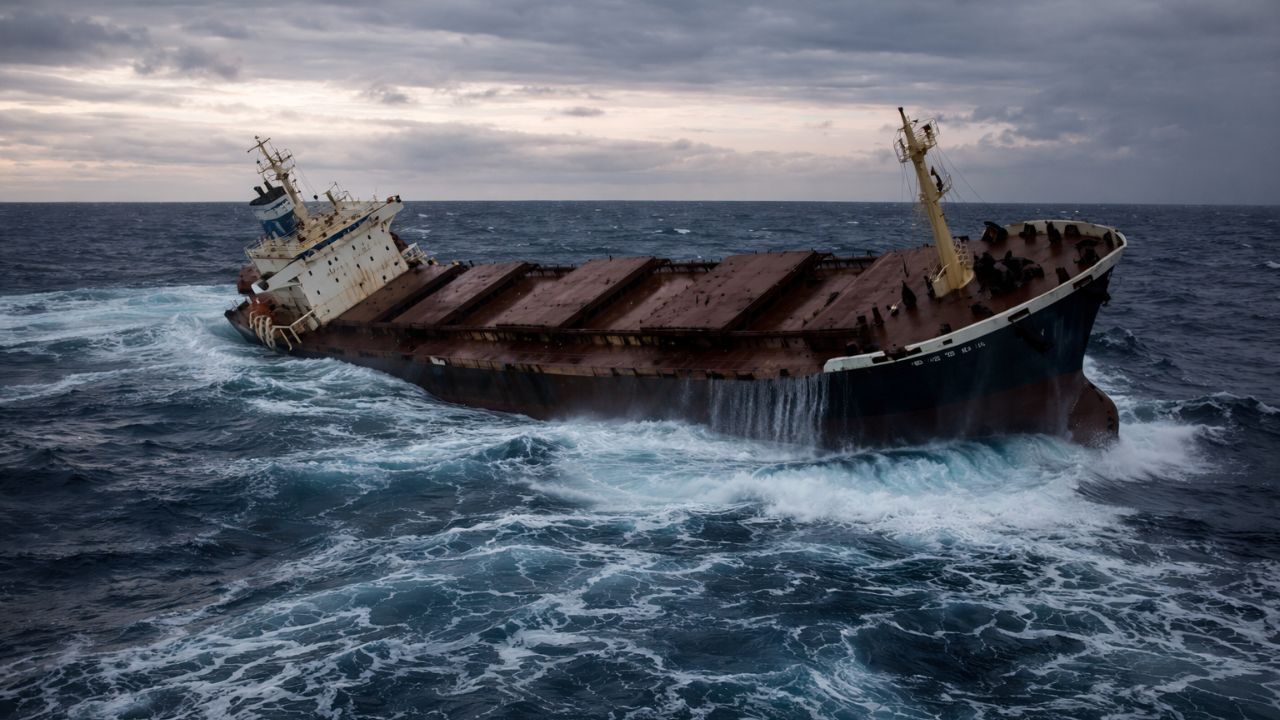


How Rice Challenges Physics Inside Ships, Threatens Modern Bulk Carriers, and Creates Invisible Risks That Only Engineering and Constant Monitoring Can Control
On cargo ships, danger does not always come from the waves or storms. In many cases, it is hidden in the hold, in the form of a common grain found in everyday life. Rice, when transported in large volumes, poses serious technical challenges to ships, potentially compromising stability and safety.
What seems routine in maritime trade requires strict rules, specific designs, and constant crew attention. On bulk carriers, small variations in tilt, ventilation, or access to the hold can turn an innocuous cargo into a real risk to human life.
The Behavior of Rice Inside Ships

Rice grains are solid materials, but they behave unstably when subjected to the continuous motion of ships. Their so-called angle of repose is relatively low, meaning the cargo can slide easily when the vessel sways beyond this limit.
-
131-Ton Naval Propeller, Costing Up to $4 Million and Taking 4 Months to Manufacture, Powers the World’s Largest Cargo Ships Almost Invisibly

-
Brazil’s Maceió Port Joins Decarbonization Efforts with Study to Supply Clean Energy to Cruise Ships

-
Brazilian Port Expands Ship Capacity to 9.5 Meters, Boosting Cargo Transport and Reducing Logistics Costs
-
Three Chinese companies manufacture more than 96% of the world’s dry cargo containers and 100% of refrigerated ones, in a dominance built over 40 years that has made it almost impossible for the West to compete in this market.



In rough seas, this displacement alters the center of gravity of the ships, causing permanent tilt. Unlike liquids, rice does not return to its original position after the motion, maintaining the imbalance and increasing operational risk.
Why Full Holds Do Not Eliminate Risk


Many believe that completely filling the hold would solve the problem. In practice, this is not the case. During the journey, vibrations and the sway of ships cause the natural compaction of rice, creating an empty space at the top of the compartment.
This space is sufficient to allow for new load displacements. Even seemingly full holds continue to pose risks, requiring rigorous stability calculations and specific structural solutions on bulk carriers.
Engineering and Rules to Keep Ships Stable
To deal with this scenario, ships that transport grains follow strict technical standards. The designs prioritize greater stability margin and include vertical partitions in the holds that limit the movement of cargo mass.
These measures do not eliminate risk but control it. The safety of ships depends on engineering, procedures, and operational discipline, not on improvisation or overconfidence.
The Invisible Danger Inside the Holds

Despite the historical concern with the stability of ships, the greatest current risk is not physical but chemical. Rice, as organic matter, consumes oxygen and releases carbon dioxide during storage.
Furthermore, the use of fumigation with highly toxic gases turns the holds into potentially lethal confined spaces. The majority of fatal accidents on bulk carriers occur during unmonitored entries into these environments, without prior atmospheric measurement.
When Everyday Life Turns into a Threat
The transportation of rice has shaped technical rules, influenced the design of ships, and redefined safety practices on board. Today, the greatest threat is not sudden sinking, but the combination of routine, negligence, and ignorance.
Multiplied by thousands of tons and confined in a steel hull, a simple grain can challenge even the largest ships in the world. In the maritime environment, often the danger does not come from the sea but from what is inside the vessel.
Did you ever imagine that something as common as rice could represent such a significant risk to ships and crews?