






 Portuguese
  Spanish


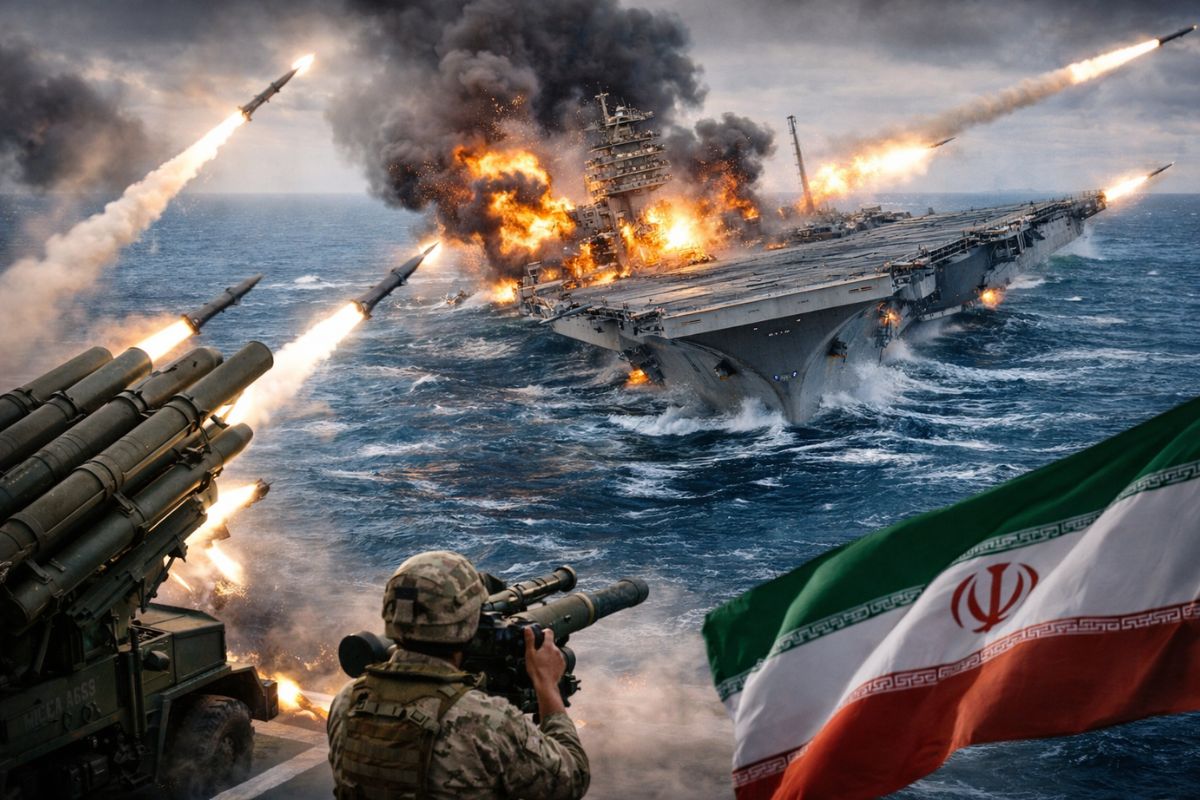


In The Escalation Between The United States And Iran, Doubt Grows About The American Nuclear Aircraft Carrier. Tehran Gathers Nur And Gadir Cruise Missiles, Khalij Fars And Zolfagar Bazir Ballistic Missiles, As Well As Mines And Drones, But Needs To Locate, Track And Breach Defensive Layers Hundreds Of Kilometers Away From The Coast.
The Debate About The American Nuclear Aircraft Carrier Often Mixes Two Things That Are Not Equivalent: Causing Damage And Sinking. Iran Can Indeed Force Costly Responses, Create Saturation Threats And Try To Open Breaches, But Turning This Into A Total Loss Would Require A Rare Chain Of Accurate Hits, Repeated And Timed.
In The Persian Gulf And The Surrounding Gulf Of Oman, The Target Is Not An Isolated Vessel, But A Moving System With Escorts, Aircraft And Countermeasures. The Relevant Question Becomes Not “Does It Have Missiles?” But “Can It Find, Maintain Contact And Survive The Defensive Layers Until The Right Impact.”
Damage Is Not Sinking And That Is Where Propaganda Often Simplifies Too Much
When Iran Talks About Engaging And Sinking, The Easiest Part To Imagine Is The Individual Impact: A Missile That Passes, Explodes, Leaves A Hole And Becomes Headline News.
-
AI Data Centers Now Feature Built-In Nuclear Power Plants and Have Ordered Non-Existent Reactors

-
In India, thousands earn about $2.50 an hour cooking and cleaning with a phone strapped to their heads, as every move is recorded to train humanoid robots for jobs they might one day replace.

-
Nuclear Fusion Study Proposes Transforming Mercury into Gold Using Tokamak Neutrons, but Real-World Application Remains Uncertain
-
Brazilian Researchers Develop Floor Tiles That Convert Student Footsteps into Electricity to Reduce University Energy Costs





However, A Modern American Nuclear Aircraft Carrier Does Not Depend On A Single Point Of Failure, And A Large Localized Damage Is Not Automatically A Sinking.
The Practical Difference Lies In The Type Of Hit Needed.
To Sink, The Problem Is Not Just Hitting, It’s Repeating Hits Below The Waterline, Along The Length Of The Hull, At The Right Time, With The Target Maneuvering And The Escort Working To Interrupt The Sequence.
What Iran Has In The Anti-Ship Game And Why Saturation Becomes Temptation
The Backbone Described For Iran Are Anti-Ship Cruise Missiles From The Nur And Gadir Families, Derived From The Chinese C802.
The Real Range Mentioned Is Between 200 And 300 Km, With Low Flight Just A Few Meters Above The Waves And A Warhead Of About 200 Kg, In Addition To The Capability To Launch From Mobile Platforms On The Coast, Fast Boats, And Even Aircraft.
These Vectors Are Subsonic, But The Method Does Not Rely On Pure Speed. The Logic Is Quantity: Launched In The Dozens, In Swarm, They Can Try To Saturate Sensors And Interceptors, Creating Enough Confusion For One Or Two To Escape.
The Central Point, However, Is That Saturation Only Works If There Is A Window, Coordination, And Persistence Of Target Tracking.
Abu Mahdi, Khalij Fars And Zolfagar Bazir And The Difference Between Range And Reality
The Abu Mahdi Anti-Ship Cruise Missile Appears As An Evolution, With A Range Greater Than 1000 Km And Reports Of Up To 2600 Km In The Extended Version, Turbojet Engine, Low Flight And AI Guidance To Alter Trajectory Mid-Flight.
It’s A Package That, On Paper, Expands The Threat Radius And Pressures Approaching Routes.
In Anti-Ship Ballistics, We Have Khalij Fars, Based On The Fateh 110, With A Range Of 300 Km, Speed Of Three To Four Times That Of Sound And A Warhead Of Up To 650 Kg, In Addition To The Zolfagar Bazir, With A Range Of 700 Km And The Idea Of A Terminal Phase Capable Of Targeting A Moving Target.
This Is Where The Most Controversial Part Of The Debate Arises, Because Range Does Not Solve The Challenge Of Hitting A Fast Ship In The Middle Of The Ocean.
The Obstacle That Few People See: Hitting A Moving Target In The Vacuum Of The Sea
The Traditional Ballistic Missile Was Designed For A Fixed Target On Land, With Known And Stable Coordinates.
An Anti-Ship Ballistic Missile Requires Something Different: Locating A Relatively Small Target, Updating Position, Predicting Movement And Maintaining The Solution Until The Terminal Phase, When The Ship May Have Maneuvered Abruptly.
That’s Why Doubts Arise About How Fully Operational These Weapons Are.
It’s Not Enough For The Missile To Exist; An Ecosystem Of Sensors, Command And Control, And Tracking Persistence Is Needed To Transform “Launch” Into “Impact”, Especially Against A Protected Target Far From The Coast.
The Strike Group Is The Real Weapon And The American Nuclear Aircraft Carrier Is Just The Core
A Carrier Strike Group Is Not Just The Aircraft Carrier.
The Operational Description Starts With The Basics: An Aircraft Carrier Like The Gerald Herryford Or The Abram Lincoln Carries About 70 Aircraft, Creating An Air Layer That Can Strike Launchers Even Before Firing, In Addition To Patrols, Surveillance And Rapid Response.
In The Naval Ring, The American Nuclear Aircraft Carrier Does Not Sail Alone.
One Or Two Ticonderoga-Class Cruisers Appear, Each With 122 Launchers, And Three To Four Arleigh Burke-Class Destroyers, Each With 96 Launchers.
Considering Part Of These Launchers With Anti-Air Missiles, The Stated Count Exceeds 250 Air Defense Missiles In A Typical Escort. The Iranian Target, In Practice, Is A Mobile Fortress With Redundancy And Defensive Depth.
Final Layers, Countermeasures And Why “Getting Through Everything” Is The Real Challenge
Even If A Vector Survives Long-range Interception, There Is Still Point Defense.
Short-range Systems Like Phalanx CIWS And SeaRAM Missiles Come Into Play, Forming An Internal Ring With A Radius Of Up To 8 Km, Designed As A Last Barrier When Everything Else Fails.
Traditional And Electronic Countermeasures, Such As Chaff And Flares, And Electronic Warfare To Degrade Orientation And Guidance Are Added.
The Sequence That Takes Down An American Nuclear Aircraft Carrier Requires Multiple Attackers To Traverse Multiple Layers, And This Is Statistically More Difficult Than Propaganda Admits, Especially If The Group Is On High Alert.
Distance From The Coast And The Geometry That Changes The Chance Of Hit
In Addition To Defenses, There Is A Tactical Choice That Reduces Exposure: An Aircraft Carrier Would Hardly Approach To Less Than 600 Or 700 Km From Iran, Which Touches On The Upper Limit Of The Range Of The Iranian Weapons Mentioned As Potentially Dangerous To The Fleet.
This Shifts The Problem For Iran To An Area Where Maintaining Contact With The Target Tends To Be More Difficult.
In This Layout, The Difference Between Operating In The Gulf Of Oman And Operating In The Arabian Sea Becomes Apparent. Only The Zolfagar Bazir Is Described As Having Sufficient Range To Reach An Aircraft Carrier Operating, For Example, In The Gulf Of Oman, But Not In The Arabian Sea.
In Naval Warfare, “Where” Is Almost Always More Important Than “What,” Because Distance Buys Time And Time Buys Defense.
Robustness, Compartmentalization And Why The Hull Does Not Collapse As In Popular Imaginary
Robustness Is A Factor That Is Often Underestimated Outside The Technical Circle.
The American Nuclear Aircraft Carriers Of The Nimitz And Gerald Ford Classes Are Described As A Steel Mass Of 333 Meters In Length And About 100,000 Tons Of Displacement, Compartmentalized Into Hundreds Of Watertight Sections, With Elite Damage Control.
This Does Not Make The Ship Invulnerable, But Changes The Type Of Effect Expected.
A 650 Kg Warhead Can Cause Significant And Localized Damage, But Sinking Would Require Dozens Of Impacts Below The Waterline Along The Hull, And Still Facing Containment, Isolation And Emergency Repairs.
The Damage Can Be Spectacular And Still Not Be Decisive.
Where The Risk Is More Plausible: Escorts, Mines, Drones And Ammunition Cost
The Most Credible Scenario Is Not The Total Loss Of The Aircraft Carrier, But The Wear And Interruption.
Iran Can Damage Escorts With Missiles Or Strategically Planted Mines And Can Force The Group To Spend Expensive Ammunition Against Drones And Missiles, Stretching Resources And Imposing Difficult Defensive Decisions.
This Type Of Pressure Has Military And Political Value, Even Without “Sinking” Anyone.
Spending Interceptors, Maintaining Constant Alert And Reacting To Swarms Can Be A Partial Victory, Because It Disrupts The Rhythm Of Operations, Inventory Consumption And Freedom Of Maneuver, Especially In A High-tension Environment With Strategic Communication.
What The Question Reveals About Modern Naval Warfare And The Limits Of Easy Discourse
Iran Can Cause Damage, Impose Cost And Create Dangerous Situations With Mines, Drones And Saturation Attacks.
But Sinking A Modern American Nuclear Aircraft Carrier, Protected By Escorts And Operating Far From The Coast, Depends On An Almost Impossible Sequence: Locating, Maintaining Contact, Crossing Layers And Repeating Hits Below The Waterline At The Right Time.
If The Discussion Gets Stuck On The Verb “Sink,” It Loses The Main Focus, Which Is The Realistic Effect. The Most Serious Risk Is The Combination Of Wear, Pressure And Human Error Under Saturation, Not The Fantasy Of A Single Miraculous Shot.
In Your View, Which Threat Weighs More In The Calculation: Mines On Likely Routes, Swarms Of Drones To Force Air Defense Spending, Or The Risk Of An Allegedly Maneuverable Anti-Ship Ballistic Missile Achieving The First Break In Sequence? And What Would You Do As A Commander, Move Further Away From The Coast Or Accept Operating Closer To Gain Air Range?


Não precisa afundar, basta cortar o abastecimento de combustível e suprimentos e game over. É o que o Irã está fazendo. Já há várias matérias falando sobre isso, vocês estão atrasados