






 Portuguese
  Spanish


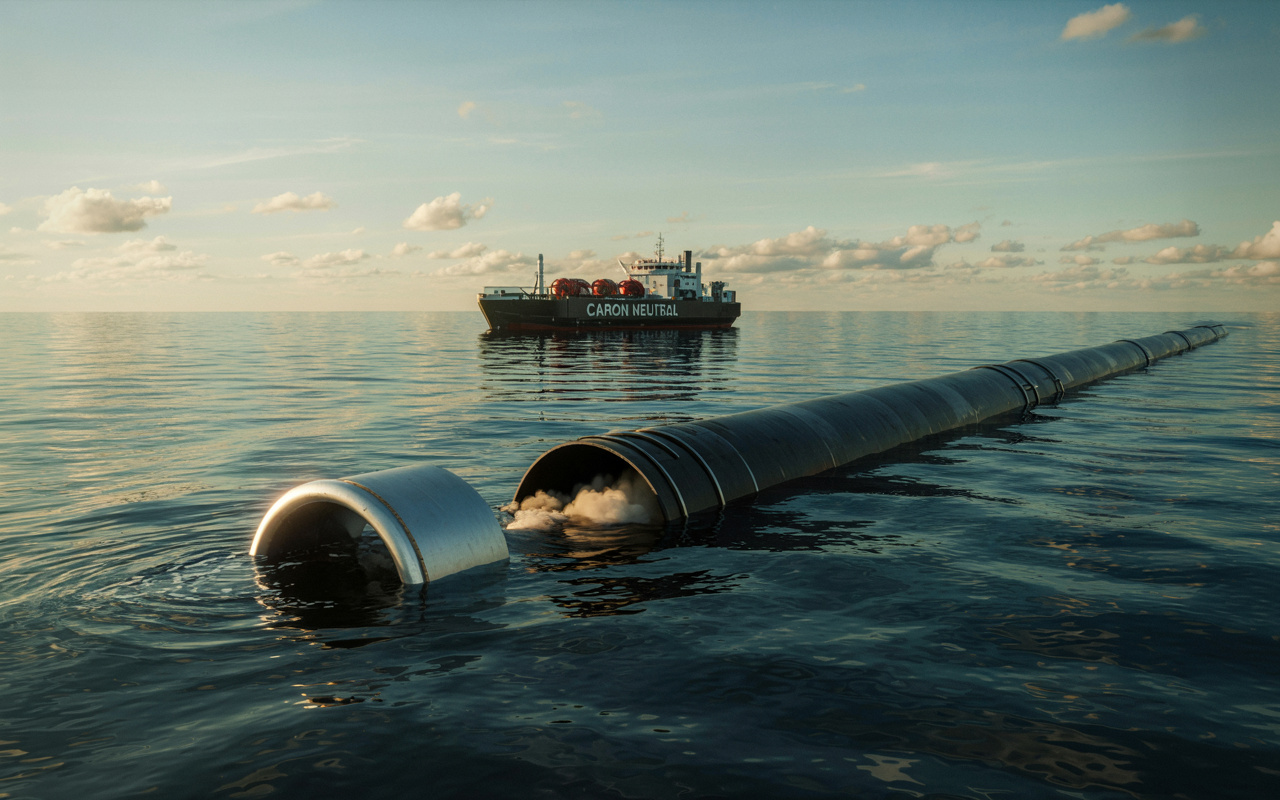


Offshore in South America, A Project Already Reinjects Over 14 Million Tons of CO₂ per Year into the Subsoil — and Leads Carbon Capture Worldwide.
As the world races against time to curb climate collapse, a quiet and extraordinary feat has been taking place in the deep waters off the Brazilian coast. In the Atlantic Ocean, the world’s largest carbon capture and storage (CCUS) project is in operation, responsible for burying more than 14 million tons of CO₂ per year in the seabed — a volume greater than many countries emit annually.
Few know, but this advanced technology is already being applied on an industrial scale, in offshore oil fields in South America. And the numbers are surprising: more than 68 million tons of carbon dioxide have been stored since 2008, with ambitious targets set to exceed 80 million by the end of 2025.
This is a real example of how it is possible to extract oil while dramatically reducing net carbon emissions — thanks to the innovation applied when CO₂ is separated from natural gas on pre-salt platforms and immediately reinjected into the depths of the reservoir.
-
Farmer Revives Arid, Abandoned Land in Brazil’s Bahia into Thriving Forest, Demonstrates How ‘Syntropic Agriculture’ Can Transform Rural Futures

-
Study Reveals 40% of Brazilians Unaware of Circular Economy, Highlighting Challenges in Sustainable Transition and Recycling Expansion
-
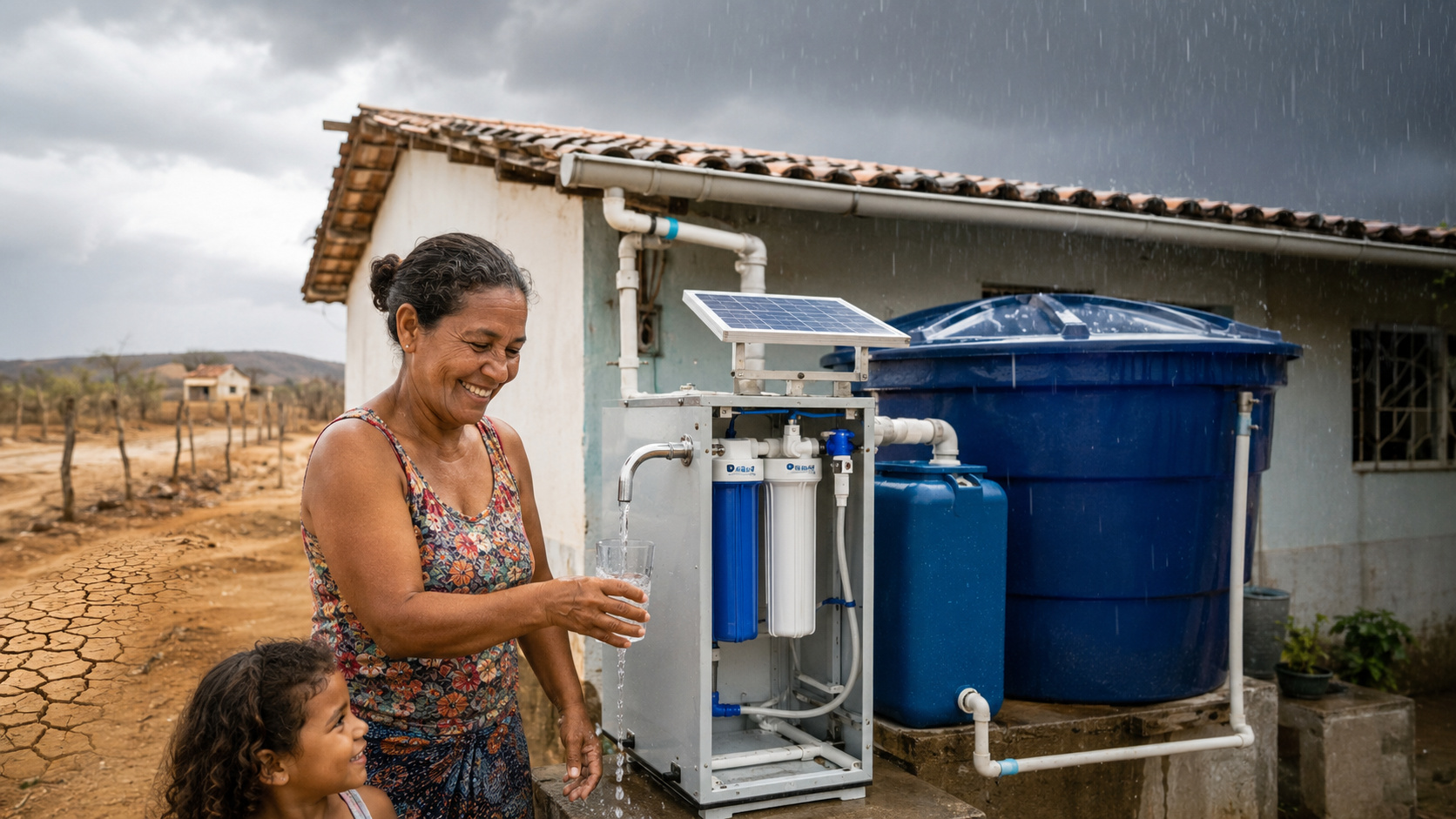
Brazilian Startup Converts Rain into Potable Water Without Chemicals, Surpasses 10 Million Liters, Joins $1.2 Million Project to Bring Simple Technology to Drought-Stricken Areas in Northeast Brazil
-
Brazilian Company Innovates with Treated Water Billing Model, Surpassing 10 Billion Liters and Offering Up to 40% Savings for Large Industries

The Logic of the Subsoil: Transforming Waste into Asset in the Carbon Capture Process
The operation begins on offshore platforms, where the natural gas extracted along with the oil undergoes a separation process. Since CO₂ represents a large fraction of the total volume, it needs to be isolated before the gas can be used or exported.
Instead of releasing this CO₂ into the atmosphere, the bold solution found was to compress and reinject the gas directly into underground reservoirs, over 5,000 meters deep, where it remains trapped in porous rocks with natural geological seals.
More than an environmental solution, this process also increases production efficiency. The technique is called EOR (Enhanced Oil Recovery), and it uses CO₂ itself as a pushing agent to extract more oil from mature fields.
Results from South America That Surpass Any Other Project Currently in Operation
In 2024, the system achieved a new record: 14.2 million tons of CO₂ reinjected in just one year, a volume greater than the sum of all major industrial carbon capture projects operating worldwide.
For comparison, this figure surpasses:
- The combined capacity of the Quest CCS (Shell, Canada) and Sleipner (Equinor, Norway) projects
- The equivalent of removing over 3 million cars from the road each year
- The total annual emissions of countries like Uruguay, Croatia, or Bolivia
Even more impressive is that this entire operation occurs in open waters, on floating platforms located up to 300 km off the Brazilian coast, in waters more than 2,000 meters deep.
Why the Marine Subsoil is Ideal for Storing CO₂
The pre-salt reservoirs offer a perfect combination for geological storage:
- High porosity, allowing for gas accommodation
- Thick rock seals, preventing any leakage
- Extreme distances from the surface, ensuring long-term safety
The system is constantly monitored by sensors and software that track pressure, displacement, and temperature in real time. The data is audited by international climate and energy institutions, and the project is already recognized as a global case of large-scale offshore CCUS.
The Strategic Role for Brazil and the Energy Transition in South America
The success of the project positions Brazil — discreetly — at the center of discussions on carbon capture worldwide. The structure already attracts the attention of companies wishing to purchase carbon credits backed by real, verifiable, and permanent removals, something rare in today’s voluntary market.
Furthermore, the operation offers the country the chance to:
- Export technical and regulatory knowledge
- Certify oil with a lower carbon footprint
- Lead the climate agenda without compromising energy security
And all of this has been done without relying on international subsidies or multilateral funds — the project is 100% financed by the operator itself, with proven technical and strategic returns.
A Replicable Model in Other Energy Frontiers
What is currently being done in the pre-salt can, in the future, be expanded to other regions of the country and even exported as a service to countries with similar geological structures. Brazil, for instance, has continental sedimentary basins with storage potential and a vast network of pipelines, wells, and know-how that can be adapted.
With the regulation of a more robust carbon market, it is possible that Brazilian oil starts to compete globally not only in price but also in climate efficiency — a differentiator that could attract refineries and international investors focused on meeting ESG goals.
While countries debate targets for 2050, this project already removes millions of tons of CO₂ each year, in continuous, traceable, and documented operation. It is a concrete action, on an industrial scale, that shows how the oil and gas sector can indeed be part of the climate solution — with technology, science, and pragmatism.
And this is being done far from the spotlight, in the middle of the South Atlantic Ocean, where innovation works silently but on a scale that impacts the entire planet.





Interessante o tema! Quem realiza o projeto?