Portuguese
  Spanish


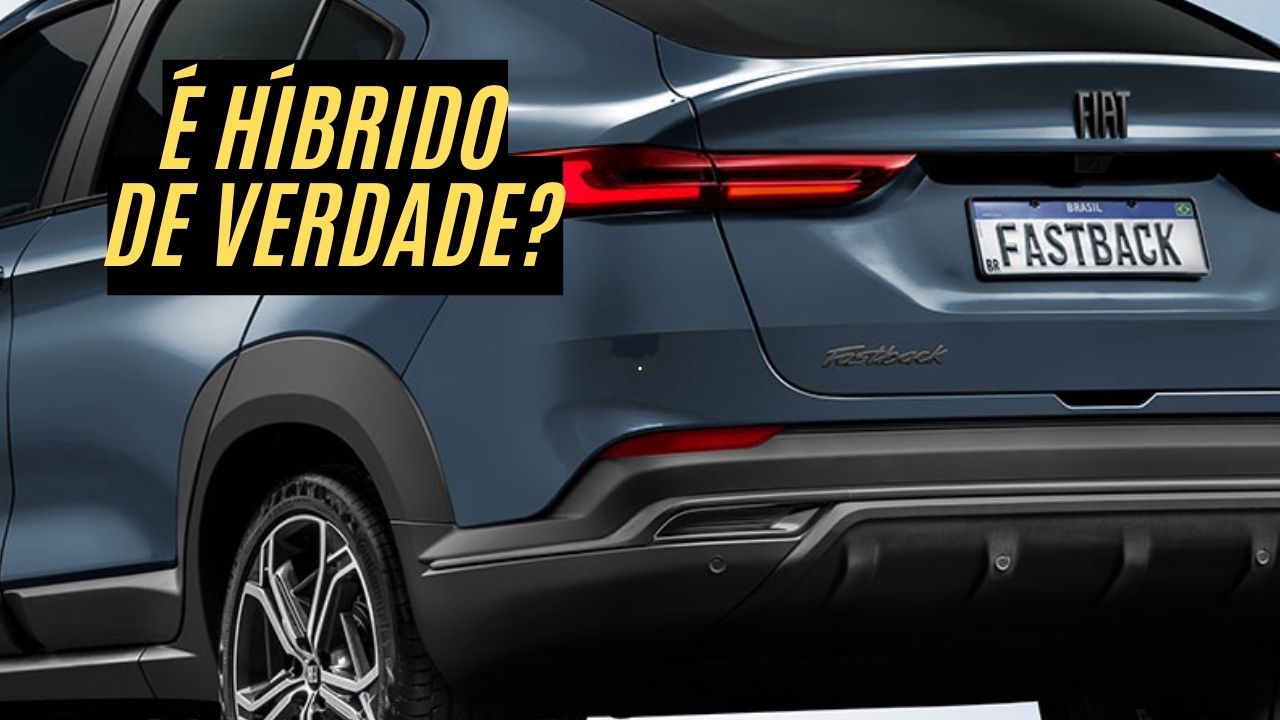


Experts Comment on Whether the New Fiat Fastback Hybrid Is Really Economical and Brings Performance Improvements
The new Fiat Fastback Hybrid is the first hybrid car from Fiat in Brazil, but does it deliver on its promises in terms of economy and performance? The Auto Super team looked into the details to answer the doubts of many consumers, and the CPG consulted experts from the channel to provide a comprehensive analysis of the launch.
The new Fiat Fastback Hybrid, available in Impetus and Audace versions, aims to adapt Fiat to the new emissions standards of Proconve L8, which will come into effect next year.
This model features a 3 kW electric motor integrated with a 1.0 turbo combustion engine, producing 130 hp (ethanol) and 125 hp (gasoline). The starting price of the new Fiat Fastback Hybrid is around R$ 161,199. But does this electric motor truly make a difference in fuel consumption and driving experience?
-
Fiat Cronos Precision 2018: Affordable Sedan with Spacious Trunk and Reliable Maintenance

-
Volkswagen to Cut Production by 1 Million Cars by 2030, Reducing Jobs and Platforms, Focusing on More Profitable Models

-
Toyota Launches First 100% Electric Car in Brazil: bZ4X with 343 HP, All-Wheel Drive, 361 km Range, Priced at $419,990 BRL, Limited to 99 Units

-
Chinese SUV Achieves 24.4 km/l, Outperforms Toyota Yaris Cross in Real-World Tests with 224 hp Hybrid System, Offers 51-Liter Tank for Greater Range, and Costs Up to R$ 5,000 Less.


Performance of the New Fiat Fastback Hybrid
When analyzing the new Fiat Fastback Hybrid, experts from Auto Super highlighted that the 3 kW electric motor does not directly propel the car.
Instead, it assists the combustion engine, replacing the starter motor and contributing to a smoother and more efficient start. In practice, this translates to a more pleasant and quieter driving experience, especially in urban routes.
The new Fiat Fastback Hybrid also features an optimized start-stop system, allowing for faster and smoother responses, ideal for the heavy traffic in cities.
During testing, the team noticed an improvement in the smoothness of the 1.0 turbo engine’s operation, but overall power remains the same, as the electric motor is not responsible for the direct movement of the vehicle.
Although the 3 kW electric motor enhances initial response and reduces the well-known “turbo delay” during acceleration, experts warn that Fiat could have advanced a bit more, adopting a more robust electrification system, like those found in models from brands such as Mercedes-Benz.
Consumption: Is the New Fiat Fastback Hybrid Economical?
According to Fiat, the new Fiat Fastback Hybrid can offer up to 12% fuel savings compared to the traditional model with a 1.0 turbo engine.
This figure seems promising, but during testing, the Auto Super team observed that the average consumption was around 5.1 km/l with ethanol, a figure that still needs to be better analyzed over a longer usage period.
The hybrid system of the new Fiat Fastback Hybrid uses energy recovered from braking and the combustion engine itself to recharge the battery.
This process allows for smoother operation but still does not reach the efficiency levels of a full hybrid. Nonetheless, this system promises advantages for those driving in urban areas, where the car faces constant stops and accelerations.
In initial tests conducted by the Auto Super team, the new Fiat Fastback Hybrid recorded an average consumption of about 5.1 km/l with ethanol in urban stretches, a result lower than what is indicated by Inmetro.
This discrepancy may be attributed to the specific conditions of the test, such as the short route and heavy traffic. The Fastback’s mild hybrid system does not directly drive the car; it only assists the combustion engine, mainly during starts and accelerations, which limits fuel economy.
In contrast, Inmetro, which conducted controlled measurements, reported higher numbers: with ethanol, the hybrid Fastback achieves 8.9 km/l in the city and 9.8 km/l on the highway; with gasoline, it reaches 12.6 km/l in the city and 13.9 km/l on the highway.
Design and Improvements
Externally, the new Fiat Fastback Hybrid received some subtle touches that enhance the visual identity of the hybrid model.
The hybrid versions come with the option of a new exclusive blue color, as well as Black Piano finishes on the front and 18-inch diamond-cut wheels. The front grille and the Fiat logo in matte gray are also details that distinguish this hybrid version.
Inside, the new Fiat Fastback Hybrid offers a 10.1-inch multimedia center with native navigation and connectivity with Android Auto and Apple CarPlay wirelessly.
There are also features like induction charging, USB and USB-C ports, and a one-zone automatic air conditioning system.
However, Fiat has omitted some safety features that its competitors already offer, such as adaptive cruise control (ACC) and six airbags, with the model only having four airbags.
Is the New Fastback Worth It?


Experts from Auto Super concluded that the new Fiat Fastback Hybrid is a good option for those seeking a moderately economical car and looking to benefit from tax exemptions for hybrid vehicles in some cities.
Fiat made a good decision by introducing a hybrid version to meet new environmental regulations, but there is still room for improvement, especially in the inclusion of safety features and the enhancement of the electric motor’s capacity.
The new Fiat Fastback Hybrid is more efficient in urban use and offers a smoother ride, but the impact on consumption still needs to be better analyzed to determine if it truly offers significant savings.