






 Portuguese
  Spanish


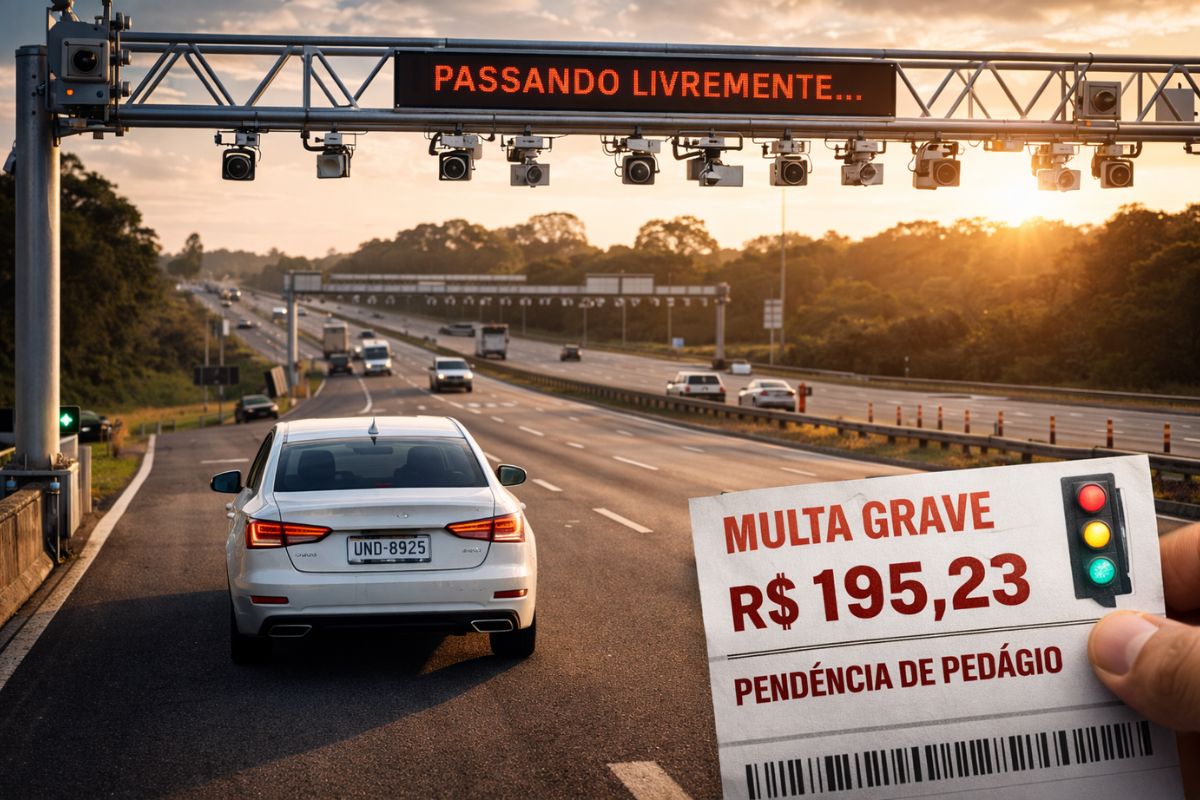

No Booth, No Line, and No Barrier: The New Free-Flow Toll Uses Gantries to Read Signs via OCR or Charge via Tag. The Rule Gives 30 Days to Pay, with a Grace Period on Business Days, but Those Who Forget Face Heavy Fines and Keep Pending Debts in the System.
The new toll is already changing how many people traverse road sections: you pass and don’t see a booth, don’t stop, don’t receive a paper ticket, and may not always notice that a charge has occurred. The feeling of fluidity is real, but the charge is too. In the Free Flow model, the bill can come via tag or OCR, and the risk begins when the driver continues the journey as if nothing has happened.
The rule allows for 30 days for payment, counting from the day of passage, with an extension to the next business day if the final date falls on a weekend or non-business day. The problem is simple and repeated: forgetting the deadline not only results in a heavy fine, but the toll debt remains pending.
What Free Flow Does in Practice When You Pass Through the Gantry

Free Flow operates as a free passage system where the charging occurs without a barrier and without a booth.
-
Brazil’s 2026 Tax Refund: Record 9.58 Million Filers in Largest Payout Ever, But a Key Detail on Priority Recipients Draws Nationwide Attention

-
Itaú Alters Hybrid Work Model, Increasing Office Days from 2028, Prompting Employees to Adjust to New Routine
-
Facing Labor Shortage, Japan Plans to Invest $34 Million to Attract Foreign Workers in Construction, Healthcare, Industry, and Commerce

-
Brazilian City Makes Remarkable Leap, Becomes 4th Wealthiest in the Country with GDP of R$ 134.1 Billion




Instead of the traditional toll plaza, gantries along the road take on the role of identifying the vehicle and recording passage, connecting that crossing to a later charge.
In the driver’s routine, the change is moving from visible payment to silent billing.
Identification can occur via tag, for those already using automatic payment devices, or through OCR, optical character recognition technology that reads the license plate, using the same capture concept employed in oversight systems.
When the tag is active, the process tends to be automatic; when it relies on OCR, the responsibility to seek payment within 30 days weighs heavier because there is no “ritual” of the booth to remind.
The 30-Day Rule and Why Signage Becomes Part of the Risk
The logic of the deadline is straightforward: once you pass the Free Flow point, the 30 days start counting. If the 30th day falls on a weekend or non-business day, the payment is pushed to the next business day.
The detail is that 30 days may seem long, but they disappear quickly when there is no line, receipt, or mandatory stop.
There is an obligation to inform: when Free Flow exists in that section, there must be signage with enough advance warning so that the driver knows where they are entering and can even avoid passing through.
This does not eliminate the risk of forgetting, but it changes the discussion about predictability: without warning, the new toll becomes a surprise; with warning, it becomes a commitment that the driver needs to remember to settle within 30 days.
When It Becomes an Infraction and Why the Heavy Fine Doesn’t Close the Account
The milestone that changes the game is the 31st day. After 30 days, on the first subsequent business day, if there is no payment, the rule provides for the issuance of notification and categorization as a serious infraction, with a heavy fine of R$ 195.23.
This is where the new toll can become a trap: the punishment arrives, but does not resolve the original debt.
The less intuitive point, which often generates discussion, is that paying the heavy fine does not erase the toll fee.
The heavy fine punishes failure to pay on time; the debt of the new toll continues to exist as a pending charge in the system.
In practical terms, these are two different things: one is an administrative penalty, and the other is the fee owed for passage recorded via Free Flow and OCR or via tag.
How to Reduce the Risk Without Relying on Luck or Memory


For those already using a tag, the tendency is to feel the change less, as the billing occurs automatically, but it is still worth checking if the tag is active and linked to the correct vehicle.
A registration error can turn convenience into a headache, because Free Flow has no booth to alert about failure at the moment.
For those paying later, discipline is what prevents the heavy fine: registering the date of passage, remembering the 30-day deadline, and periodically checking the billing channels of the concessioned stretch.
You don’t need to make it a drama, but you can treat it like a recurring bill, just like you keep track of fines, licensing, and other debts.
And in the new toll, what typically hurts is not just the amount, but the accumulation of forgetfulness at different Free Flow points.
The new toll in the Free Flow model replaces the line with gantries, tag, and OCR, promising fluidity, but also bringing a new obligation: to pay within 30 days to avoid incurring a heavy fine of R$ 195.23.
The most confusing part is that the heavy fine does not clear the toll debt, which may remain pending in the system.
In your routine, what would make you forget this new toll more easily: traveling on holidays, changing cars, or passing through multiple gantries in the same month? And would you prefer to receive an active billing alert, or do you think that could still encourage distraction and delays?








