






 Portuguese
  Spanish




With An Investment of R$ 16 Billion, Volkswagen Prepares Its Hybrid Car Offensive in Brazil to Compete with Toyota and Chinese Brands, and the New Polo 2026 Is at the Center of the Strategy
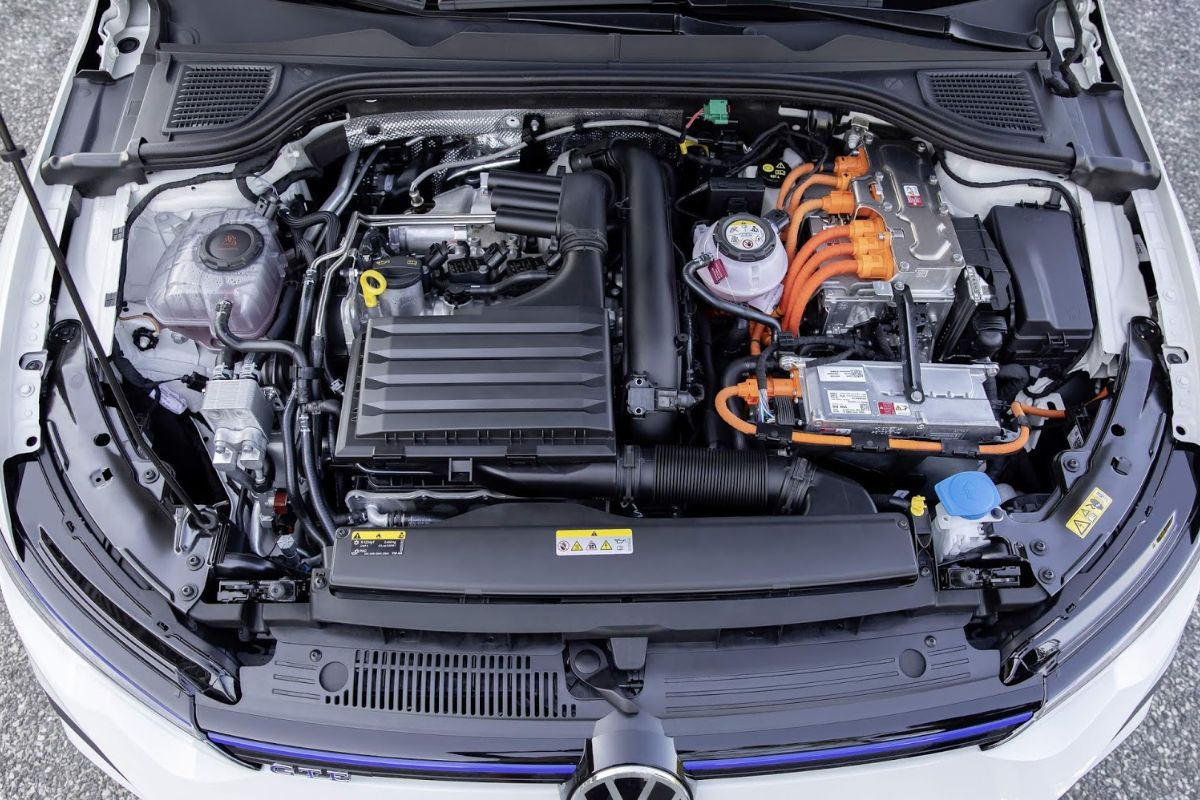
Pressed by the success of Toyota hybrids and the invasion of Chinese electric cars, Volkswagen is racing against the clock to launch its highly anticipated flex hybrid technology in Brazil. At the center of the strategy is the new Polo 2026, which promises to exceed 20 km/l using the e-TSI system, a different approach from the competition.
To achieve this, VW is betting on its e-TSI system, a mild hybrid technology that optimizes the efficiency of the already well-known combustion engines. However, the strategy is complex and the Polo may not be the first to debut the more advanced engine, sharing the spotlight with an unprecedented pickup truck.
The Investment of R$ 16 Billion, VW’s Counteroffensive in Brazil
Volkswagen’s decision to fully enter the electrified market is a matter of survival. The brand has seen Toyota dominate the hybrid segment and Chinese automakers, like BYD and GWM, capture the public with aggressively priced electric cars. To avoid falling behind, VW announced a R$ 16 billion investment in Brazil by 2028.
-
Entrepreneur Turns Rio Cemetery Canteen into a Successful Snack Chain Generating $4.9 Million Annually and Expanding to Metro Stations

-
Rare fox feared “extinct” found alive on Caribbean island after over two decades without official sightings

-
21-Year-Old Brazilian Student Turns Homemade Popsicle Hobby into $100,000-a-Month Business

-
Australia Dumps Hundreds of Thousands of Tons of Gravel into Rivers to Restore Natural Barriers and Reverse 150 Years of Erosion




The funds will be used to modernize its factories and nationalize the production of new technology. The plant in São Carlos (SP) will be responsible for the new 1.5 e-TSI Flex engine starting in 2025. The São Bernardo do Campo (SP) factory will handle the MQB Hybrid platform. And the São José dos Pinhais (PR) unit will produce the brand’s new pickup truck.
The e-TSI Technology, the Engine That Shuts Off to Save Fuel
The technology chosen by VW for Brazil is the e-TSI, a 48-Volt Mild Hybrid System. Unlike a full hybrid like Toyota’s, where the electric motor can move the car alone, VW’s system functions as a smart assistant.
In practice, it works in two ways. The first is the ‘coasting’ mode: on a highway, when you take your foot off the accelerator, the system shuts down the combustion engine, and the car continues coasting, as if it were in neutral, but with complete safety, saving a lot of fuel. The second is an ‘electric boost’ during acceleration, which makes the car quicker and smoother.
Is It Possible to Achieve More than 20 km/l? An Analysis of the Consumption Target
The consumption target that circulates in the market, above 20 km/l, is technically feasible. Homologation data for the Volkswagen Golf in Europe, equipped with the same 1.5 e-TSI engine, shows a consumption of up to 21.7 km/l with gasoline in the road cycle. This is primarily achieved thanks to the “coasting” mode.
The great challenge for Brazilian engineering will be to adapt the system for flex technology, as ethanol has a lower energy power and, consequently, higher consumption. The official figures from Inmetro for the national model will be crucial for the car’s success.
Polo May Not Be the First, VW’s Strategy with the Udara Pickup
While much has been said about the Polo, industry sources indicate that the debut of the 1.5 e-TSI engine should occur in VW’s new compact to midsize pickup (Project Udara) in 2026. The strategy would be to launch the most advanced technology in a product with higher added value.
This does not mean that the new Polo 2026 will be left out. The hatchback, a sales leader in the country, should receive a hybrid version to remain competitive. However, the most likely bet is that it will be equipped with a variant based on the 1.0 TSI engine, so its price does not rise to a level that takes it out of the competition with its direct rivals.
How the New Polo 2026 Will Face the Competition
Volkswagen will face a significant positioning challenge. The new Polo 2026 hybrid risks getting caught in a ‘strategic bind’: too expensive to compete with combustion cars and with benefits less clear than pure electric cars, such as the BYD Dolphin, or full hybrids, like the future Toyota Yaris Cross. The success of the model will depend on almost perfect pricing and very effective communication to justify its place in this new and competitive market.






Tem um equívoco, Engenharia da Alemanha e não do Brasil
Não existe fábrica de automóveis Brasileira
Sinceramente, algo que eu tenho esperado da VWB, mas sempre atrasada! A Ford saiu de cena e a VWB assumiu a pecha de estar sempre atrás!
Essas tecnologias já são vistas nos Coreanos Kia/Hyundai que nem são citados na matéria