Portuguese
  Spanish


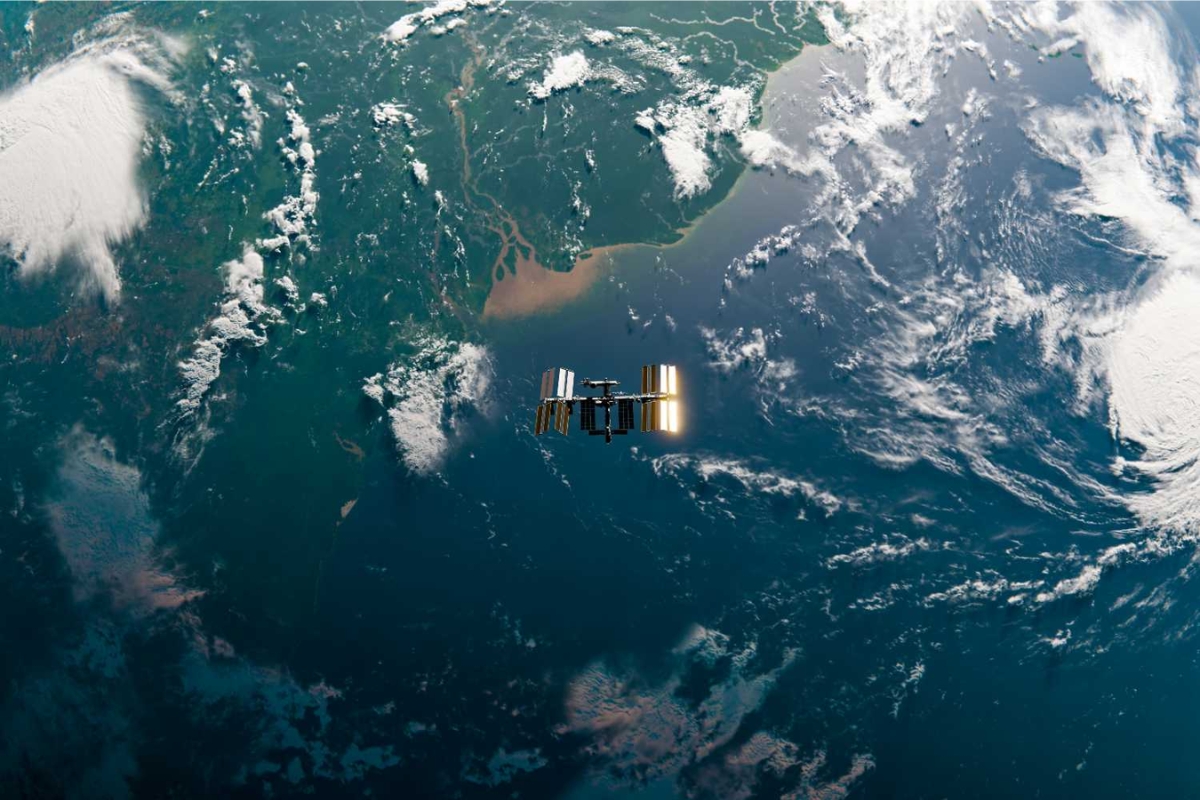


Brazil Has Become The Number One Target For Satellite Internet Giants. With Remote Regions, Suppressed Demand, And A Strategic Position, The Country Has Become The Biggest Technological Prize In The Southern Hemisphere
Brazil has become the most contested territory for spatial connectivity giants — and it’s no coincidence. With continental dimensions, remote regions without fiber optics, and a market of over 215 million people, the country has become the biggest strategic objective for companies looking to dominate the next decade of satellite internet. According to experts, whoever conquers Brazil automatically gains access to one of the largest laboratories for technological expansion on the planet.
In recent years, several foreign companies have advanced with ambitious projects here. While Elon Musk heavily bets on Starlink, emerging powers from Asia see the Brazilian territory as the central piece for controlling connectivity in the southern hemisphere. In parallel, Europe and even Canada are exploring ways to introduce their constellations in the country, which continues to show enormous numbers of suppressed demand.
What is at stake is not just the expansion of rural broadband. It is a contest for influence, data, logistics, infrastructure, digital security, and, above all, market.
-
Geologists Find 4% of Normandy D-Day Beach Sand Still Contains Metal Fragments from WWII Explosions

-
2027 Total Solar Eclipse to Feature Unprecedented Duration, Turning Day into Night
-
China Unveils 300-Ton Hybrid-Electric Truck as the Heavy Machinery of the Future

-
Brazilian mechanic invents simple solar lamp using water and chlorine in a PET bottle, providing up to 60 watts of light during the day


Why Brazil Is The Largest Market In The World For Remote Areas
Although Brazilian capitals have fast internet, the scenario changes completely when looking at the countryside. Regions such as the Amazon, Pantanal, Cerrado, and the northeastern hinterland are home to thousands of communities with limited or non-existent access to traditional broadband.
According to public government data, more than 40 million Brazilians live in areas with unstable connectivity, and over 5,000 schools still rely on slow links or improvised networks. In agriculture, the number is even more critical: less than 30% of rural properties have satisfactory internet.
It is precisely this gap that has turned Brazil into a global priority. For any company interested in dominating satellite internet, it is not enough to operate in the United States or Europe. It is in Brazil that there are:
- the largest coverage gaps in the southern hemisphere
- the largest exporting agribusiness in the world
- the largest continuous frontier in Latin America
- the largest concentration of inhabited remote areas on the planet
No other country simultaneously combines scale, need, and consumer potential like Brazil.
And whoever secures a presence here automatically paves the way for all of South America.

The Billion-Dollar Battle For Brazilian Connectivity Control
The race we see today is not limited to technology — it is a commercial, political, and strategic dispute.
Starlink has rapidly grown by occupying spaces where radio or fiber internet does not reach. The operation gained strength in indigenous areas, large farms, offshore platforms, and even police and military operations. But, while consolidating its leadership, a growing line of competitors interested in a slice of this colossal market is emerging.
On one side, Asian constellations plan to deploy thousands of low-orbit satellites with a direct focus on Brazil, attracted by agreements with local companies and the size of the market. On the other side, European groups are accelerating the development of their own systems to avoid losing ground to the United States and China.
This dispute does not go unnoticed. For economists and telecommunications experts, Brazil is the decisive territory because it has a unique profile: poorly connected in rural areas, highly connected in urban centers, and with an industrial and energy sector that increasingly depends on stable, low-latency links.
When oil platforms, agricultural machines, autonomous drones, and logistics systems rely on constant communication, any failure is costly. Therefore, Brazil has become the most valuable gem in the southern hemisphere for all LEO satellite operating companies.
Agriculture, Mining, Defense, And Energy: The Sectors That Transform Brazil Into The Space Internet Jackpot
Satellite connectivity is no longer a luxury. It is an essential tool for the Brazilian economy.
In agribusiness, large farms require internet to monitor harvesters, map crops with drones, control automatic irrigation, and operate tracking systems. The larger the property, the greater the dependence on a stable connection — and Brazil has some of the largest contiguous agricultural areas in the world.
In mining, companies operate in places where no terrestrial infrastructure reaches. Oil platforms face the same challenge. In the energy sector, wind and solar parks require constant monitoring. And in border regions, satellite communication has become a strategic tool for security operations.
This sum of needs — and the accelerated pace of digitization — makes Brazil a market that grows faster than any other in South America.
It’s simple: whoever dominates satellite internet in Brazil will also dominate the connectivity of almost the entire Southern Cone.
Brazil As A Gateway To South America
Another decisive factor: the country’s strategic position.
With borders connected to 10 countries and the largest telecommunications infrastructure in the region, Brazil is naturally the ideal hub for continental operations. It’s no coincidence that almost all companies looking to expand their services in South America start here.
From Brazilian territory, it is possible to broadcast signals to:
- Bolivia
- Paraguay
- Peru
- Argentina
- Uruguay
- Chile
And, with the installation of ground stations, the country can become the main control center for satellites in the southern hemisphere — something that further increases the interest of foreign companies.
The Future: Brazil Could Become A Regional Leader In Space Connectivity
The global movement indicates that the country will not only be a consumer but may also lead the next phase of digital connectivity in South America. Whether due to the size of the market, geopolitical importance, or growing demand, Brazil is about to assume a role it has never occupied: that of the gateway to space internet across the continent.
And while global giants engage in a silent battle for influence and orbital space, millions of Brazilians may finally gain access to fast, stable, and affordable internet, regardless of where they live.
In the end, the connection of the future is being decided now. And Brazil is undoubtedly the biggest prize in this new race.