






 Portuguese
  Spanish


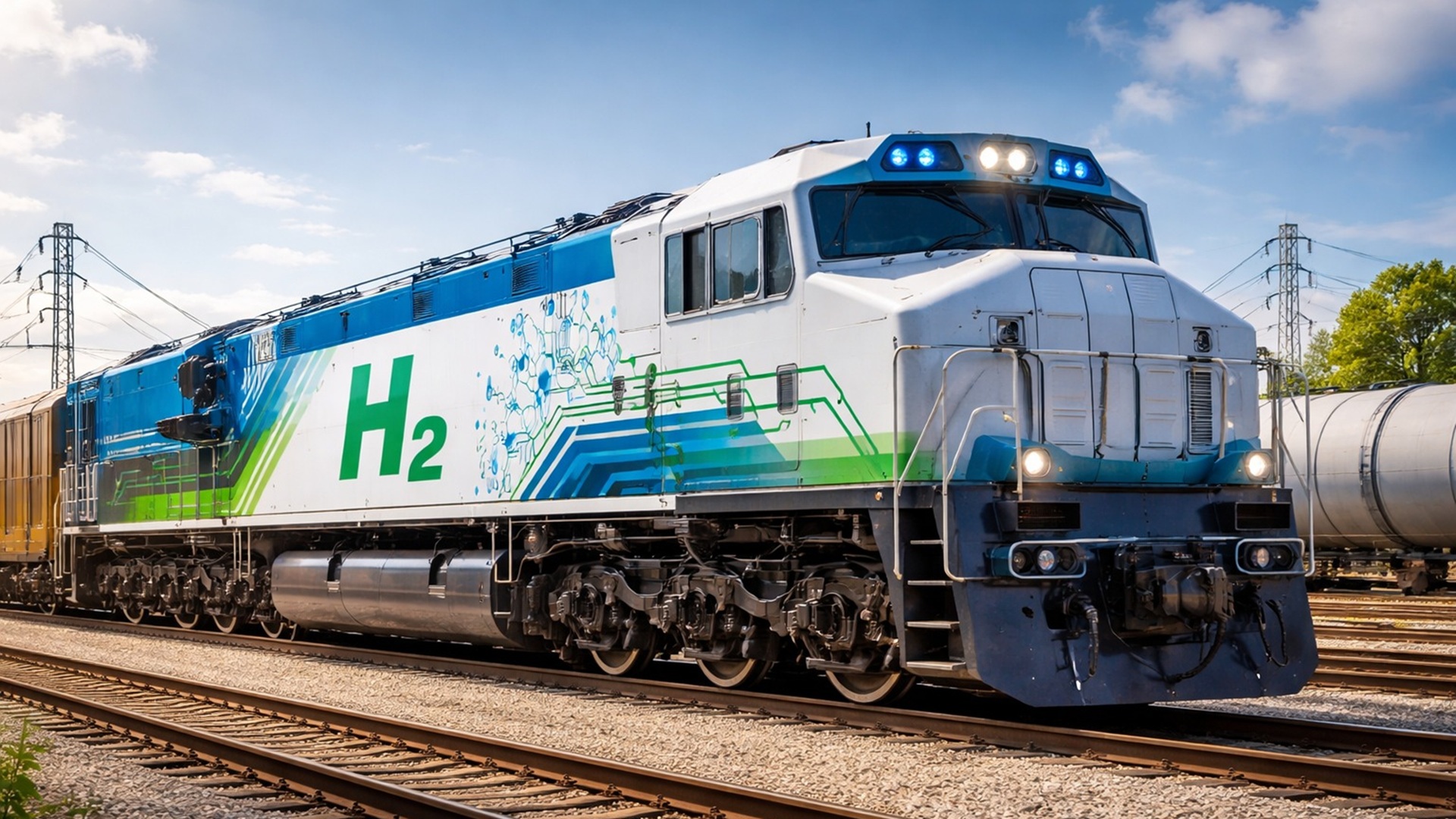
With a US$ 5 million contract signed on January 17, India plans to convert a diesel locomotive into a 3,100 hp hydrogen model, more than twice the current global standard, reinforcing the national strategy for rail decarbonization and technological leadership
India announced on January 17 a project to build the world’s largest hydrogen freight locomotive, with 3,100 hp, after a US$ 5 million contract between Concord Control Systems Limited and NTPC Limited, with a direct impact on the energy transition of heavy transport.
Contract, Scope, and Companies Involved
Concord Control Systems Limited signed a US$ 5 million (₹47 crore) contract with NTPC Limited to design the world’s most powerful hydrogen propulsion system for locomotives. The agreement provides for the conversion of a conventional diesel locomotive.
Concord will carry out the transformation to a hydrogen-powered system with 3,100 hp. The execution will be handled by its subsidiary Advance Rail Controls Pvt. Ltd. (ARCPL), in collaboration with Railway Engineering Works, integrating rail engineering and hydrogen technology.
-
In Somaliland’s Desert, Greenhouse Uses Sun and Seawater to Grow Lettuce, Cucumbers, and Tomatoes Without Rain: 1-Hectare Project Cools Crops, Desalinates Water, and Converts Brine into Commercial Salt

-
Trump Unveils $400 Million Boeing 747 Donated by Qatar as Temporary Air Force One Amid Boeing Delays, Sparking Debate on National Security, Costs, and Foreign Influence
-
Chinese Company Unveils Robotic Toilet That Comes to You, Featuring Lidar Sensors, Voice Command, Bidet, Hot Air Drying, UV Light, and Self-Cleaning Waste Disposal
-
Rotterdam Develops Floodable Square to Absorb Nearly 2 Million Liters of Rainwater, Doubling as Sports, Theater, and Leisure Space When Dry to Combat Urban Flooding



Record Power and International Comparison
The advancement more than doubles the current global reference of approximately 1,600 hp for hydrogen-powered rail systems. As a result, the project positions India ahead of international peers that only operate lower-capacity pilot projects.
Both companies announced the agreement on January 17, highlighting the unprecedented scale of the system. The increase in power consolidates a new technical benchmark for hydrogen applications in heavy transport, focusing on freight.
National Engineering and Green Hydrogen Vision
The initiative integrates national engineering, rail knowledge, and hydrogen technology. NTPC, India’s largest integrated energy company and a driver of the national green hydrogen mission, sees the locomotive as a practical demonstration of hydrogen viability.
Gaurav Lath, Deputy Chief Executive Officer of Concord, stated that the company is pioneering the world’s first 3,100 HP hydrogen propulsion system for NTPC, within a green hydrogen initiative of national importance.
Lath further noted that the company’s conviction is to surpass limits of innovation and provide systems that propel the global journey towards zero emissions, pointing to hydrogen locomotives as a decisive step towards a sustainable and future-ready railway.
Institutional Impact and Intersectoral Collaboration
Nitin Jain, Deputy General Manager of Concord, emphasized that the historic project represents a leap in clean mobility, highlighting the strength of national engineering and intersectoral collaboration in developing a high-power hydrogen and battery-powered locomotive.
According to Jain, the partnership with NTPC supports India’s decarbonization goals and sets new global standards in sustainable rail technology, with direct implications for the public and private sectors.
Strategic Importance and Hydrogen Economy
Ritwick Ghosh, from NTPC, classified the project as a personal and institutional accomplishment, from the conception of the idea to the acquisition of the contract. He stated that the initiative will help address the scarcity of hydrogen buyers in the country.
Ghosh added that the moment highlights how the public sector expands infrastructure in the energy transition, going beyond regular limits, while the private sector supports by taking risks, reinforcing intersectoral coordination.
Climate Goals, Railways, and Global Expansion
The initiative is aligned with the Indian Railways goal of net-zero emissions by 2030, two decades ahead of the original climate goal of 2070. The project fits into the railway decarbonization strategy.
In addition to the domestic market, Concord’s global expansion may be in the plans, with potential partnerships in Europe, Japan, Australia, and the Middle East. The collaboration reinforces India’s position as a next-generation rail innovation hub.
The program also connects to the Make in India initiative, with significant export potential for hydrogen locomotives in the coming years, increasing Indian competitiveness. Minor final adjustments will be made to ensure the full integration of the system.
By consolidating record power and institutional cooperation, the project signals a new technological cycle for freight railways, focused on hydrogen and applied national engineering.





-

-

-

-

12 people reacted to this.