





 Portuguese
  English
  Spanish
  3 min of reading
  6 comments





Italy, Germany and Major Automakers Pressure the European Union to Review the 2035 Target, Which Provides for the End of Sales of Cars with Combustion Engines. The Stalemate Exposes the Rift Among Leaders and Threatens the Continent’s Green Transition.
The Italian Prime Minister, Giorgia Meloni, reignited the debate about the future of the automotive sector in Europe by questioning the ban on combustion engines starting in 2035.
In a speech in the Senate, before the European Council meeting, she stated that “the future of the automobile cannot be based solely on electrification” and argued that the European Union should keep other technological possibilities open, such as sustainable biofuels.
According to the Italian leader, these alternatives should continue to be allowed even after the zero emissions target comes into effect.
-
Used Honda Civic: 3 versions of the Japanese sedan with naturally aspirated engines of up to 155 hp, fuel consumption of up to 13.8 km/l, robust automatic transmission, and a reputation for reliable mechanics still dominate the used car market in Brazil.

-
Toyota Hilux becomes a ‘cargo truck’: automaker declares a new era for the pickup with greater capacity, reinforced chassis, 2.8 turbodiesel engine, raised suspension, 1,525 kg load capacity, and targets Ford Ranger Super Duty, which tows an impressive 4,500 kg.
-
Could the invasion of Chinese cars in Brazil be destroying the country’s automotive industry? Analysis points to problems

-
New Fiat car replacing the Siena in Brazil has a range of up to 760 km, a trunk capacity of 525 liters, and a reduced price in a surprising campaign that makes the automatic sedan leave Chevrolet’s rival, the Onix Plus, behind among PcD buyers.


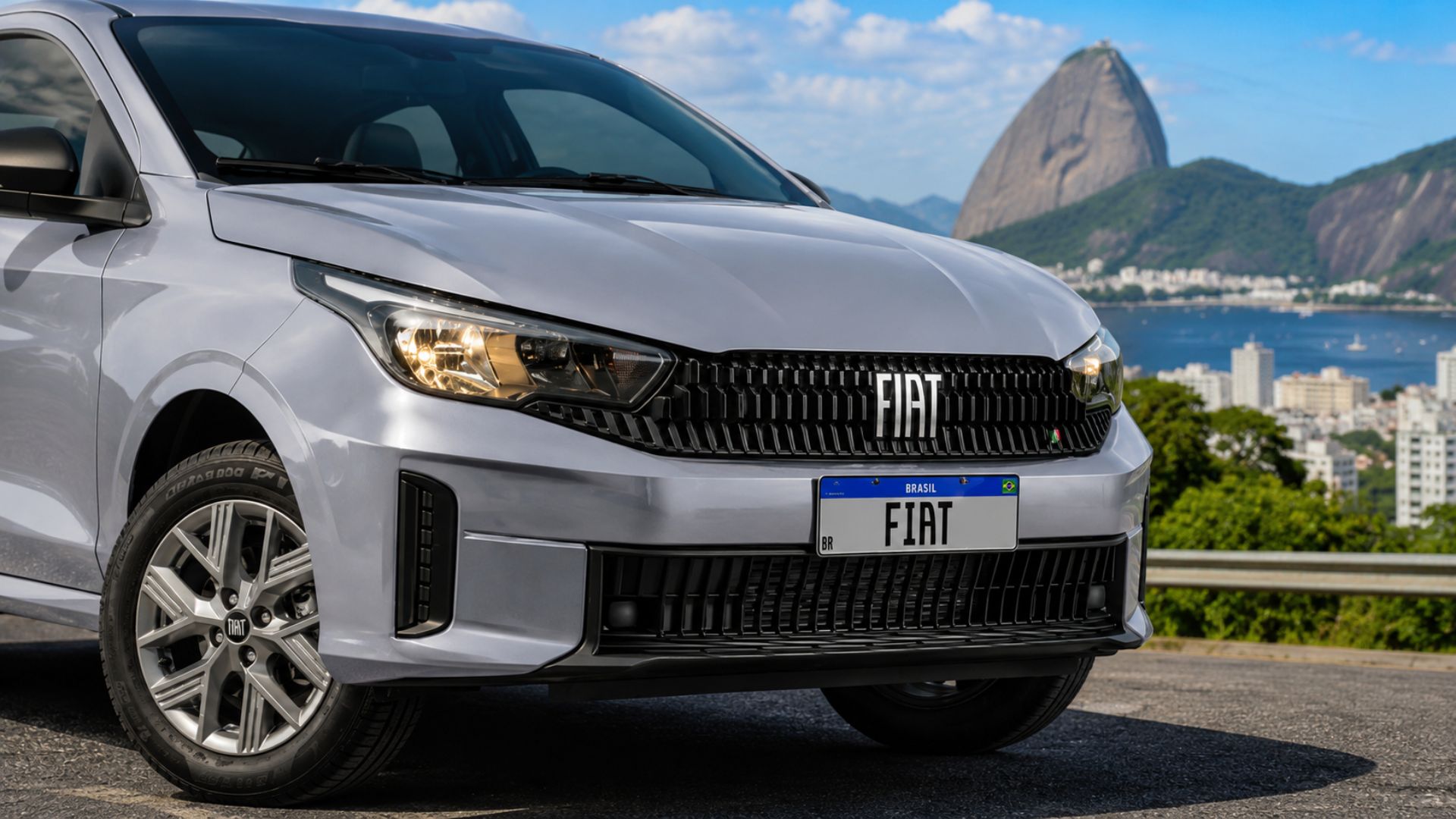
Meloni stated that the path to decarbonization needs to be “realistic” and respect the principle of technological neutrality — that is, without limiting advancement solely to electric cars.
Parliamentary documents related to her speech reinforce this guidance, emphasizing that climate targets should consider the balance between sustainability and industrial competitiveness.
Meloni Demands Measures on Energy and Competitiveness
During a meeting with Ursula von der Leyen in Brussels, Meloni also called for “urgent interventions in the automotive sector” and advocated for a reduction in electricity prices. For the Prime Minister, the increase in energy costs threatens the competitiveness of Italian factories and the very pace of ecological transition.
The Italian press highlighted that the meeting had a tone of direct accountability and precedes the review of European regulations scheduled for the end of 2025.
This review will reassess the rule approved in 2023, which states that, starting in 2035, all new cars and vans sold in the European Union must emit zero CO₂.
The measure, in practice, ends the sale of traditional combustion engines, except in cases of using e-fuels or sustainable biofuels — points that Italy wants to expand.
Europe Divided on the Path to Decarbonization
The debate, however, divides the countries of the bloc. France and Spain advocate keeping 2035 as the final target for the decarbonization of transport, while Italy and parts of the automotive industry are calling for adjustments and more flexibility. The discussion pits, on one side, governments prioritizing strict environmental targets and, on the other, those calling for gradual transitions and varied technologies.
The main sector associations, such as ACEA and the European suppliers, argue that current targets “are no longer viable” without changes. They urge Brussels to recognize other solutions beyond total electrification. BMW CEO, Oliver Zipse, classified the ban as “a major mistake,” while Ola Källenius from Mercedes-Benz warned that, without flexibility, Europe “could hit a wall,” risking market collapse. He also advocated for incentives and cheaper energy to facilitate the advancement of electric vehicles.
Oliver Blume, president of the Volkswagen Group, called the 2035 deadline “unrealistic” and proposed a hybrid strategy: prioritize electromobility but without eliminating other technologies capable of accelerating emission reductions.
Germany and Spain: Distinct Positions
The German Chancellor, Friedrich Merz, also publicly expressed support for revisiting the 2035 ban. He stated that “there will be no blackout in 2035 if it depends on me” and reiterated support for technological neutrality.
Despite this, the German federal government has yet to reach a unified position. Merz gathered representatives from major automakers, but the meeting ended without consensus. Part of the coalition, especially within the SPD, advocates for only specific exceptions rather than a complete review.
In Spain, the scenario is different. Pedro Sánchez’s government has not made any recent new statements on the subject but has officially maintained support for the 2035 target, aligning with France in the intention to preserve the original schedule proposed by the European Commission.
Thus, the dispute between environmental targets and industrial interests remains at the center of the European political agenda.





Kkkkkkk……os sonhadores, vao ter que esperar um pouco mais……..aquí nos US Nao emplacara antes de 2050……
A combustão ou elétrico, são mudancas de tecnologias. É idependente de desejos dos governantes. O povo, a sociedade é que vai adotar uma ou outra. Tudo indica que a motorização elétrica vai ser a preferida…muito mais fácil de utilizar e manter. Tecnologias mais simples…motorização a combustão tem apenas algumas dezenas de empresas capazes de fabricar. Elétrico tem milhares…então qdo baterias evoluírem, não será decisão dos governantes.
Quando se deparar com o custo de um conjunto de baterias novas , jogos de pneus q são diferenciados , acho q surgirá uma nova indústria apesar das leis anti poluição , A DE SE ADAPTAR MOTORES A COMBUSTAO NESTES VEICULOS DUVIDO DA REDUCAO NO CUSTO DAS BATERIAS COM PAISES CONTROLANDO O FORNECIMENTO DE LITIO E OUTROS INSUMOS!!!!