Portuguese
  Spanish


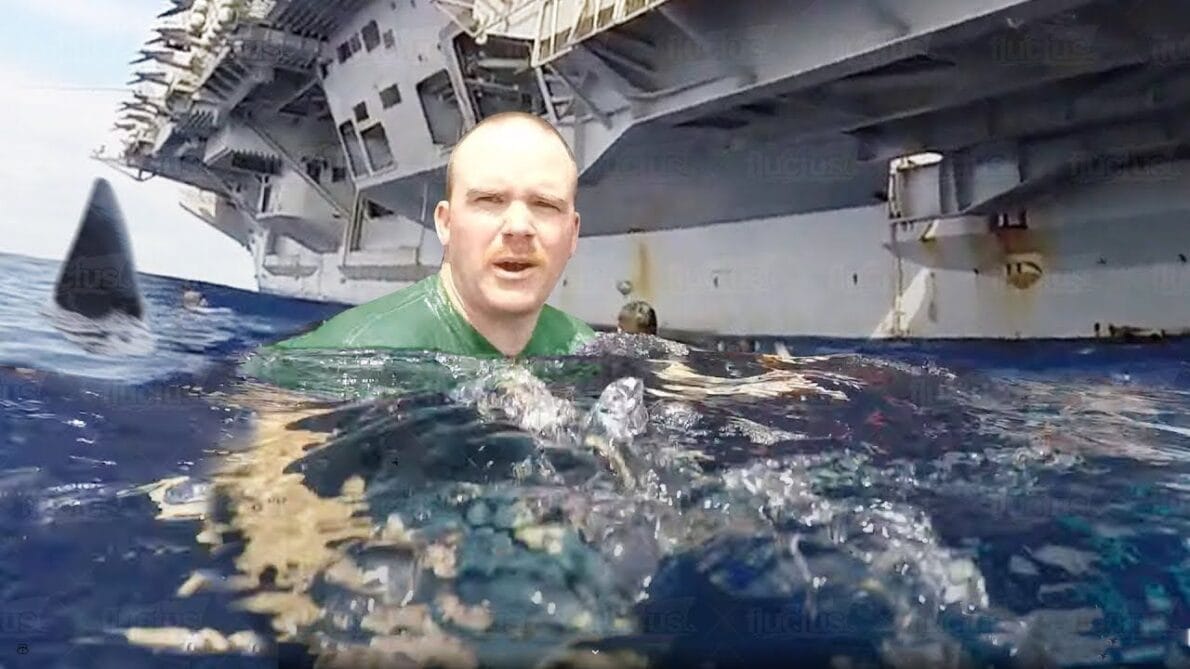

Discover How U.S. Sailors Deal with Sharks Swimming Near Their Aircraft Carriers and Ships.
U.S. sailors spend most of their time at sea aboard ships. However, there are times when entering the water is necessary, either for training for emergencies or simply to relax. On these occasions, the U.S. Navy takes several measures to ensure the safety of the sailors, especially against sharks.
During missions, U.S. naval forces sometimes have the opportunity to swim in the ocean, an event known as a “swim call”. These swimming moments are refreshing and allow sailors to exercise. In August 2022, for example, the aircraft carrier USS Harry S. Truman, anchored in the Mediterranean Sea, turned into an improvised water park, with sailors jumping and swimming in the warm water.
However, Allowing Sailors to Swim in the Sea Also Poses Risks
If a shark approaches, the safety and operations of the ship may be at risk. To avoid problems, some sailors act as lookouts and lifeguards during these swims. These lookouts are armed with weapons to shoot in the water if a large shark is spotted.
-
Petrobras Secures $2.2 Billion Contract to Build and Operate Four Support Vessels for Brazil’s Offshore Oil Fields

-
France Revamps 530 Social Housing Units with Large Balconies and Glass Facades Without Demolishing Existing Buildings

-
10-Year-Old Max Makes History with Paris Fashion Show, Launches Own Brand, Hires Staff, and Sets World Record as Youngest Runway Designer

-
Bolivian Female Construction Workers Form Association to Combat Discrimination and 38% Pay Gap in the Industry




In 2020, members of the U.S. Coast Guard who were swimming in the Pacific had a very close encounter with a six to eight-foot-long shark. A maritime enforcement specialist, who was on guard, fired shots in the water, distracting the shark and allowing the swimmers to exit safely. Fortunately, the shark was not injured and swam away.
If a Shark Attack Occurred and Someone Was Seriously Injured, a Medical Evacuation Helicopter (Medevac) Could Be Called to Take Them Quickly to a Hospital
In 2018, the Coast Guard in San Francisco managed to lift a man bitten by a shark from a moving boat to a flying helicopter, transporting him to Stanford University Medical Center for treatment.
The U.S. Coast Guard conducts rigorous training to prepare its members for emergency rescues, such as shark bites, search and rescue operations, and natural disasters. In exercises like Cascadia Rising, the crew practices medical evacuations by simulating earthquake and tsunami scenarios, ensuring they are ready for any situation.
Sailors from the U.S. aircraft carriers and ships face many challenges when entering the sea, including the risk of encounters with sharks. With constant vigilance and rigorous training, the U.S. Navy ensures that its sailors can swim safely and handle any emergency that arises. These safety measures demonstrate the Navy’s commitment to protecting its members while operating in the vast and unpredictable waters of the oceans.