






 Portuguese
  Spanish
  3 min of reading
  0 comments


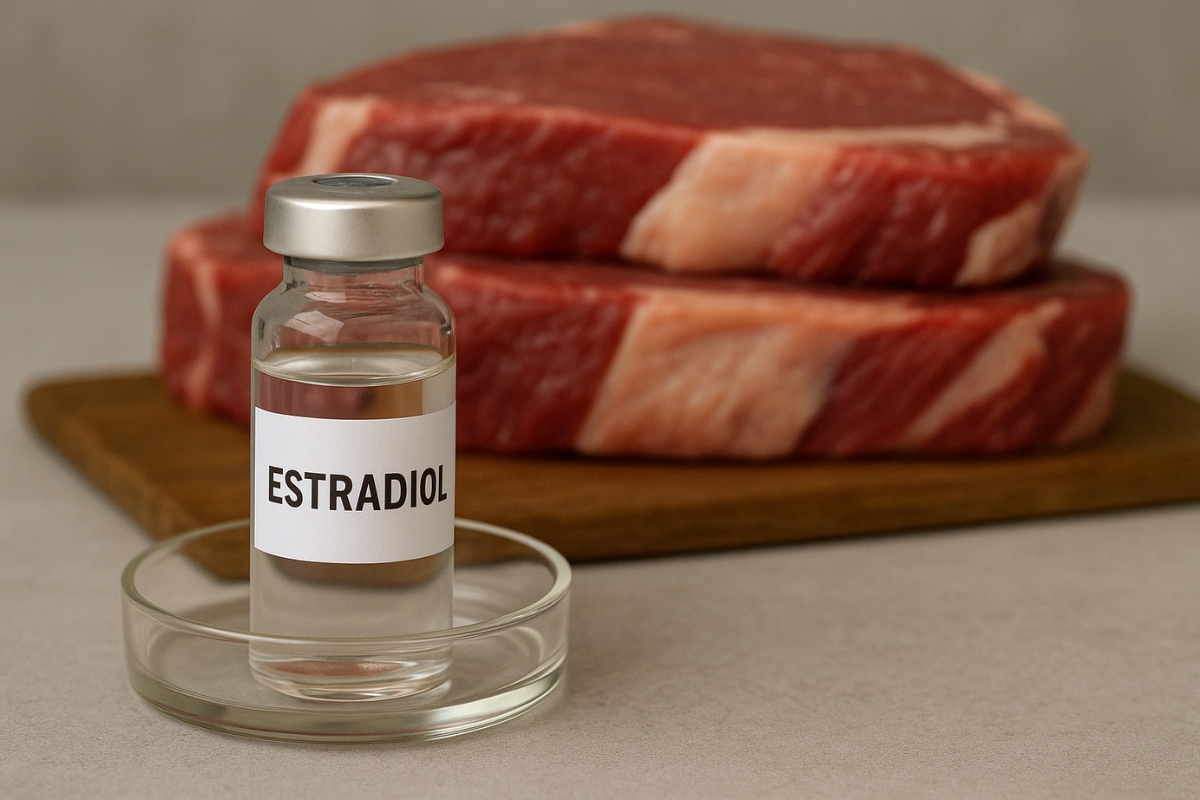
Understand How Estradiol Works in Cattle Farming, Why the Hormone Is Prohibited in the Bloc, and What Changes in Certification for Exporting
Estradiol is a natural hormone linked to the reproductive cycle of females, including cattle. It can also be used in reproductive management, focusing on synchronizing estrus and organizing insemination protocols.
The discussion returned to the spotlight after the European Union recalled batches of Brazilian beef over suspicion of hormone residue in a recent shipment. The immediate consequence was an increased focus on traceability and certification for selling to the European market.
What Is Estradiol and Why Does It Exist in Cattle
Estradiol is an estrogen, a class of hormones involved in the development and regulation of sexual characteristics and the reproductive cycle. In females of various species, the hormone plays a direct role in the manifestation of estrus.
-
Low-Demand Brazilian Beef Offal Gains Popularity Abroad: Indonesia Purchases $19.5 Million, Boosting Revenue and Reducing Waste

-
Soy Expansion in Former Brazilian Savanna Sparks Water and Land Conflicts in Major Agricultural Frontier
-
Mexican Pest Threatens U.S. Cattle Herds at Historic Lows, Potentially Boosting Brazilian Beef Exports as Burger Prices Soar

-
Avocado Boom for European and U.S. Markets Fuels Water Crisis in Drought-Stricken Chilean Region





Being natural, estradiol can be present in the animal’s body without any intervention. The sensitive point begins when the hormone is used as part of management, even if for reproductive purposes.
How Estradiol Is Used in Brazilian Cattle Farming
In reproductive routines, estradiol can be used to synchronize estrus and facilitate timed artificial insemination programs. This logic aims to standardize the timing of estrus to organize batches and breeding calendars.
This use is different from application for fattening. The topic becomes delicate because the same substance may appear in discussions about growth promoters, even when the stated objective is reproduction.
Why the European Union Prohibits the Hormone in Animal Production
The European Union maintains strict restrictions on substances with hormonal action in animal production, including estradiol 17β, focusing on consumer protection and residue control in meat.
The bloc prohibits the use of hormones for growth promotion in production animals and extends this requirement to imports. This compels exporting countries to demonstrate, through controls and certification, that the European standard has been met.
What Happened in the Recent Export That Became a Problem
A batch of Brazilian beef was recalled after residues of estradiol were identified in frozen meat shipments. The measure resulted in the withdrawal of the product from the market in bloc countries and increased scrutiny on the certification chain.
The episode reinforced a critical point for export: it is not enough to comply with Brazilian rules; it is necessary to meet the importer’s standard, with traceability capable of supporting the certification required by the European Union.
The Role of Traceability and What Changed with the Female Protocol
Traceability gains importance when export involves females, as estradiol appears in reproductive protocols. To meet European requirements, a protocol was established to ensure that females slaughtered for export have not undergone management with estradiol esters.
The PEFB was approved on January 16, 2025 through SDA MAPA Ordinance No. 1,228, with rules and procedures to support official Brazilian certification when the importing market demands this type of guarantee.
How Brazil Monitors Residues and Why This Matters
Brazil operates the PNCRC Animal, linked to the Ministry of Agriculture and Livestock, as a risk management tool for the chemical safety of animal-derived food produced in facilities registered with the SIF.
The program includes sampling strategies and analysis records in its own system, forming a control database used in sanitary dialogues with external markets. This type of structure becomes increasingly scrutinized when there is a recall in the export destination.
The European Union recalled a recent batch of Brazilian beef after detecting residues of estradiol, reopening the debate on compatibility between national rules and bloc requirements.
In practice, the topic pressures the exporting chain to strengthen traceability and certification, especially for females, to avoid blockages, recalls, and market losses in high-value destinations.


Be the first to react!