






 Portuguese
  Spanish


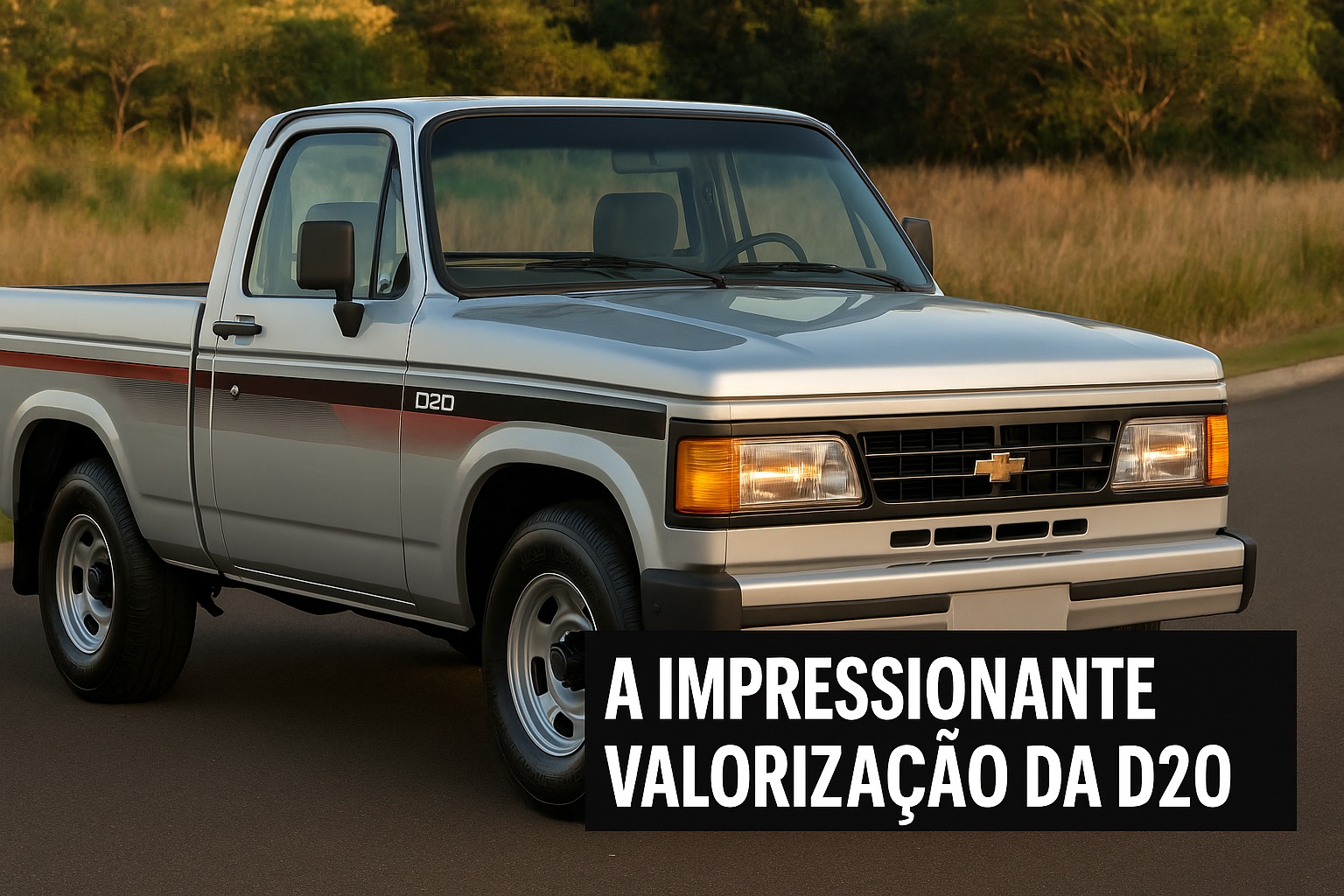


Manufactured Between 1985 and 1996, the Chevrolet D20 Transitioned from Workhorse to National Icon. Today, Its Older Versions Command Impressive Prices and Symbolize Resilience, Nostalgia, and Long-Term Investment
The history of the Chevrolet D20 reveals a curious phenomenon: the older it is, the more it’s worth. Produced between 1985 and 1996, this pickup was designed for heavy-duty work, focusing on both rural and urban use. After being discontinued, it transformed into an icon.
This transition explains much of its appreciation. From a work tool, the D20 became a symbol of mechanical resilience and nostalgia.
As a result, many buyers today seek the model not only for use but also as an investment or collectible item.
-
Fiat Cronos Precision 2018: Affordable Sedan with Spacious Trunk and Reliable Maintenance

-
Volkswagen to Cut Production by 1 Million Cars by 2030, Reducing Jobs and Platforms, Focusing on More Profitable Models

-
Toyota Launches First 100% Electric Car in Brazil: bZ4X with 343 HP, All-Wheel Drive, 361 km Range, Priced at $419,990 BRL, Limited to 99 Units

-
Chinese SUV Achieves 24.4 km/l, Outperforms Toyota Yaris Cross in Real-World Tests with 224 hp Hybrid System, Offers 51-Liter Tank for Greater Range, and Costs Up to R$ 5,000 Less.


The prices confirm this phenomenon. In November 2025, a D20 from the mid-1990s appears in listings at prices reaching R$ 85,000, exceeding even modern vehicles.
This continuous appreciation draws attention because it shows how the classic car market in Brazil has matured.


The Evolution of Prices and the Numbers from the Fipe Table
According to the Fipe Table, a 1990 D20 S 3.9/4.0 Turbo Diesel is priced around R$ 62,066. However, the asking price from sellers is often much higher.
There are examples of units from 1993 and 1994 listed between R$ 99,900 and R$ 120,000.
This difference indicates that the model has gained an “affective” and symbolic value. Even with high mileage, used condition, and decades on the road, many buyers are willing to pay more because they see the D20 as a classic.
The result is a scenario where, instead of depreciating over time, the vehicle becomes more coveted. This does not happen by chance. There are concrete and emotional reasons behind this movement.
Why Does the D20 Appreciate So Much?
The first factor is scarcity. As production ended nearly 30 years ago, finding well-preserved examples has become difficult. Fewer available units mean more demand for the few good specimens.
Another point is mechanical durability. The D20’s diesel engine has gained a reputation for being resilient and reliable.
Many specimens have survived years of intense use, which enhances their prestige among enthusiasts.
In addition, there’s the nostalgia factor. The D20 was part of the lives of those who grew up seeing the model on the roads of the countryside and on farms throughout the country. This emotional connection turns the utility vehicle into a symbol of an era.
Finally, it still retains real utility. Even though it is old, the pickup can carry loads and tackle difficult paths.
This functionality contributes to maintaining its market value, as the model remains practical and usable.

Cautions When Buying a D20 for Investment
The appreciation is real, but it’s not enough to acquire just any unit. It’s important to assess conservation, originality, and maintenance history.
Modified models or those with compromised structures can lose value rapidly.
Restorations require high investment, and depending on the parts, the cost can exceed profitability.
Furthermore, listings with high prices do not guarantee sales at those figures. The difference between the asking price and the final price is usually significant.
Therefore, anyone intending to buy a D20 as an appreciating asset should proceed with caution and patience.

The Legacy of the Car in Brazil
More than a vehicle, the D20 has become part of the national automotive memory. It represents the time when robustness and simplicity were synonymous with reliability.
If someone paid R$ 30,000 or R$ 40,000 a few years ago and today receives offers of R$ 80,000, there is logic to this appreciation. The model has become rare, loved, and iconic.
Therefore, preserving a D20 in good condition is more than just keeping a car: it’s safeguarding a piece of Brazilian history on wheels.






Coisa mais chata é escutar que carro com mais de 10 anos só serve pra enfeitar garagem. Tenho um Monza Classic 89 automatico e uma Caravan 6cc 90, que são meus carros do dia a dia e me atendem bem demais
Amadurecimento do mercado é a nova denominação para os espertalhões que querem lucrar acima do ponderável e para os ” inocentes ” que acham que esses carros antigos realmente valem esses preços surreais ?
Quem conhece o carro é sabe oque de fato é um carro compra porque de fato vale a pena o carro além de ser muito bom não quebra atoa não se trata de espertaoes e sim de mostrar o valor do carro mas ninguém é forçado a comprar compra quem conhece de carro e sabe que faz um investimento
Só pra informar tenho uma S10 2004 executive e tipo assim. Não tenho pra venda, mais quando aparece alguém perguntando se quero vender coloco o preço , porque sei que tem muitas por aí que não valem nem metade da tabela por falta de conservação